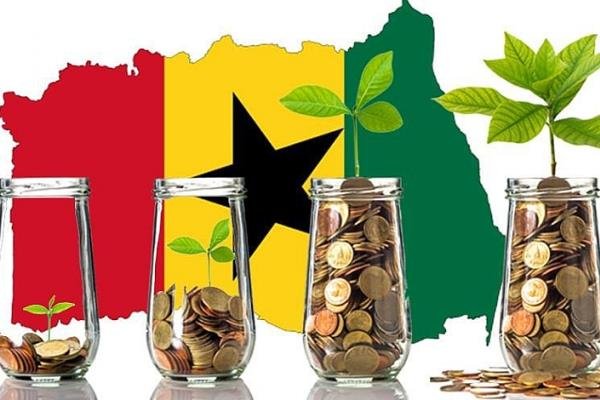
According to the Rand Merchant Bank (RMB), Ghana retained its position as the lead investment destination in West Africa and the 6th on the African continent.
The RMB Where To Invest In Africa in 2025/2026 report, which explores the theme “From aid to investment and trade,” revealed that among the top investment destinations on the continent, Ghana lags behind Seychelles, Mauritius, Egypt, South Africa, and Morocco.
According to the report, the top six countries’ position remains unchanged from the 2024/2025 edition. Behind Ghana are Algeria, Cote d’Ivoire, and Tanzania in 7th, 8th, and 9th positions respectively.
“We, therefore, anticipate most countries to maintain their respective rankings from year to year. Industrial structures, populations, and investment environments rarely change considerably over short spells.”
Rand Merchant Bank, South Africa
The RMB was, therefore, not surprised that 11 out of the 31 countries’ positions did not change in the current review period. 14 countries changed position between 1 and 3 range, suggesting that “just over half of our countries moved at most one position”.
RMB was particularly surprised that 7 countries moved between 2 and 4 positions, while 6 other countries moved 5 positions or more. Nigeria, for instance, was the 9th best investment destination country in Africa in the 2024/2025 edition but moved to 18th position in the 2025/2026 edition.

RMB revealed that “Larger rises or falls invite deeper analysis at a country analysis to better understand.” According to the report, the index focused on structural or fundamental elements that are “foundational, slow-moving, and robust – rather than fickle, flighty, and erratic.”
Benefits of Ghana’s Lead Position
This position opens several opportunities as the country receives recognition on the global stage. This signals a favourable investment climate to both internal and external investors. Consequently, more jobs will be created, productivity will be boosted, and poverty will be reduced.
This exposure can lead to economic diversification as investment is made in different sectors of the economy. Local businesses will also be stimulated, while the government’s revenue increases.
Foreign Direct Investment (FDI) could target infrastructure projects in transportation and energy to address key development gaps and improve the overall business environment.
The RMB WTIIA Report
According to RMB, the current edition of the report is built on the success of the 2024/2025 Where To Invest In Africa (WTIIA) publication. It emphasized that the 2025/2026 edition offers “fresh insights into the continent’s top investment prospects.
The report does not just list the top 31 best countries suited for investment, but also provides a clear view of the factors shaping each country’s investment landscape, helping investors and policymakers identify where the greatest opportunities for growth and impact lie.
“Over the past year, Africa’s investment landscape has been shaped by significant political and policy developments. Elections across multiple countries, episodes of unrest and policy uncertainty, and the global fracturing and reorientation have all had measurable macroeconomic effects.
“Changes in the political and the subsequent policy environment and declining foreign aid, coupled with the redirection of global capital flows, are reshaping how African economies engage with the world, moving from dependence toward resilience and self-determination.”.
Isaah Mhlanga, Chief Economist at RMB
This situation, Mr Mhlanga resorted, has caused major shifts in the growth and development of the countries, causing tectonic shifts in country performance. The 2025/2026 theme “reflects a broader transition underway across the continent.”

RMB is confident that as the “traditional aid models give way, new opportunities are emerging for partnerships driven by investment and commerce. In this evolving landscape, African nations are redefining their growth trajectories, prioritizing sustainable development, regional collaboration, and private-sector participation as key drivers of progress.”
The Robust Metrics Used by the Report
In collaboration with the Gordon Institute of Business Science (GIBS), the report chose only 31 countries that contribute to 90 percent of the continent’s GDP, 83 percent of its population, and 61 percent of the continent’s land mass.
The intricacies and opportunities of the African economic investment landscape, as well as its macroeconomic, market, and demographic data, form the 20 distinct metrics used.
These are again grouped into 4 pillars to reflect economic impact: economic performance and potential; market accessibility and innovation; economic stability and investment climate; and social and human development.
According to RMB, these criteria were molded to craft a balanced and data-driven view of investment attractiveness across the continent.
READ ALSO: Royalties Over State-Ownership Cannot Support Quest for Sustainable Development – IEA Warns