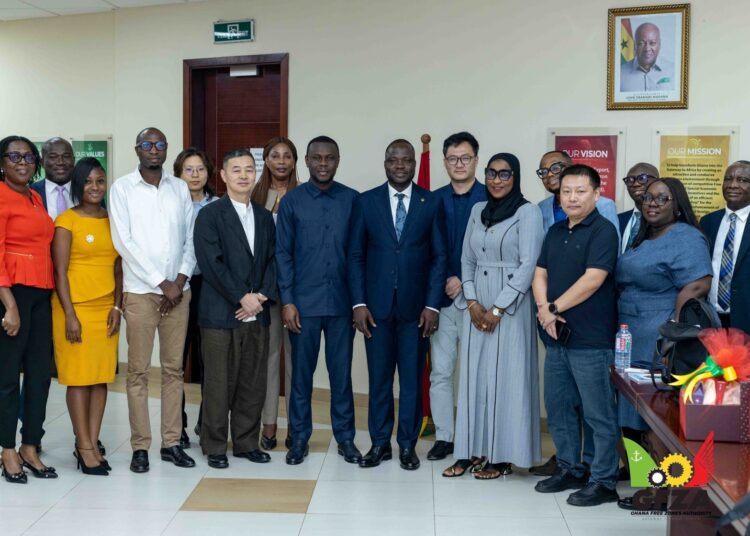
The Ghana Free Zones Authority (GFZA) has intensified its drive to attract high-value industrial investment, hosting a high-level business delegation from the Meihua Group of China – a global biotechnology and fermentation-based manufacturing conglomerate that arrived in Accra to assess Ghana’s suitability for large-scale, export-oriented production facilities.
Led by the Group’s Chief Executive Officer, Mr. Jun He, the delegation’s visit signalled a significant step toward integrating bio-industrial technology into Ghana’s manufacturing landscape. The Meihua Group, a leader in the production of amino acids, bio-based chemicals, and animal nutrition, explored the Free Zones Scheme to establish a regional hub for its global supply chain.
Welcoming the delegation on behalf of the Authority’s leadership, the Deputy CEO for Finance and Administration, Mr. Hamidu Sibiri Musah, reaffirmed the GFZA’s commitment to supporting investments that align with national development priorities.
“We express our deep appreciation for Meihua Group’s interest in the Free Zones Programme. The Authority remains committed to promoting and supporting investments that contribute significantly to national development.
“We are ready to facilitate every stage of this potential partnership to ensure that Ghana becomes the preferred destination for your bio-industrial operations in Africa”
Mr. Hamidu Sibiri Musah, GFZA Deputy CEO for Finance and Administration
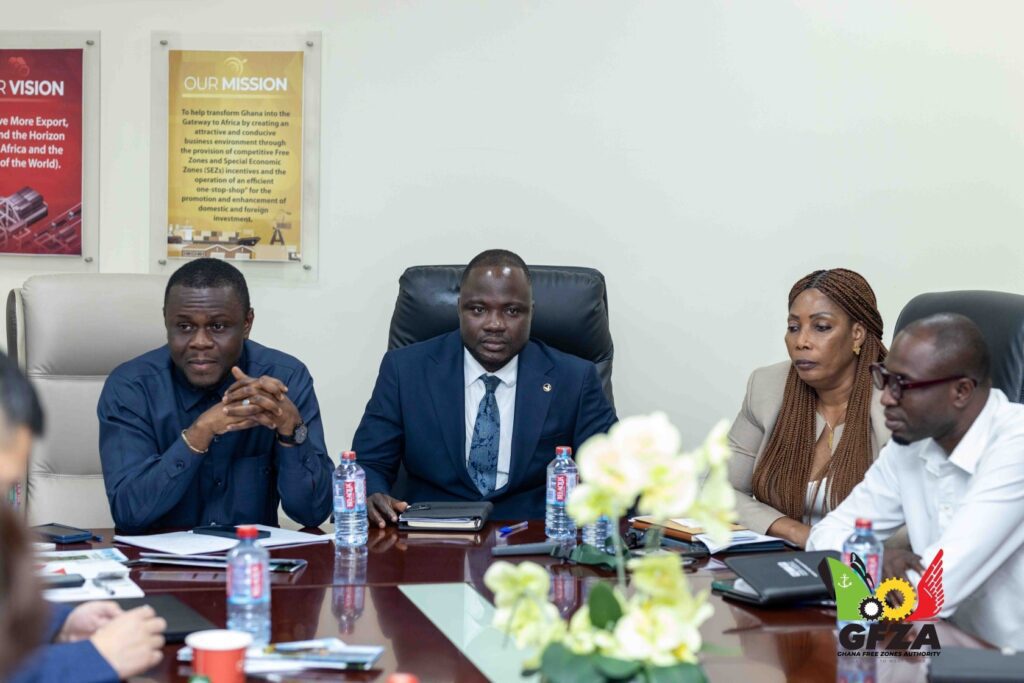
The Deputy CEO positioned the Free Zones Scheme as the primary vehicle for export-led industrialization, offering a suite of fiscal and regulatory incentives designed to lower the cost of doing business. The Authority noted that for a conglomerate like Meihua, which relies heavily on integrated agro-processing and bio-manufacturing, the availability of specialized industrial enclaves is a decisive factor in their investment appraisal.
According to GFZA, the delegation’s primary focus involved a rigorous assessment of Ghana’s industrial infrastructure, specifically the availability of natural gas, reliable power, water, and port logistics.
Strategic Engagement
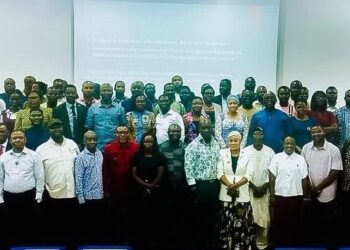
To address these technical requirements, the GFZA organized an expansive stakeholder meeting at its Tema Office. This session brought together key regulatory bodies, including the Ministry of Trade, Agribusiness and Industry (MoTAI), the Ghana Standards Authority (GSA), and the Environmental Protection Agency (EPA).
This multi-agency approach ensures that potential investors have a clear roadmap for compliance and utility access before breaking ground.
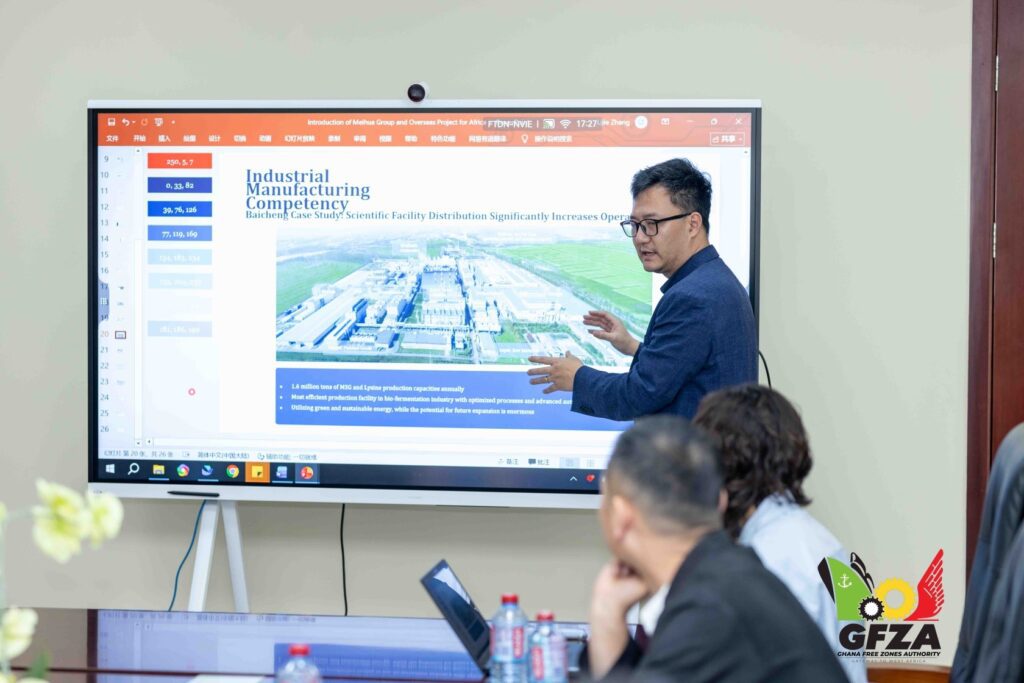
The Deputy CEO for Operations, Mr. Lateef Apau Wiredu, assured the Chinese delegation that the GFZA would provide full operational support. He highlighted the conducive business environment fostered by the “24-Hour Economy,” framework, which encourages continuous industrial activity and enhances the efficiency of export-oriented firms.
By streamlining the interface between the investor and state agencies like the Energy Commission and the Food and Drugs Authority (FDA), the GFZA aimed to reduce the “time-to-market” for Meihua’s bio-based products.
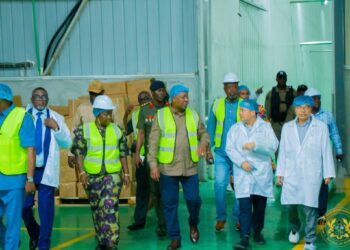
“During the two-day mission, the delegation conducted site visits to several of Ghana’s flagship industrial hubs, including the Dawa Industrial Park, the Bright Industrial Park, and the Afienya Export Processing Zone (EPZ).
“The Afienya EPZ, in particular, was highlighted by the Director of Corporate Affairs, Dr. Patience Agbleze Acorlor, as a prime location for Meihua’s integrated bio-industrial operations due to its proximity to major transport corridors and the Ghana Ports and Harbours Authority (GPHA)”
Ghana Free Zones Authority
The inclusion of the Ghana Revenue Authority (Customs Division) in the briefings emphasized the seamless export procedures available to Free Zones enterprises.
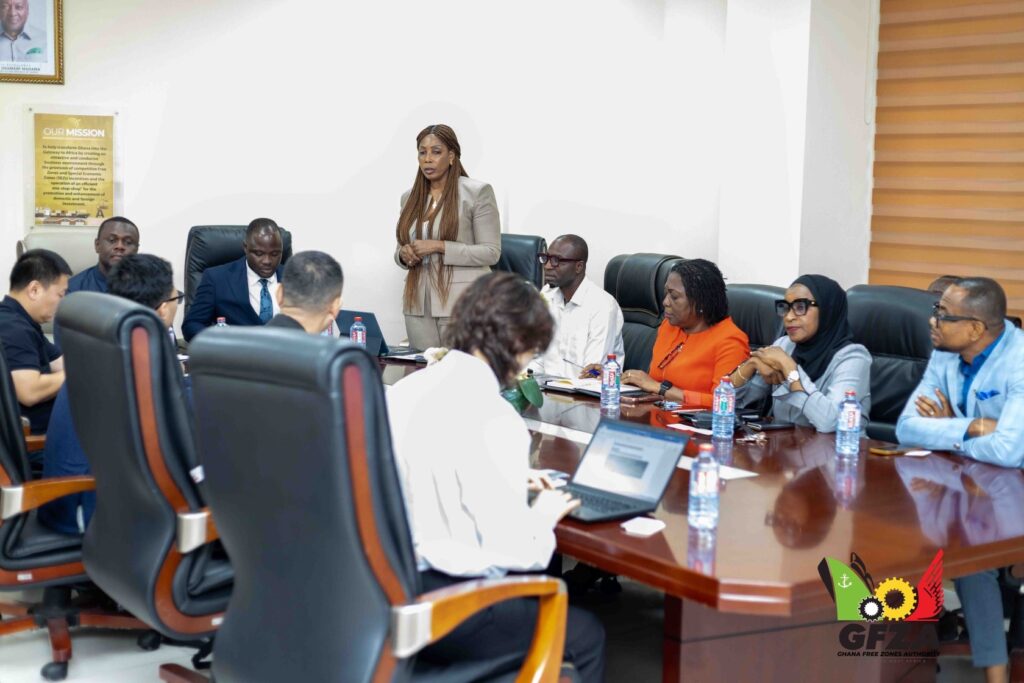
For Meihua Group, whose core products include starch-based sweeteners and feed additives, port efficiency is critical for reaching international markets in Europe and across the AfCFTA region. The visit underscored a growing trend of Chinese industrial giants looking to Ghana as a gateway for value-added exports.
READ ALSO: Africa’s Industrial Growth Hinges on Energy, Trade Integration