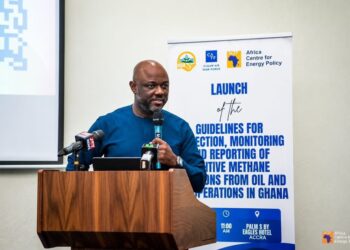
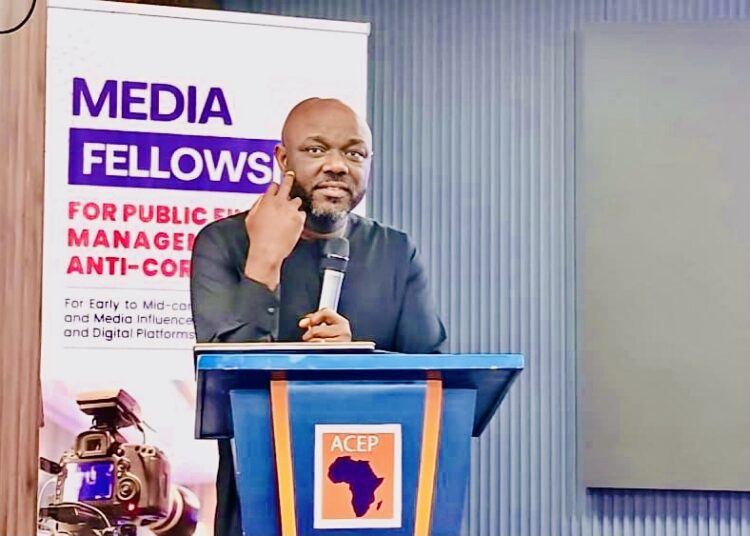
The Executive Director of the Africa Centre for Energy Policy (ACEP), Ben Boakye, has outlined what he describes as a decisive three-point energy sector reset needed to prevent Ghana from sliding back into the long-standing circular debt crisis.
Speaking on efforts to stabilise the power sector, Mr. Boakye warned that without structural reforms and disciplined implementation of existing agreements, any reset could merely recreate the same financial imbalances that have burdened the state for years.
He argued that the goal must not only be short-term relief but a lasting transformation that makes the sector financially self-sustaining and less dependent on fiscal bailouts.
According to Mr. Boakye, the first priority in the energy sector reset must be strict adherence to agreements already negotiated with Independent Power Producers (IPPs).
He revealed that recent negotiations secured significant concessions from IPPs, including a haircut of about US$450 million on outstanding debts and an estimated US$7 billion in recurring liabilities over a 15-year period.
“What that means is that the bills that would have been paid from now to the next 15 years or so translate into savings of about US$7 billion.”
Ben Boakye, Executive Director of the Africa Centre for Energy Policy (ACEP)
These savings, he stressed, were granted in good faith and must be matched by credible follow-through from the government. Failure to honour the revised payment terms, he cautioned, would damage Ghana’s reputation with investors and counterparties, making future negotiations more difficult and potentially more expensive.
While acknowledging the Finance Minister’s commitment to implementing the negotiated framework, Mr. Boakye insisted that reforms must outlive individual officeholders. Institutional systems, he argued, need to be strengthened to ensure continuity and prevent future breaches.
Without such safeguards, Ghana risks undermining the very credibility it worked hard to rebuild during the renegotiation process.
Rethink Power Procurement and Generation Costs
The second pillar of the proposed energy sector reset involves a fundamental reassessment of forward-looking power generation projects.
Mr. Boakye attributed the high cost of existing power contracts to governance lapses, including weak transparency and rushed procurement processes that locked the country into expensive arrangements.
He noted that some IPPs currently charge between US$0.06 and US$0.08 per kilowatt-hour, largely driven by cost recovery and recurring liabilities.
In contrast, newer generation models demonstrate that electricity can be produced at costs as low as US$0.03 per kilowatt-hour. “The question then is why we were paying US$0.06, US$0.07 or US$0.08 when US$0.03 was achievable,” he remarked.
Introducing cheaper power into the national generation mix, he argued, would gradually blend down existing high tariffs and improve affordability for households and businesses.
Mr. Boakye warned that current tariff levels, which can exceed US$0.10 to US$0.15 per kilowatt-hour when fuel costs are included, undermine Ghana’s industrial ambitions.
High electricity prices, he said, make it difficult to realise policy goals such as expanding manufacturing capacity and sustaining a 24-hour economy.
For him, reforming procurement practices and prioritising cost-efficient projects is central to restoring competitiveness and preventing the recurrence of excessive financial obligations.
Restructure ECG to Stop Financial Leakages
The third and most urgent intervention, according to Mr. Boakye, is the restructuring of the Electricity Company of Ghana (ECG).
He maintained that continued government-led management of ECG has proven unsustainable, citing persistent inefficiencies and financial leakages that ultimately fall on the state.
“ECG has happened to be one of the big ones bleeding the state,” he said, arguing that private sector participation is essential to address chronic under-collection and operational weaknesses.
Although a previous private sector arrangement failed to deliver the expected results, Mr. Boakye noted that the government has recommitted to exploring alternative models and appointed a transaction advisor to guide the process. However, he acknowledged that progress has been slow.
Fixing ECG’s structural inefficiencies, he estimated, could free up nearly US$100 million annually that government currently absorbs to stabilise the distributor. Those funds, he suggested, could instead be redirected into roads, hospitals and other national development priorities.
Strengthen Regulatory Independence

Beyond the three core actions, Mr. Boakye called for stronger institutional alignment within the sector. He emphasised the need to allow regulators such as the Public Utilities Regulatory Commission (PURC) to operate independently, free from political interference.
He pointed to recent improvements in cash flow enforcement as evidence of what can be achieved when governance structures support reform rather than undermine it.
In his view, sustainable reform depends on transparent procurement, efficient revenue collection, competitive power pricing and disciplined regulatory oversight.
“If we fix the core problems and put the right systems in place, the sector should be able to run sustainably, regardless of who is in office.”
Ben Boakye, Executive Director of the Africa Centre for Energy Policy (ACEP)
As discussions around Ghana’s energy sector reset continue, his proposals add renewed urgency to calls for structural reform, with the ultimate aim of ending circular debt and building a resilient, investor-confident power sector capable of supporting long-term economic growth.
READ ALSO: President Mahama Pledges Productivity Revolution and Cocoa Value Reset