
Gold prices surged back above $5,160 per ounce as the geopolitical landscape in the Middle East shifted into a more volatile phase, forcing market participants to re-evaluate their risk positions.
This recovery comes as investors pivot back toward safe-haven assets following a brief period of losses in the prior session, as the escalating friction between the U.S.-Israeli coalition and Iran sparks renewed concerns over global stability.
The commodity’s bounce reflects a broader market anxiety as the “uncertain trajectory” of the regional conflict threatens to disrupt traditional trade flows and energy security.
“Gold rose back above $5,160 per ounce on Wednesday, recovering some losses from the previous session, as investors tracked developments in the Middle East. Gold and other metals had tumbled on Tuesday as the dollar strengthened on worries that rising energy costs could drive inflation, prompting investors to reassess the Federal Reserve’s policy path.”
Minerals Financial Express
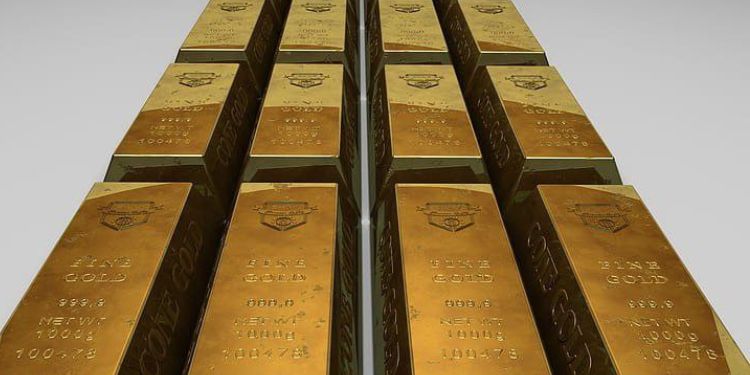
The current upward momentum in the bullion market is directly tied to a five-day military campaign that saw Israeli forces strike a strategic building in Iran on Tuesday during a sensitive meeting of clerics tasked with selecting a new Supreme Leader.
While the dollar’s recent strength fueled by fears that rising energy costs might trigger inflation had previously weighed on metals, the potential for a “troubling” new administrative era in Iran has provided a fresh catalyst for gold.
US President Donald Trump has expressed grave concerns regarding the leadership transition, prompting a pledge of naval escorts and insurance support to protect oil tankers navigating the critical Strait of Hormuz.
Geopolitical Friction Re-ignites Bullion Demand

The intersection of military action and energy security has fundamentally altered the short-term outlook for the extractive sector as the strike against Iranian leadership candidates introduced a significant risk premium into global markets.
Investors who had briefly retreated to the greenback are now reconsidering the Federal Reserve’s policy path in light of these heightened risks, as any sustained disruption at the Strait of Hormuz could lead to a permanent shift in inflation expectations.
Consequently, gold has reclaimed its status as the primary hedge against both geopolitical catastrophe and the potential for a new Iranian leadership as “troubling” as the previous regime.
White House efforts to stabilize market fears through maritime insurance support and naval escorts underscore the severity of the threat to the global energy supply chain.
This climate of “market fears” has turned the extractive industry’s attention toward safe-haven commodities, with gold lead-pricing the recovery across the metals complex.
The volatility experienced on Tuesday, where rising energy costs were seen as a bearish signal for metals due to dollar strength, has been superseded by the immediate need for capital preservation amidst active warfare.
Impact on Ghana’s Mining Sector and Economy

The surge in global gold prices to record highs above $5,160 is creating a transformative yet complex fiscal environment for Ghana, which remains Africa’s leading producer and a key player in the extractive space.
While the price boom significantly bolsters the nation’s foreign exchange reserves and increases the value of its exports, it has also triggered a localized policy shift as the government moves to capture a larger share of the windfall.
This global uncertainty has led to a paradoxical situation where major operators are seeing record margins while simultaneously facing higher operational and regulatory costs.
Furthermore, the high-price environment has accelerated the formalization of the Artisanal and Small-Scale Mining sector through the Ghana Gold Board, which aims to leverage the price surge to build an “economic war chest” and stabilize the national currency.
Ultimately, the stability of the Ghanaian economy is now more closely tethered to these international price fluctuations than at any other point in the last decade.
Industry experts warn that while the current bull market provides an immediate fiscal cushion, the rising cost of labor and inputs which often “move with gold prices” could squeeze the margins of higher-cost mines if the global tension subsides unexpectedly.
For Ghana, the challenge remains utilizing this $5,160 threshold to strengthen external buffers without discouraging the long-term exploration projects that will sustain the sector beyond the current geopolitical crisis.
READ ALSO: Feed Ghana Launches National Vegetable Development Project