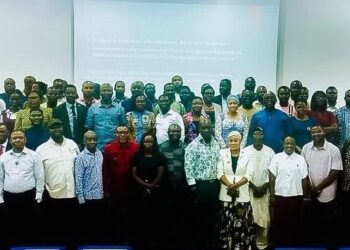

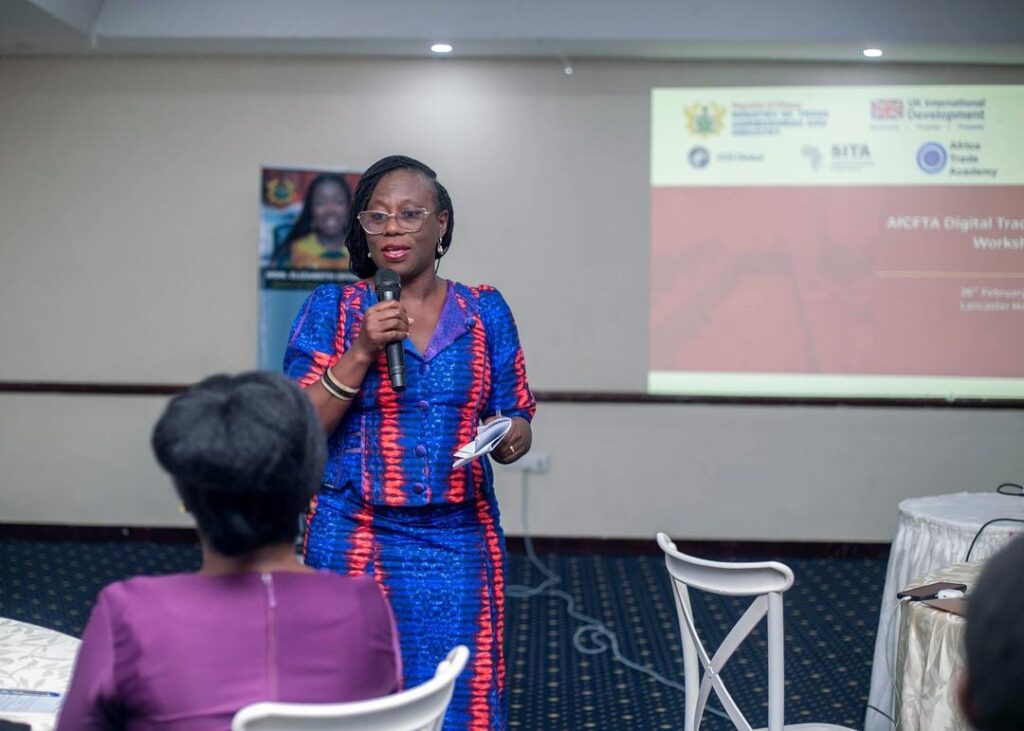
In a bold move to ensure that Ghana’s economic progress permeates every corner of the nation, the Ministry of Trade, Agribusiness and Industry (MoTAI) has descended upon the Ashanti Regional capital, Kumasi, with a pivotal workshop to spearhead a transformative digital trade inclusivity drive.
According to MoTAI, by targeting the bustling trade hub of Kumasi with the benefits of the African Continental Free Trade Area (AfCFTA), the administration is signaling that the future of Ghana’s Industrialization will not be confined to corporate boardrooms in Accra, but will be driven by the digital empowerment of the “ordinary” Ghanaian entrepreneur.
“The workshop formed part of activities to disseminate the Digital Trade Protocol of the African Continental Free Trade Area (AfCFTA) and advance the objectives of Ghana’s National E-Commerce Strategy (NECS). It brought together key actors from the public and private sectors to strengthen awareness and participation in digital trade opportunities”
Ministry of Trade, Agribusiness and Industry
The engagement, executed with strategic technical support from ODI Global through the Supporting Investment and Trade in Africa (SITA) programme, was specifically designed to bridge the yawning gap between traditional commerce and the modern digital marketplace.
As the global economy shifts toward a paperless and borderless future, the Ministry is ensuring that Ghana’s most vulnerable – yet most industrious – sectors are not left behind in the transition to a high-tech trade environment.
Kumasi’s selection as the host for this critical capacity-building exercise was no coincidence. As the historic and economic “bridge” linking the northern and southern belts of the country, Kumasi serves as the nerve center for thousands of traders who form the backbone of Ghana’s internal commerce.

Bringing the Digital Trade Protocol of the AfCFTA directly to this regional hub, was the Administration’s way of effectively “decentralizing” the continental trade agenda. The workshop served as a masterclass in the National E-Commerce Strategy (NECS), a comprehensive policy framework designed to simplify the complexities of online trading.
For many participants, the AfCFTA has often felt like a distant, high-level diplomatic concept. The Kumasi engagement changed that narrative, translating complex protocols into practical tools for market expansion. The focus was clear: to move from “survivalist” trading to “strategic” digital participation.
Empowering the Historically Excluded
At the very core of this initiative is the mandate for Inclusivity, as MoTAI has recognized that for Industrialization to be sustainable, it must include those who have been historically marginalized by traditional financial and trade systems.
“The Kumasi workshop placed a deliberate spotlight on Micro, Small and Medium Enterprises (MSMEs), women-led businesses, youth entrepreneurs, and Persons with Disabilities (PWDs). These groups often face the highest barriers to entry, including limited access to credit, lack of technical digital skills, and a lack of awareness regarding international trade regulations”
Ministry of Trade, Agribusiness and Industry
Through the SITA programme, the Ministry provided these entrepreneurs with “digital toolkits,” intended to help them navigate everything from online payment gateways to digital consumer protection laws.
The goal is to ensure that a young female weaver in Bonwire or an artisan with a disability in Suame Magazine can list their products on a continental platform with the same ease as a multinational corporation.

A recurring theme throughout the engagement was the need for a stronger partnership between the creators of technology and the regulators of trade.
The workshop facilitated direct, face-to-face interactions between marginalized private sector operators and key institutions such as the Foreign Trade and Negotiation Directorate and the Internal Trade Directorate. This “open-door” approach is vital for building trust in the digital economy.
By demystifying the role of regulators, the Ministry encouraged more small businesses to formalize their operations and join the digital ecosystem. MoTAI noted that the Africa Trade Academy played a crucial role in these sessions, providing pedagogical support to ensure that the technical training was digestible and immediately applicable.
The focus was on “Integrated Trade” – ensuring that a digital sale in Kumasi is backed by a robust legal and logistical framework that carries the product safely across the border to markets in Lagos, Nairobi, or Cairo.
A Digital Economy
As the Administration pushes forward with its Industrialization goals for 2026, the Kumasi workshop stands as a blueprint for future regional engagements.
The support of partners like ODI Global was instrumental in providing the international perspective necessary to compete on the global stage, while the Ashanti Regional Office of the Ministry provided the local context to ensure the training hit the mark.
“The initiative was supported under the Supporting Investment and Trade in Africa (SITA) programme implemented by ODI Global, which aims to ensure that Ghanaian businesses, particularly those led by women, youth, and PWDs are adequately equipped to leverage the opportunities presented by the African Continental Free Trade Area (AfCFTA)”
Ministry of Trade, Agribusiness and Industry
MoTAI’s leadership was vocal about the fact that digital trade is the “great equalizer.” In the digital realm, the size of one’s physical storefront matters less than the quality of their digital presence and the efficiency of their supply chain.
By equipping PWDs and youth with these high-value skills, Ghana is not just fostering trade; it is fostering social equity and economic resilience.
The success of the Kumasi workshop signals a new era in Ghanaian trade – one where technology is the engine and inclusivity is the fuel. As these newly empowered entrepreneurs return to their businesses, they carry with them the keys to a continental market of over 1.3 billion people.
READ ALSO: PDAC 2026 Reflects Growing Global Momentum for Mineral Exploration & Development