The integrity of the “Buy Ghana, Eat Ghana,” initiative is currently under intense scrutiny following explosive allegations from Dr. Charles Nyaaba, former director of the Peasant Farmers Association of Ghana and current CEO of Akuafo Nketewa, regarding the procurement processes of the National Food Buffer Stock Company (NAFCO).
Dr. Nyaaba raised the alarm that despite a clear executive directive from the Office of the President mandating that all public schools exclusively purchase locally produced staples, reports have emerged suggesting contractors are systematically bypassing domestic farmers.
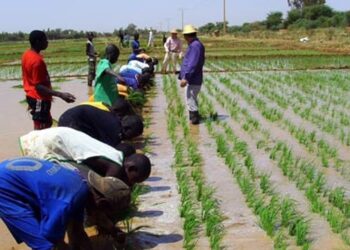
He claimed that the very individuals engaged to stimulate the Agriculture sector are instead fueling import dependency by sourcing foreign rice for the Ghana School Feeding Programme.
“We were very excited when we got the directive from the president that the school feeding programme is going to buy rice and maize from the local farmers. We were all prepared, waiting for them to arrive.
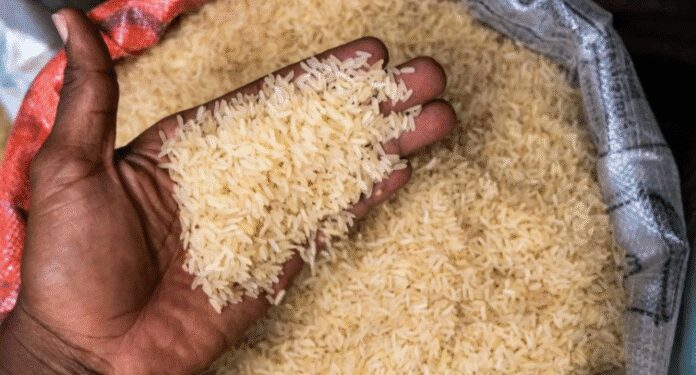
“The contractors they engaged to purchase produce from farmers decided to import it. They gave a contract to people; instead of buying from the farmers. They imported the rice, leaving the farmers”
Dr. Charles Nyaaba, Former Director of the Peasant Farmers Association of Ghana
According to Dr. Nyaaba, this development represents a significant blow to the Ministry of Finance, which had positioned the local procurement policy as a cornerstone of national economic recovery and Industrialization.
The Finance Minister, Dr. Cassiel Ato Forson, explicitly outlined a vision where the state’s purchasing power would serve as the primary engine for agricultural growth. For rice and maize farmers nationwide, he guaranteed a captive market within the educational sector – spanning from basic schools to tertiary institutions – to provide a predictable income stream.
However, the alleged failure of NAFCO to enforce these directives suggests a profound disconnect between high-level policy formulation and the ground-level execution of state contracts.
Transparency Deficits

Central to the brewing controversy is the perceived opacity surrounding the list of contractors engaged by the National Food Buffer Stock Company. For months, agricultural advocacy groups and industry stakeholders have petitioned NAFCO to publish the identities of the entities tasked with mobilizing local produce.
The refusal to disclose this information has fueled suspicions that the procurement process is being exploited by middlemen who prioritize the lower costs of imported grains over the strategic necessity of supporting Ghanaian Agriculture.
Dr. Nyaaba’s critique highlighted a disturbing lack of empirical evidence to support claims of state-led local purchasing. While the Ministry of Food and Agriculture continues to promote the narrative of a burgeoning domestic rice industry, the actual producers – the farmers – report a stagnant market.
“We keep engaging the National Food Buffer Stock Company to publish the lists of the people they engaged to mobilise this produce, and they are failing to do that. And there is no evidence from any farmer that the National Food Buffer Stock came to buy from them.”
Dr. Charles Nyaaba, Former Director of the Peasant Farmers Association of Ghana
Dr. Nyaaba warned that if the National Food Buffer Stock Company cannot demonstrate a verifiable trail of transactions with local cooperatives, the entire “Buy Ghana,” framework risks being dismissed as a mere rhetorical exercise rather than a functional tool for economic Industrialization.
The CEO of Akuafo Nketewa noted that the directive from President John Dramani Mahama was not merely a suggestion but a mandatory shift in the state’s fiscal behavior. By funneling school feeding funds into the pockets of local farmers, the Administration aimed to reduce the pressure on foreign exchange reserves and stabilize the cedi through decreased import demand.
However, if contractors are indeed using government funds to import foreign rice, the policy is achieving the exact opposite of its intended effect. Instead of building a robust domestic supply chain, the current implementation appears to be subsidizing foreign farmers at the expense of the Ghanaian taxpayer.
This failure directly undermines the Industrialization of the rice milling sector, as local millers cannot compete with the volume and price of dumped foreign imports if the state – the largest single buyer – refuses to honor its own commitment.
Regulatory Oversight

The outcry from the Peasant Farmers Association and Akuafo Nketewa serves as a call for urgent regulatory intervention. For the “Buy Ghana, Eat Ghana,” policy to survive the 2026 fiscal year, the National Food Buffer Stock Company must be held accountable for the actions of its contractors.
There is a growing consensus among stakeholders that the Ministry of Finance must link future funding for the Ghana School Feeding Programme to verifiable proof of local sourcing. Without such stringent oversight, the policy remains a “paper tiger,” easily bypassed by those with a vested interest in the import trade.
Ultimately, for Dr. Nyaaba, the success of Ghana’s Agriculture sector depends on trust between the producer and the state.
When farmers invest in expanded acreage based on an executive promise of a guaranteed market, a breach of that promise leads to catastrophic financial losses and a total breakdown of confidence in the Administration’s economic directives.
The National Food Buffer Stock Company now faces a critical choice: provide the transparency demanded by the public or remain complicit in the erosion of Ghana’s food sovereignty. As the debate intensifies, the Office of the President has been called upon to bypass intermediary agencies and establish direct monitoring of school feeding kitchens.
Only by ensuring that every bag of rice cooked in a public institution is tagged with a verifiable “Made in Ghana,” provenance, can the administration hope to salvage the credibility of its flagship agricultural policy.
READ ALSO: COMAC Warns BDCs Against Artificial Fuel Price Increases