The Bank of Ghana (BoG) spent about GHC17 billion in 2025 to absorb excess liquidity from the financial system, a significant increase from the GHC8.6 billion recorded in 2024.
The development highlights the scale of the central bank’s efforts to stabilise Ghana’s economy during a period of tight monetary policy and macroeconomic adjustment.
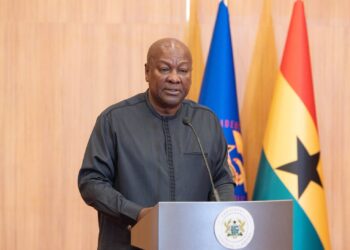
Governor of the Bank of Ghana, Dr. Johnson Asiama, disclosed the figures when he led a technical team from the central bank to brief Parliament’s Committee on Economy and Development in Accra on the institution’s detailed Monetary Policy Report.
The briefing offered insights into the financial costs associated with policy actions taken by the central bank to maintain stability in the banking system and the broader economy.
Liquidity Management Costs Rise
According to the Governor, the increase in spending was largely due to intensified operations aimed at absorbing excess liquidity in the banking sector.
He explained that the central bank often deploys financial instruments to temporarily hold funds from banks and other market participants. These operations require the payment of interest on the instruments used.
The Governor noted that the cost of these operations increased during the stabilisation period because interest rates remained elevated as part of broader efforts to bring inflation under control.
“When the central bank absorbs excess liquidity from the banking system, it pays interest on the instruments used to temporarily hold those funds as interest rates remained elevated during the stabilisation period.”
Dr. Johnson Asiama
He further explained that “intensified open market operations were required to absorb excess liquidity, resulting in higher interest expenses during the period of tight monetary policy.”
These measures were implemented as part of the central bank’s strategy to maintain financial discipline and stabilise the economy following periods of inflationary pressure and currency volatility.

Putting the Costs into Context
Despite the rising financial costs associated with liquidity management, Dr. Asiama urged policymakers and the public to understand the broader economic context.
During the engagement with the parliamentary committee, he emphasised that such expenses are not unusual for central banks that are pursuing macroeconomic stabilisation.
Dr. Asiama stressed that these financial outcomes should be interpreted within the broader framework of the benefits achieved through monetary policy interventions.
“Central banks often incur financial costs when implementing policies necessary to restore macroeconomic stability,” he disclosed.
He further explained that the financial results reflected in the Bank of Ghana’s accounts should be seen as the accounting reflection of successful policy actions.
“The financial effects that will be reflected in the bank’s accounts are the accounting counterpart of the stabilisation benefits now being realised across the Ghanaian economy.”
Benefits of Stabilisation Policies
According to the Governor, the policy measures undertaken by the central bank have already begun delivering significant economic benefits.
He pointed to improvements in key macroeconomic indicators such as inflation, exchange rate stability, and investor confidence as evidence that the stabilisation programme is yielding positive outcomes.
Dr. Asiama told members of the committee that these developments have had far-reaching benefits for households, businesses, and the government.
Lower inflation has helped ease the cost-of-living pressures faced by many Ghanaian households. Businesses have also benefited from improved macroeconomic predictability, while government finances have experienced some level of stability.
“These outcomes were achieved through policy actions that inevitably carry financial consequences for the central bank,” he added.
The Governor also assured lawmakers that the financial implications of these policy actions would not undermine the central bank’s core mandate.
Dr. Johnson Asiama assured members of the committee that “these financial outcomes do not affect the Bank of Ghana’s ability to conduct monetary policy or fulfil its mandate.”
Gold Purchase Programme and Associated Costs
The Governor also addressed the operational costs linked to the Bank of Ghana’s Domestic Gold Purchase Programme, which has become a key strategy in strengthening Ghana’s foreign reserve position.
He explained that the programme involves certain accounting and operational costs, particularly relating to exchange rate differentials.
According to Dr. Asiama, “Gold is purchased domestically at market exchange rates but recorded at the Bank of Ghana reference rate for accounting purposes, generating an accounting cost in the bank’s financial statements.”
The central bank also experienced valuation effects due to movements in the local currency.
Dr. Asiama explained that appreciation of the Ghana cedi in 2025 resulted in translation effects on the central bank’s foreign currency assets.
He noted that “when the domestic currency strengthens, the cedi value of foreign-denominated assets declines, and this translation effect appears in the bank’s accounts as an accounting valuation loss.”
Measures to Strengthen the Central Bank’s Finances
Despite the short-term financial costs associated with these stabilisation policies, the Governor indicated that the Bank of Ghana’s financial position is expected to improve gradually over the medium term.
One key factor expected to support this improvement is the repricing of the bank’s earning assets.
Dr. Asiama explained that as existing domestic securities and foreign reserve assets mature, they will be reinvested at prevailing market rates, which could enhance investment income.
“As domestic securities and foreign reserve assets mature and are replaced, they will be reinvested at prevailing market yields. This natural portfolio turnover will support a gradual recovery in investment income.”
Dr. Johnson Asiama
The central bank is also strengthening its reserve asset management practices to improve returns on investments.
According to Dr. Asiama, “Enhancements in reserve asset management are expected to support stronger investment income over time.”
He further indicated that the financial pressures linked to liquidity management operations are expected to ease as economic conditions stabilise.
“As inflation declines and policy interest rates gradually normalise, the interest expense associated with absorbing excess liquidity in the banking system will also decline naturally.”
Dr. Johnson Asiama
Government Partnership on Gold Programme
The Governor also revealed that the government has expressed its willingness to share part of the financial burden associated with the Domestic Gold Purchase Programme.
This collaboration reflects the growing national importance of the initiative, which has become a critical component of Ghana’s strategy for reserve accumulation and external stability.
With the programme evolving into a key national initiative, the partnership between government and the central bank is expected to strengthen its sustainability while supporting the country’s broader macroeconomic stability agenda.
READ ALSO: Strong Market Rally Defies Declining Trading Activity