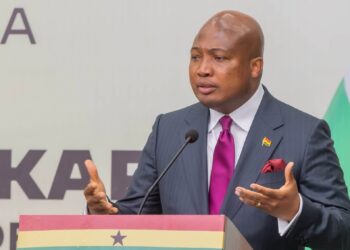
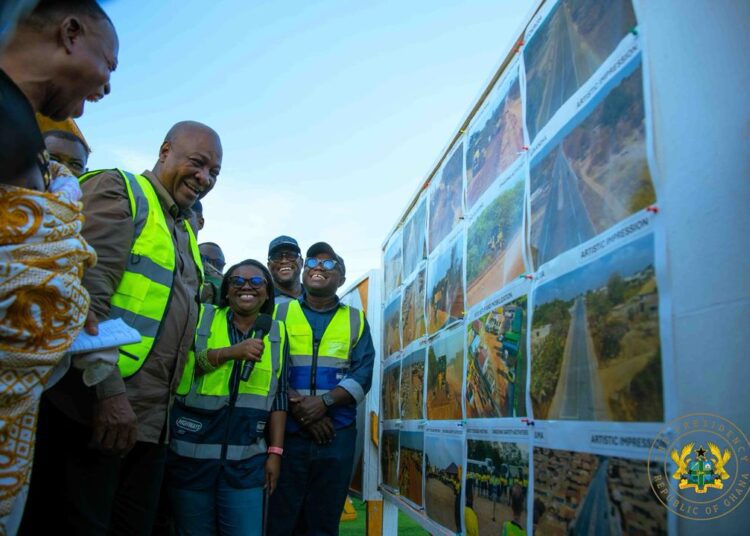
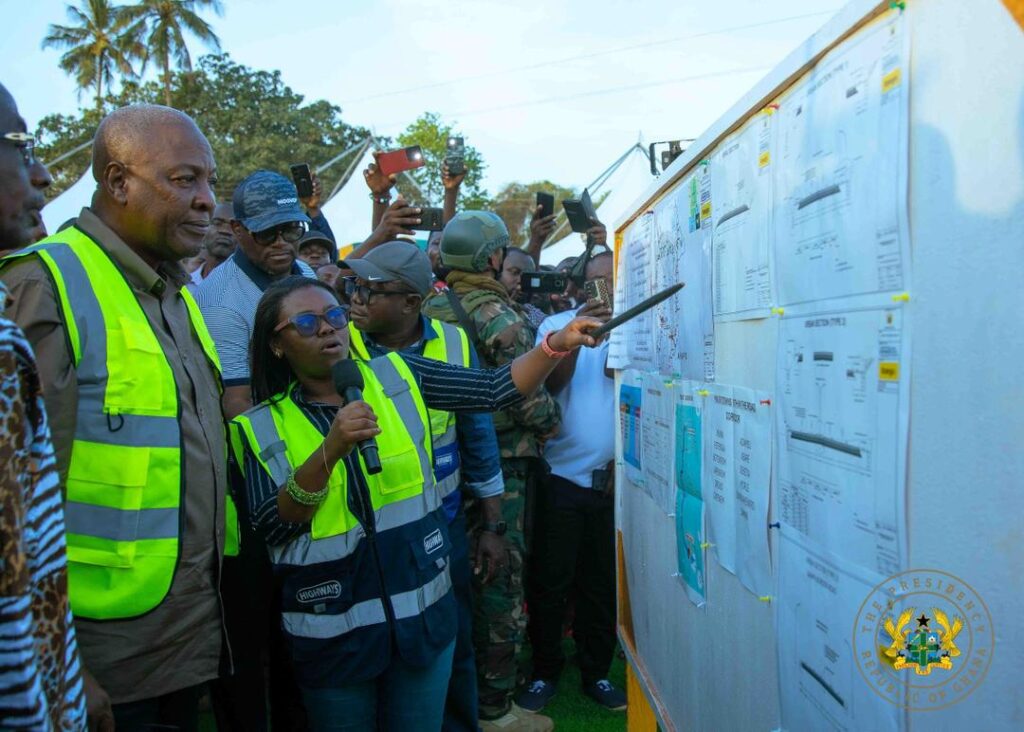
President John Dramani Mahama has inspected the 80-kilometre Jinijini–Sampa Road in the Bono Region as part of his ongoing “Resetting Ghana Tour.”
The nationwide tour, which took him to the Berekum West District, forms part of efforts to monitor infrastructure development and ensure projects are executed efficiently. During the inspection, the President engaged chiefs, community leaders, and residents to assess progress and gather feedback.
The road is a critical economic link connecting key agricultural communities and facilitating trade, including cross-border activity with Côte d’Ivoire. However, its poor condition in recent years has drawn repeated complaints from residents and commuters.
President Mahama used the occasion to emphasise the importance of quality road infrastructure in driving economic growth and improving livelihoods.
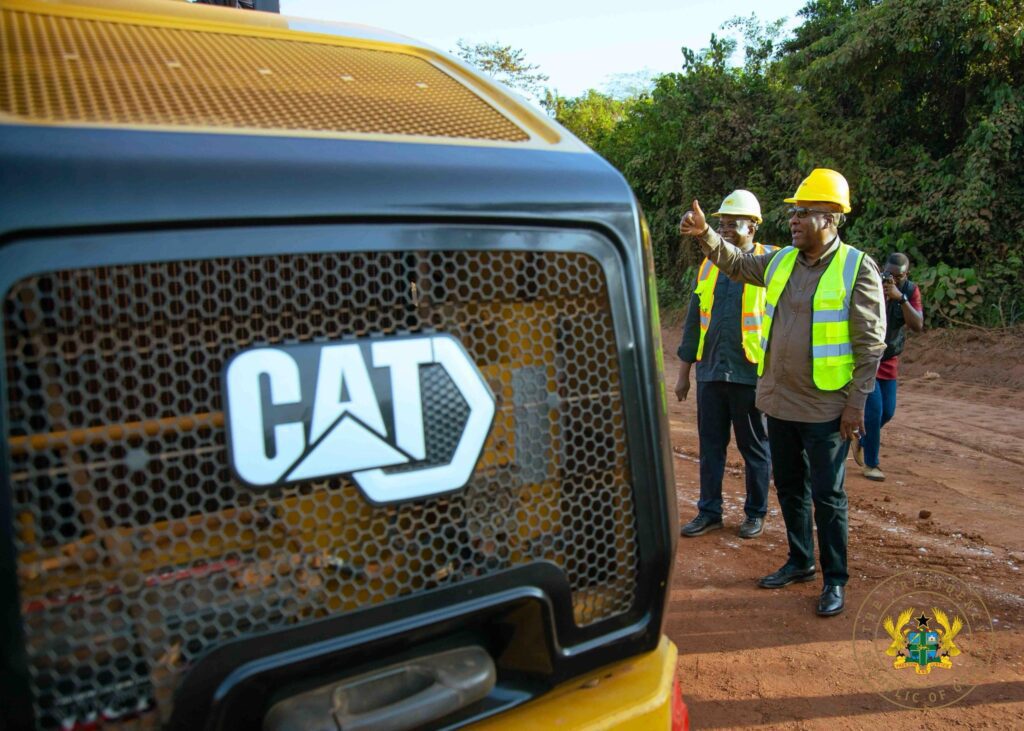
He noted that reliable roads are essential for transporting goods, reducing travel time, and opening up rural communities for business opportunities. The inspection aligns with his broader infrastructure agenda under initiatives aimed at improving connectivity nationwide.
Previous commitments under the government’s road development programmes have highlighted the Jinijini–Sampa stretch as a key route for boosting regional economic activity.
Persistent Challenges and Public Concern
Despite its importance, the road has faced longstanding challenges, including delays in construction and deteriorating conditions. Residents have previously described the stretch as dusty, rough, and difficult to navigate, with stalled works worsening the situation for commuters and traders.
These concerns continue to shape public expectations, with many hoping that renewed government attention will lead to lasting improvements.
Following the President’s visit, reactions from Ghanaians on social media over a post from the Jubilee House reveal deep frustration over the quality of infrastructure delivery across the country.

Some commentators pointed to similar projects elsewhere, questioning whether new roads are being constructed to acceptable standards. “Someone should be sent to inspect the road in and around Madina, Libya Quarters. Just a week after it was done, the road had started ‘melting away’. Taxpayers’ money… and I don’t know who was contracted to do this but… he did the worst of it.”
Others echoed concerns about the misuse of public funds and poor supervision of contractors, suggesting that the problem goes beyond a single project.
Public Reactions Diverts to Politics
The discussion quickly took on a political tone, reflecting Ghana’s often polarised public discourse. Some commenters expressed support for President Mahama, while others used the moment to criticise opposing political groups or past administrations.
One netizen said, “The men we willingly voted for… NPP never again,” adding “Mahama is the hope for mother Ghana 🇬🇭.” At the same time, a number of voices remained cautious, urging the government to move beyond rhetoric and deliver tangible results.
Beyond political sentiments, a strong demand for accountability and quality infrastructure stood out across the reactions. Many citizens emphasised that roads must be built to last, rather than deteriorating shortly after completion.
“Let’s do a quality road. You see road infrastructure works in some African countries and you ask what level of attention goes into our effort of development.” Others called for a shift in how infrastructure issues are handled, stressing the need for proactive planning rather than reactive interventions.
“Our roads shouldn’t get attention only when people’s mothers die. Thank you.” These sentiments reflect a broader public desire for consistent investment in infrastructure that directly improves daily life.
A Test for the “Resetting Ghana” Agenda
The President’s inspection forms part of a wider effort to ensure that development projects meet expected standards and address the needs of communities. However, the mixed reactions highlight a critical challenge: restoring public confidence in road construction and maintenance.
For many Ghanaians, the success of the “Resetting Ghana Tour” will not be measured by inspections alone, but by visible, lasting improvements on the ground. As the tour continues, expectations remain high, with citizens calling for a renewed focus on quality, accountability, and value for money in infrastructure delivery.
READ ALSO: Ewoyaa Lithium Projected to Hold 36.8m metric tons of Lithium