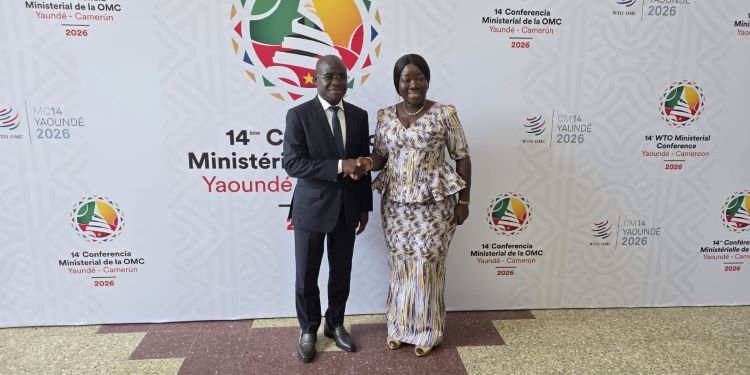
The West African trade landscape is undergoing realignment as Ghana and Côte d’Ivoire move to institutionalize their economic cooperation on the sidelines of the 14th World Trade Organization (WTO) Ministerial Conference (MC14) in Yaoundé, Cameroon.
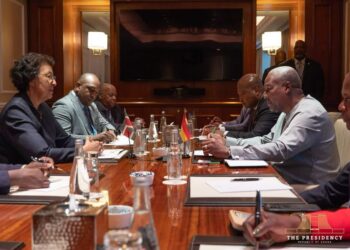
Ghana’s Minister for Trade, Agribusiness and Industry, Hon. Elizabeth Ofosu-Adjare, convened a high-level bilateral session with her Ivorian counterpart, Hon. Ibrahim Kalil Konaté where discussion moved from fraternal rhetoric to a structured, technical crackdown on the inefficiencies that have long plagued the shared borders of the two largest economies in the Abidjan-Lagos Corridor.
“Hon. Ofosu-Adjare emphasized Ghana’s readiness to collaborate closely with Côte d’Ivoire to strengthen compliance with trade regulations at shared borders, particularly in relation to the payment of duties, taxes, and other statutory charges.
“She further highlighted the importance of addressing broader trade facilitation challenges affecting border operations between the two countries”
Ministry of Trade, Agribusiness and Industry
For years, the informal nature of cross-border trade between Ghana and Côte d’Ivoire has led to significant leakages in the collection of duties, taxes, and other statutory charges, and the Minister’s address to the Ivorian delegation signaled that Ghana is no longer willing to tolerate these fiscal gaps.
According to the Ministry of Trade, Agribusiness and Industry (MoTAI), the strategy is clear: syncing the customs and tax protocols of both nations will birth a transparent trade floor where every crate of goods is accounted for, and every cedi or CFA franc in tax is collected – revenue mobilization through strict compliance with trade regulations.
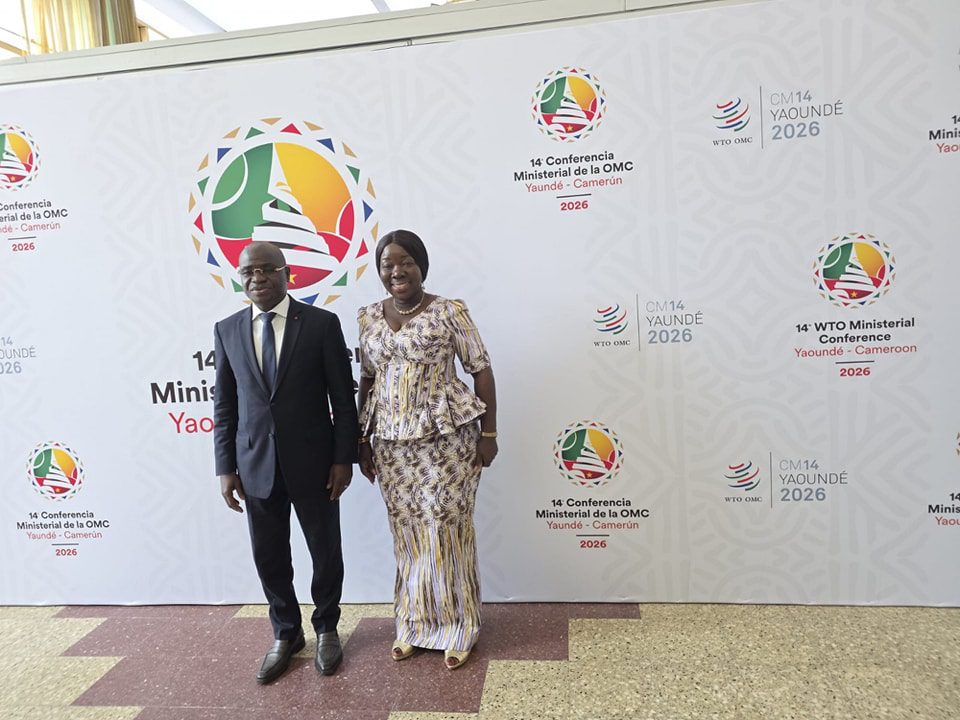
What differentiates this meeting from previous diplomatic overtures is the formalization of a technical delegation model, with Minister Konaté of Côte d’Ivoire noting that sustainable solutions to border congestion and smuggling cannot be solved through political declarations alone.
Instead, both nations have agreed to move the “heavy lifting,” to a technical process involving relevant institutions such as standards boards, food and drugs authorities, and transport regulators. MoTAI noted that Ghana is already in the process of constituting this delegation, which will lead follow-up discussions to finalize the operational rules of the border.
This move is a direct response to the “friction,” that currently slows down the movement of agribusiness products and manufactured goods. The goal is to harmonize the documentation required for transit by involving technical experts.
If a Ghanaian manufacturer has cleared a product with the Ghana Standards Authority, the new framework seeks to ensure that the Ivorian authorities recognize that certification without redundant inspections.
This mutual recognition is part of the African Continental Free Trade Area (AfCFTA), and the Ghana-Ivorian pact is being positioned as a regional pilot for a larger pan-African ambition.
Economic Diplomacy
The timing of this meeting in Yaoundé was strategic. As the global trade community debated the future of multilateralism at MC14, Ghana used the sideline stage to fortify its regional position. Hon. Ofosu-Adjare’s active economic diplomacy is not just about neighborly relations; it is about securing Ghana’s role as the commercial hub of West Africa.
With the $400 million tomato trade crisis involving Burkina Faso still fresh, the pivot to Côte d’Ivoire suggests a broader strategy to diversify trade routes and secure alternative supply chains for the agribusiness sector.

For Ghana, aligning with Côte d’Ivoire provides a stable trade bloc in the heart of ECOWAS, as the two countries together represent a massive percentage of the region’s GDP and agricultural output.
Fixing the border between them sends a powerful signal to international investors that the Abidjan-Lagos Corridor is becoming a more predictable and efficient environment for capital, with the fraternal relations now being backed by a structured technical process designed to turn trade potential into verifiable revenue.
In the 2026 fiscal environment, where both nations are under pressure to improve domestic revenue mobilization, the border represents a significant opportunity, and coordinating on the payment of duties will make it harder for smugglers to exploit grey areas between the two jurisdictions.
This coordinated enforcement is expected to provide a significant boost to the national treasuries of both countries while simultaneously leveling the playing field for legitimate businesses that pay their taxes.
Furthermore, this bilateral engagement reflects the operational reality of the AfCFTA, because while the continental agreement provides the legal framework, it is the technical work at shared borders – like those between Elubo and Noé – that actually makes trade happen.
MoTAI noted that the outcomes of this WTO sideline meeting are expected to pave the way for a more “coordinated and institutionalised,” cooperation, meaning that instead of ad-hoc meetings during crises, there will be a permanent channel of communication between the trade ministries of both nations to resolve disputes in real-time.
As the Ghanaian delegation prepares to formally communicate the dates for the initial technical meeting, the roadmap for 2026 is becoming clear. The government is moving away from broad trade ideals and toward a results-centred approach to border management.
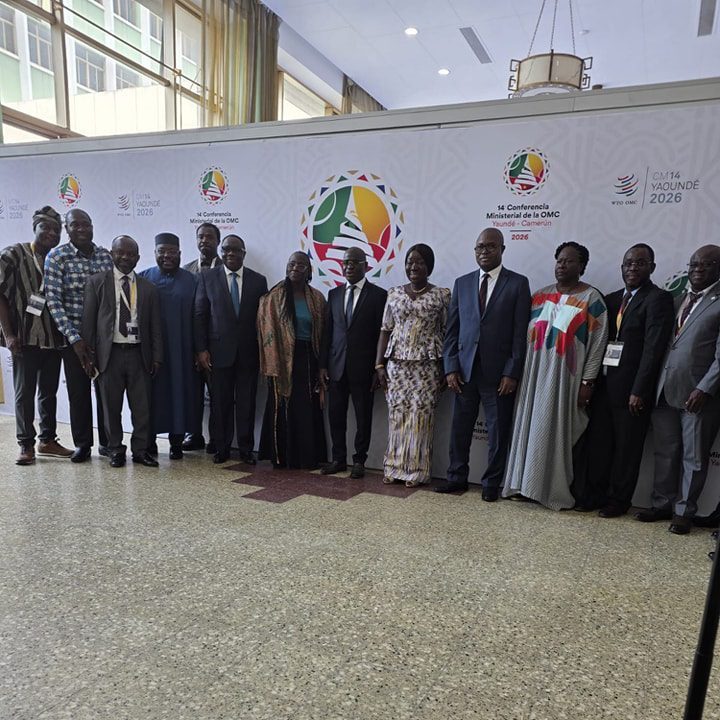
The focus on compliance, technical institutional involvement, and revenue mobilization suggests that the Ministry of Trade, Agribusiness and Industry is taking a practical view of the economy – one where efficiency is the primary driver of growth.
READ ALSO: UK Invests £4.5 million to Boost Global Tech Leadership