
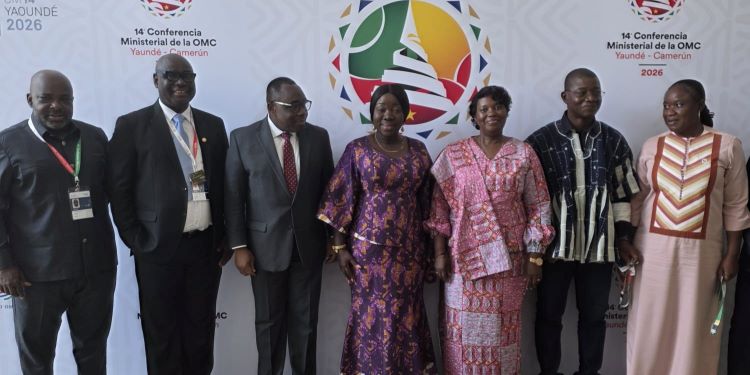
Amid the high-stakes negotiations of the 14th World Trade Organization (WTO) Ministerial Conference (MC14) in Yaoundé, Cameroon, a critical bilateral crisis has taken center stage between Ghana and Burkina Faso to address a shift in trade policy that threatens the stability of West African food markets.
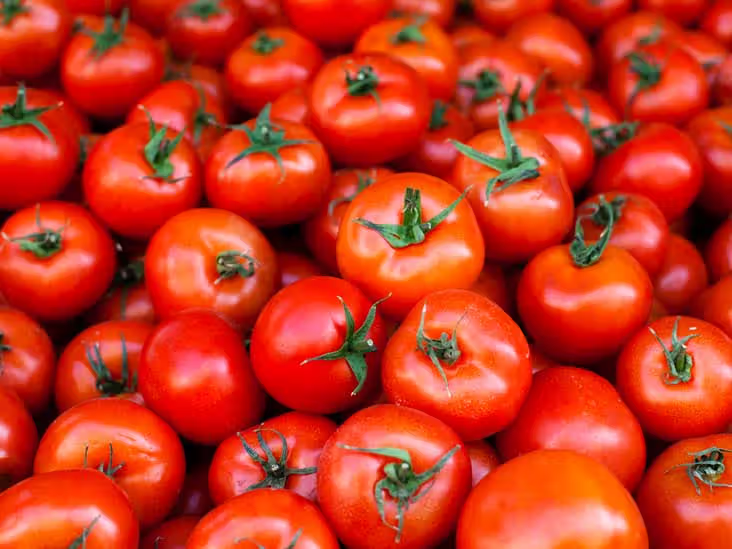
The Hon. Elizabeth Ofosu-Adjare, Ghana’s Minister for Trade, Agribusiness and Industry, held an urgent session with the Burkinabè delegation over Burkina Faso’s recent decision to impose an indefinite suspension on fresh tomato exports – a move that directly impacts Ghana’s national food security and a trade pipeline valued at hundreds of millions of dollars.
According to the Ministry of Trade, Agribusiness and Industry (MoTAI), the meeting, attended by the leadership of Ghana’s Parliamentary Select Committee on Trade and Tourism, underscored the fragility of interdependence between the two neighbors and the urgent need for a “mutually beneficial resolution,” to a growing supply chain bottleneck.
“The Minister observed that Ghana sources approximately 70 – 80% of its tomatoes from Burkina Faso, with an annual import value of roughly $400 million. She acknowledged the significant challenges this policy poses to Ghana’s tomato supply chain and called for a mutually beneficial resolution that addresses the concerns of both countries”
Ministry of Trade, Agribusiness and Industry
For Ghana, the suspension of tomato exports is not a peripheral trade issue; it is a structural emergency. The sudden withdrawal of this supply creates an immediate price volatility risk in Ghanaian markets and poses a significant challenge to the domestic tomato supply chain.

Hon. Ofosu-Adjare acknowledged the severity of these challenges while maintaining a tone of fraternal diplomacy, seeking to balance Ghana’s immediate needs with Burkina Faso’s sovereign industrial goals. However, the justification provided by the Burkinabè delegation highlighted a broader trend across the continent: the move toward domestic value addition.
The Ambassador of Burkina Faso explained that the export suspension is a strategic measure intended to guarantee a consistent supply of raw materials for the country’s newly established tomato processing factories.
This represents a pivot away from being a mere exporter of primary commodities toward becoming an industrial processor. For Burkina Faso, keeping the tomatoes within its borders is a matter of national industrialization, ensuring that the value-added benefits – such as jobs in canning and processing – remain local.
This strategic protectionism presents a classic trade dilemma within the African Continental Free Trade Area (AfCFTA) framework. While Burkina Faso seeks to build its industrial base, Ghana must find a way to bridge a $400 million gap in its food supply.
MoTAI noted that Hon. Ofosu-Adjare’s response was not merely to protest the ban but to propose a knowledge exchange.
She expressed Ghana’s interest in adopting Burkina Faso’s good agricultural practices in tomato and onion production, as learning from the Burkinabè expertise will boost Ghana’s own domestic production, eventually reducing the extreme dependency that has left its markets vulnerable to such policy shifts.
Insecurity and Trade Risks
Beyond the policy-driven suspension, the bilateral talks addressed the deteriorating “security situation,” in parts of Burkina Faso, where recent insurgencies and regional instability have disrupted the traditional routes used by Ghanaian traders.
The Minister stressed that trade volumes cannot be sustained – let alone enhanced – if the safety of traders is compromised and called for “joint measures to secure the corridors of commerce,” emphasizing that the economic health of both nations is inextricably linked to the physical security of the border regions.
This focus on trader security is a recognition that commerce in West Africa is often a grassroots endeavor, driven by thousands of small-scale operators who move goods across borders daily. When insecurity rises, the cost of doing business skyrockets due to increased insurance risks, transport delays, and the threat of physical harm.
The commitment from both delegations to deepen collaboration in market access and trader security suggests that a coordinated military or paramilitary presence may be necessary to safeguard the vital trade artery that connects the two nations.
Furthermore, to move the relationship beyond a one-sided agricultural dependency, Hon. Ofosu-Adjare introduced a reciprocal trade initiative. She invited the Burkinabè side to provide a list of their Top Ten Imports, offering Ghanaian businesses the opportunity to supply these products competitively.
This was a tactical attempt to diversify the bilateral relationship. If Ghanaian manufacturers can fill the gaps in Burkina Faso’s import needs – whether in processed foods, light machinery, or textiles – it creates a more “balanced trade ledger,” that gives Ghana more leverage in future negotiations regarding agricultural bans.
The Minister also announced a planned trade mission, inviting 20 to 50 Burkinabè business operators to Ghana in the coming months for a Business-to-Business (B2B) engagement, intended to foster partnerships that could bypass state-level restrictions.

“Both delegations reaffirmed the strength and resilience of the bilateral relationship between Ghana and Burkina Faso. They recognized the value of sustained and constructive dialogue in addressing emerging challenges”
Ministry of Trade, Agribusiness and Industry
The bilateral meeting between Hon. Elizabeth Ofosu-Adjare and the Burkinabè delegation laid the groundwork for a strategic de-escalation of the tomato trade dispute. While the export suspension remains in place, the opening of dialogue on “reciprocal imports,” and “trader security,” provides a pathway toward a more stable economic partnership.
READ ALSO: MIIF Boss Outlines 2026 Returns Target, Benchmarked 2025 Achievement