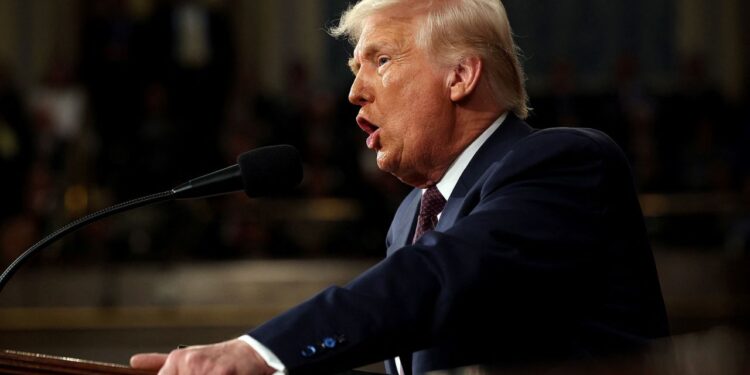
Norway has pushed back against criticism from US President Donald Trump over what he described as “zero” European support in the conflict with Iran.
Norway’s Foreign Affairs Minister Espen Barth Eide asserted that Europe is doing its part in the Strait of Hormuz but argued that NATO is not involved in the conflict in Iran.
Speaking with a news agency, the Norwegian Foreign Minister asserted that NATO is a defensive alliance. “It is not an attack alliance,” he added.

Eide said that NATO members are focused on safeguarding key global trade routes, including keeping the Strait of Hormuz open. “NATO countries are doing something, but it’s not as a party to a conflict,” he added.
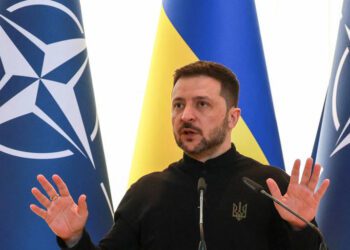
Trump has repeatedly criticised NATO allies for not backing Washington in the Iran conflict. He raised the issue again during a White House meeting earlier this month with NATO Secretary General, Mark Rutte.
Eide argued that there had been no prior preparation or consensus within the alliance, adding that as a result, there is “very limited appetite” among member states to join the war.
He said that while both the US and Iran may have reasons to end the conflict, “the sides are far apart”, with negotiations hindered by opposing demands. On Monday, Trump said that the United States would maintain its blockade of Iranian ports until Tehran agrees to a peace deal. Still, Eide pointed to signs of “some progress,” noting the broader global impact of the conflict. “This is not only an issue for the two sides, but it affects the whole world economy,” he said.
Norway Iterates Support For Two-state Solution
Addressing a European diplomatic push to establish a Palestinian state, Eide reiterated support for a two-state solution based on long-standing United Nations principles. However, he acknowledged that such an outcome is “not around the corner.”
He added that a two-state solution is also in Israel’s interest, describing it as “the only viable solution for real peace in a very troubled region.” Norway, alongside Spain and Ireland, recognised the State of Palestine in 2024.
Yesterday, Eide noted in a post on X that the European Union is a vital actor in support of the Palestinian government and the two-state solution, which is necessary to achieve regional peace and security. “Glad to work with co-chair Kaja Kallas in Brussels on long-term support for Palestine at today’s AHLC meeting,” he added.
He made the post as Europe turned its attention to the Palestinians yesterday as the election defeat of Israel ally Victor Orban in Hungary gives new momentum to efforts addressing Gaza and the occupied West Bank. More than 60 nations sent representatives to Brussels for talks with Palestinian representatives on stability, security and long-term peace.
The European Union has largely been on the sidelines in the Middle East despite being the biggest provider of aid to the Palestinians and backing a two-state solution to the Israeli-Palestinian conflict.
A majority of EU member countries now recognize an independent Palestinian state after many expressed outrage over Israeli actions in Gaza. The 27-nation bloc is also Israel’s top trading partner and a major buyer of Israeli weapons.
The Spanish Prime Minister wants the EU to suspend its long-standing Association Agreement with Israel and has said Spain will make a formal proposal at an EU Foreign Ministers’ meeting on Tuesday.
Other action, such as targeted sanctions on Israeli settlers in the West Bank, could be approved if a “qualified majority;” 15 of the 27 nations representing at least 65% of the EU’s population, agree.
On his part, Palestinian Prime Minister Mohamed Mustafa said in Brussels that Gaza requires “one state, one government, one law and one goal.”
“Our common objective of achieving one security structure under the legitimate authority should guide the effective coordination between the International Stabilization Force, the Palestinian Authority, security institutions and other international actors. Security must not be fragmented.”
Mohamed Mustafa
He also called for “the gradual and responsible collection of arms from all armed groups and also the full Israeli withdrawal from Gaza.” The disarmament of Hamas is a major challenge in next steps for the ceasefire in Gaza.
The EU has avoided directly joining the Board of Peace created by the Trump administration to tackle Gaza, preferring the multilateralism of the United Nations and global legal norms.
READ ALSO: ECG MD Apologizes for Recent Power Fluctuations, Pledges Urgent Reforms