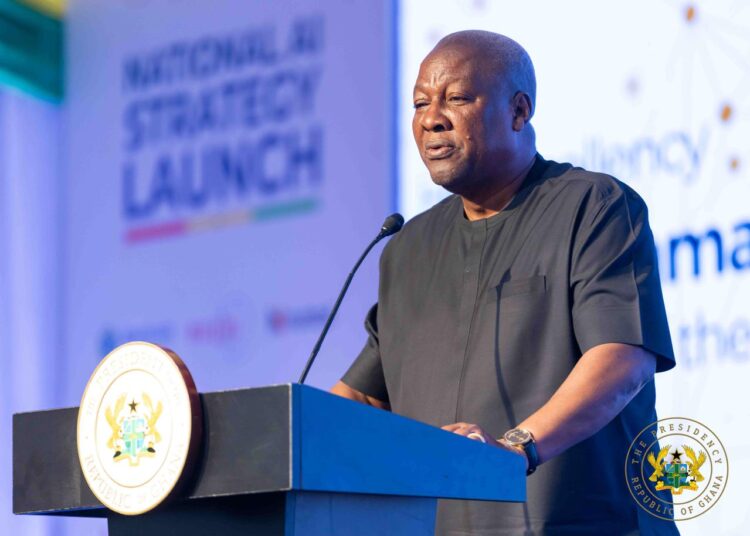
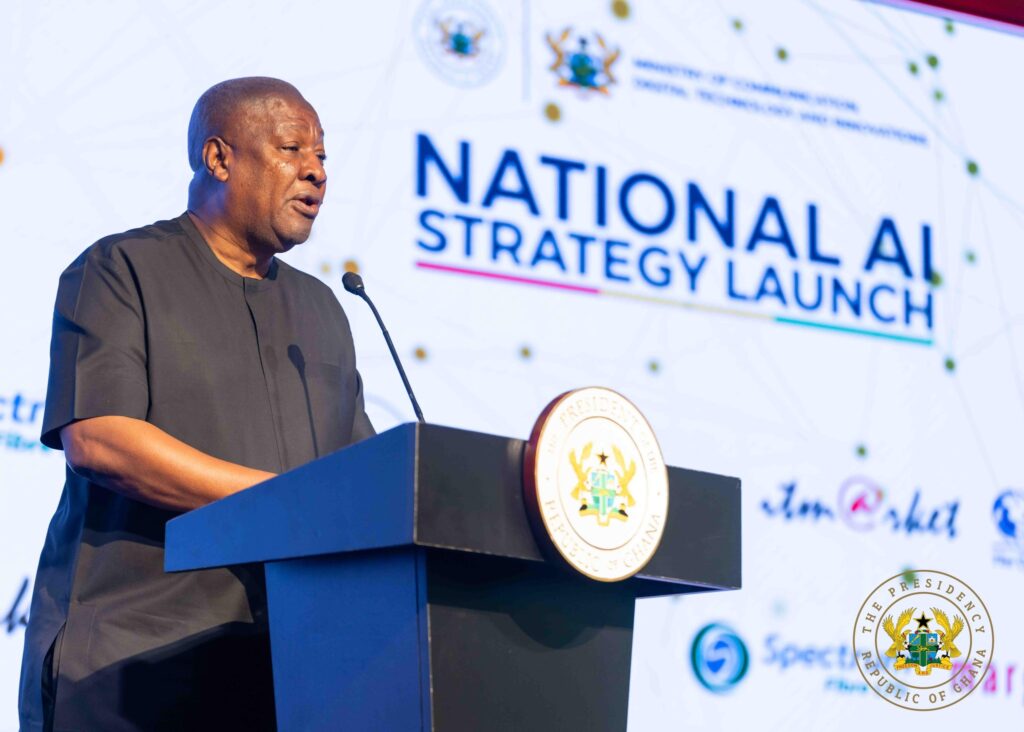
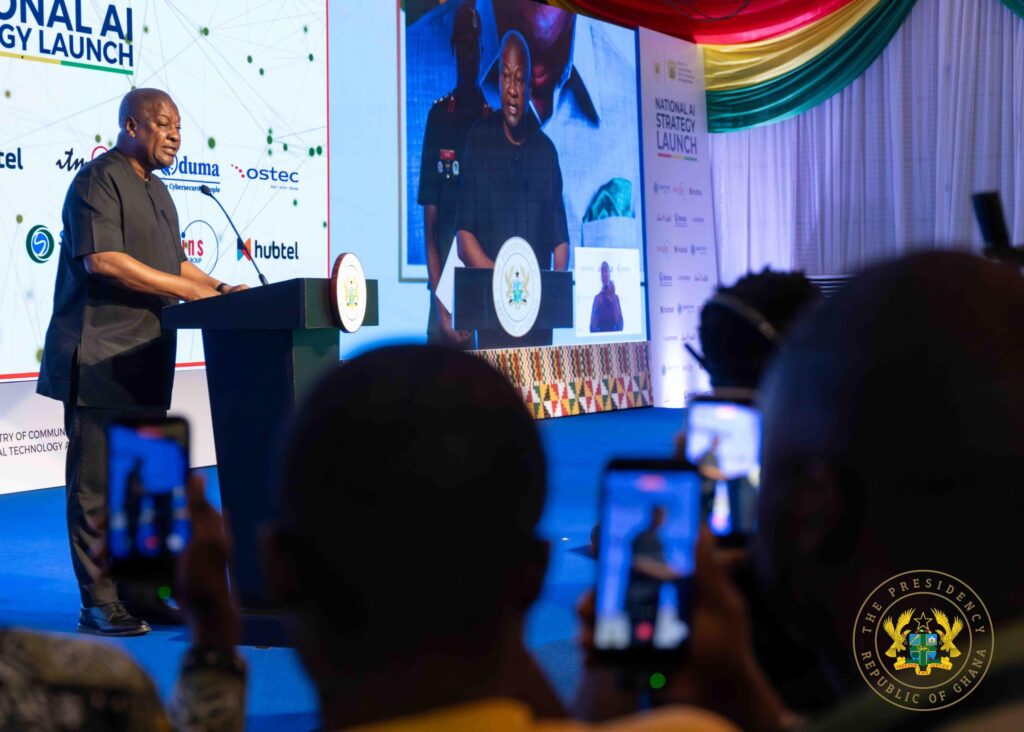
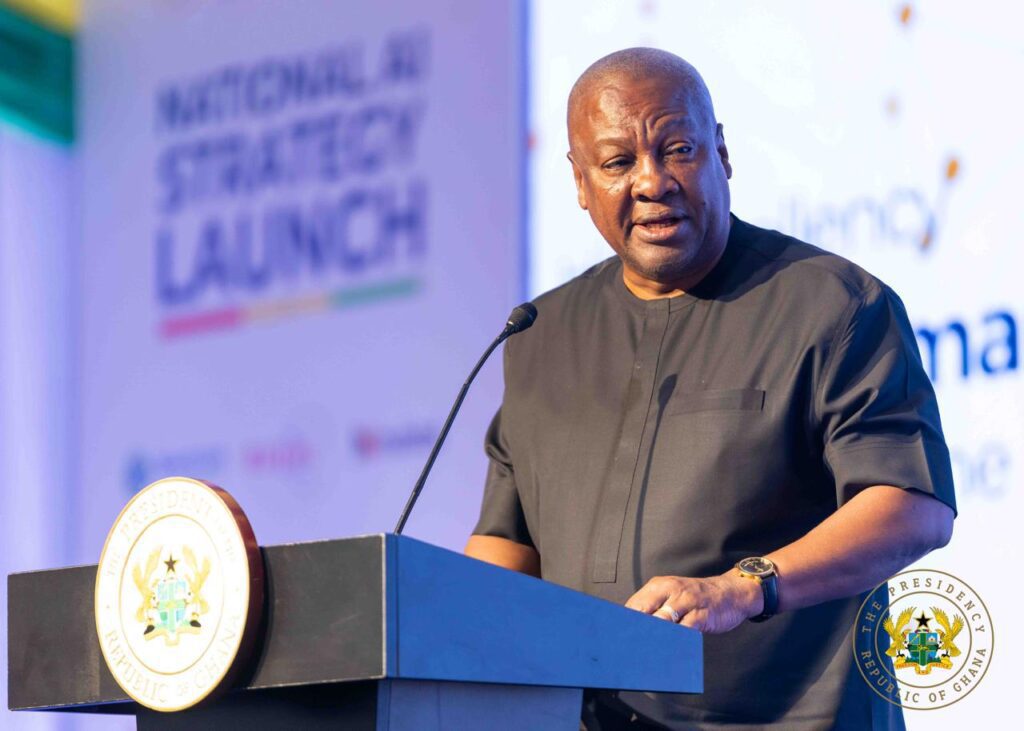
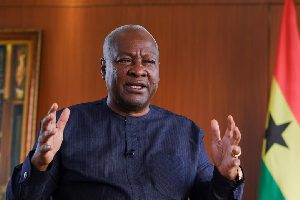
Speaking at the launch of the Artificial Intelligence Strategy, the President emphasised that the nation had transitioned from being a passive consumer of technology to an active participant in designing and governing digital tools for national transformation.
President Mahama noted that earlier global discussions focused on the risks of automation, whereas current trends prioritise the ethical and productive use of innovation for the common good.
Leadership remained a central theme. The President explained his recent decision to enroll ministers and senior government officials in a National AI Bootcamp. He said leaders needed a clear understanding of the tools shaping the future to ensure effective governance and accountability.
He also introduced Key Performance Indicators across all government agencies to track how new technologies are being integrated into public service. He maintained that transformation must be measurable and results oriented to deliver tangible benefits to citizens.
ADVERTISEMENT
President John Dramani Mahama
Ghana’s agriculture and healthcare sectors have already begun to experience change through precision farming and faster diagnosis supported by intelligent systems. The President highlighted AI as a practical development tool that is improving disease surveillance and financial management across the country.
Strategic institutional deployment featured prominently in the 2026 budget, with emphasis on strengthening domestic revenue mobilisation through the Ghana Revenue Authority. These AI-driven systems reduce errors and detect revenue leakages, supporting a more transparent and efficient public administration.
President Mahama expressed confidence in Ghana’s youthful population as a key national advantage in the digital era. He argued that youthful energy must be matched with structured opportunities through education and workforce development to address national challenges effectively.
He continued his address by announcing the launch of the One Million Coders Programme by the Government to equip young people with the technical skills required to develop and manage AI applications. The initiative is designed to build a strong talent pipeline that positions Ghana competitively within the global digital economy.
“The pilot phase of the One Million Coders Programme, conducted last year, enabled the Ministry to assess readiness for a nationwide rollout. The portal is now open, and more than 100,000 applications have already been processed. Citizens can now register for more than 15 courses across 10 disciplines at learning centres close to their homes.”
His excellency, John Dramani Mahama
President Mahama addressed concerns about job security and the potential displacement of workers by machines. He assured that government would invest in upskilling public sector workers to help them adapt and thrive in a period of technological change.
ADVERTISEMENT
President John Dramani Mahama
He added that a human-centred approach would preserve the role of people while improving efficiency across industries. He reiterated that the 2025–2035 strategy represents an important step toward a digitally empowered and globally competitive nation.
Ghana Aims To Become Regional Artificial Intelligence Hub
President John Dramani Mahama outlined his vision to position Ghana as the leading artificial intelligence hub in West Africa and across the continent. He said this ambition would drive innovation, create sustainable jobs, and strengthen national institutions through advanced technological integration.
The President shared light-hearted examples involving digital avatars to illustrate the growing impact of technology on human interaction and professional identity. He noted that the ability of AI systems, such as Aku, to understand Ghanaian languages reflects the rapid advancement of linguistic capabilities in modern software.
ADVERTISEMENT
Public service delivery is already improving through automation and more efficient decision-making, as government shifts from experimental use of technology to practical application. The President stressed that the administration remains committed to ensuring AI is deployed in line with national values and priorities.
The Ghana Revenue Authority is using intelligent systems to reduce processing times and improve taxpayer compliance. These improvements are helping the state streamline operations and support evidence-based policymaking.
“For example, the Ghana Revenue Authority is currently deploying AI-driven systems to reduce processing times, minimise errors, identify revenue leakages, and improve tax compliance, thereby strengthening domestic revenue mobilisation.
President John Dramani Mahama
“This is only the beginning. Across government, AI is expected to streamline operations, enhance responsiveness, and support evidence-based policymaking. If applied effectively, it will enable the delivery of public services that are faster, more transparent, more efficient, and more centred on citizens’ needs.”
His Excellency, John Dramani Mahama
His Excellency Mahama also emphasised the importance of using domestic data to train AI systems so they represent Ghana’s cultural and linguistic diversity. He observed that many global systems are built on foreign assumptions that often fail to capture local realities accurately.
The One Million Coders Programme has also established learning centres closer to communities to improve access to digital education. This decentralised approach ensures that the benefits of digital transformation are more widely distributed.
The President also stressed the need to prepare the workforce for technological change. He stated that government is focused on building resilience. This is not to allow citizens to be overwhelmed by disruption.