Minister of Energy and Green Transition, Hon. John Jinapor, has described the Sentuo Oil Refinery as a vital, pivotal player that is now anchoring Ghana’s downstream petroleum industry.
This ministerial designation underscores the private facility’s strategic importance in reshaping the country’s energy matrix and its central role in the state’s broader agenda to maximize domestic fuel security.
“Sentuo Oil Refinery has become a key player in Ghana’s downstream petroleum industry. At the same time, the Tema Oil Refinery is currently refining, following the receipt of one million barrels of crude oil, further enhancing the country’s refining capabilities and reducing reliance on imported fuel products.”
Minister of Energy and Green Transition, Hon. John Jinapor
The strategic allocation of one million barrels of crude oil to the facility reflects the government’s firm commitment to adding value to natural resources locally while strengthening national energy security.
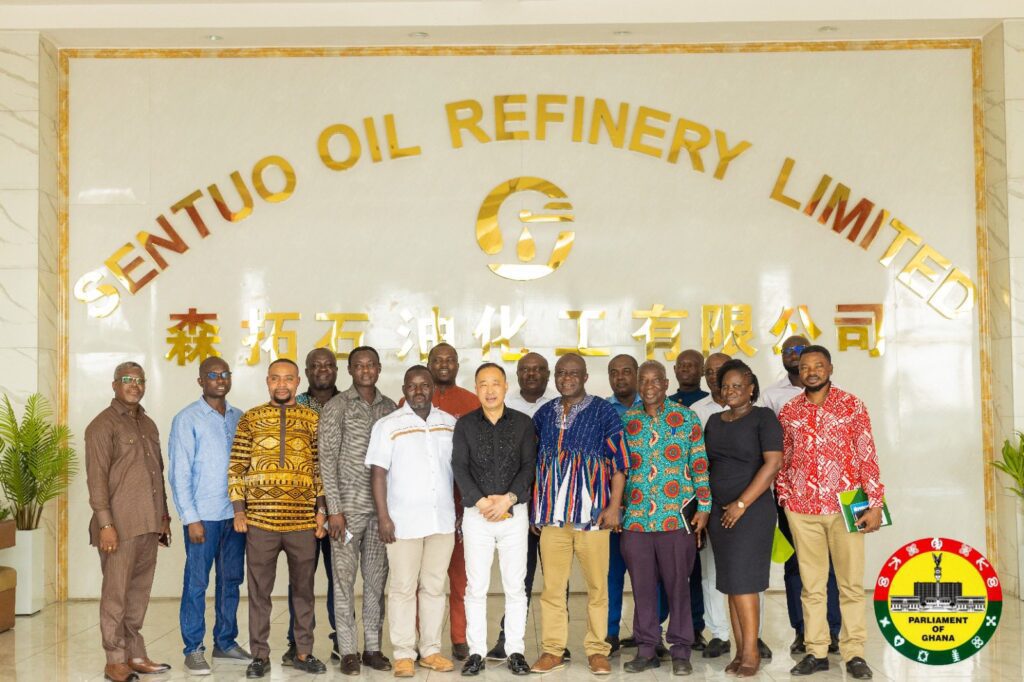
By processing its oil within domestic borders, Ghana is taking definitive steps toward retaining substantial economic benefits, safeguarding the local currency, and cutting down on the expensive premiums associated with importing finished fuel products.
This integration of upstream production with local refining capacity is a direct continuation of successful industrial milestones, notably the 2016 supply of Ghanaian crude oil from the TEN Fields to the Tema Oil Refinery (TOR).
This operational framework is being successfully replicated at a higher scale; as Sentuo Oil Refinery cements its role as a pivotal player in the downstream market, the state-owned Tema Oil Refinery is simultaneously refining a newly received one million barrels of crude oil, creating a robust domestic network that steadily curtails the country’s dependency on foreign fuel.
Integrating Upstream Production with Local Refining Capacity
The successful delivery of Jubilee crude oil represents the culmination of intense collaborative efforts between the government, regulatory bodies, and upstream petroleum partners, including the Ghana National Petroleum Corporation (GNPC) and international oil companies.
Historically, Ghana has operated under an unsustainable economic model, exporting raw crude oil while spending billions of foreign exchange to import refined petroleum products.

By establishing a reliable pipeline from the Jubilee fields directly to domestic processing plants, the Ministry of Energy and Green Transition is structurally resolving this disparity.
This milestone acts as a critical buffer against global energy volatility. With international supply chains increasingly disrupted by geopolitical tensions, securing a domestic supply of refined products ensures that Ghanaian transport networks, households, and manufacturing industries remain insulated from external price shocks.
The alignment of upstream extraction with downstream refining capabilities establishes a self-sustaining cycle where the wealth generated from Ghana’s waters directly fuels domestic industrialization.
Sentuo’s Expanding Footprint in Ghana’s Energy Landscape
Sentuo Oil Refinery has rapidly evolved into the cornerstone of Ghana’s downstream petroleum infrastructure.
Built through a private investment of nearly $2 billion under industrialization frameworks, the refinery offers an advanced technical ecosystem.
The facility currently processes a substantial volume of medium to heavy crude oil assays, producing essential sub-products such as high-grade gasoline, gasoil (diesel), liquefied petroleum gas (LPG), and asphalt, which directly support the nation’s ongoing infrastructure projects.
Equipped with modern hydrocracker technology across its expansive 100-acre complex in the Tema Industrial Park, Sentuo is structurally built for scalable growth.
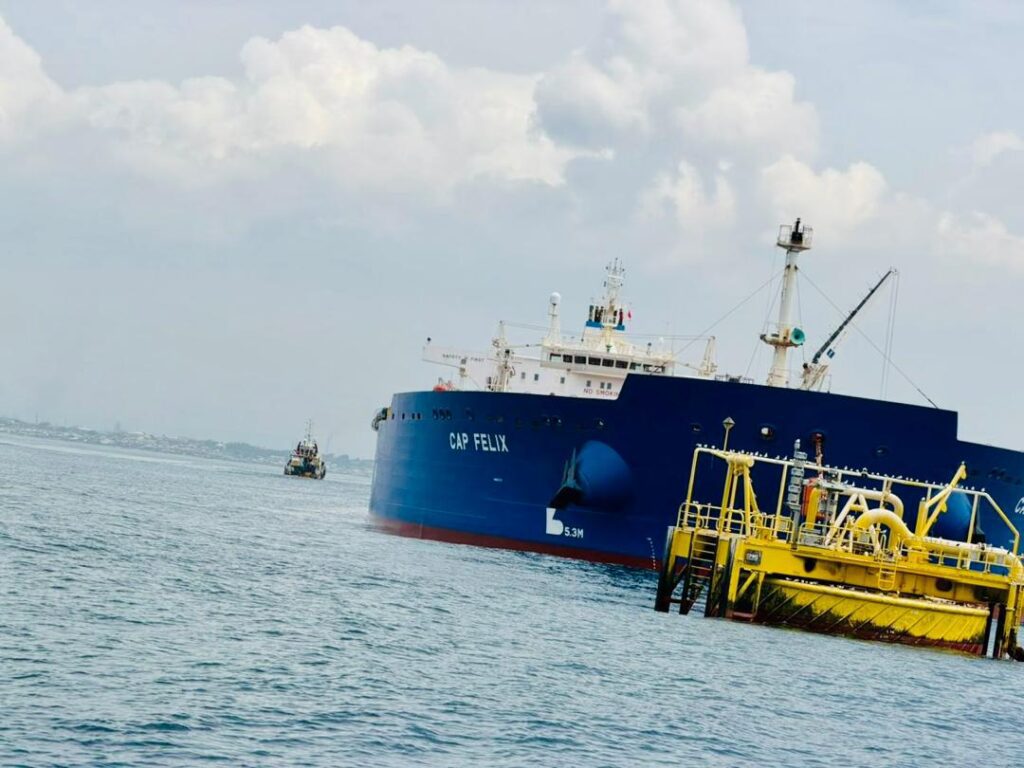
The refinery currently operates its initial 40,000 barrels per stream day phase, but plans are already underway for a massive Phase Two expansion.
This upcoming expansion will scale total production capacity up to 100,000 barrels per day, a volume that will effectively satisfy a vast portion of Ghana’s domestic fuel consumption and dramatically alter the market dynamics of the West African sub-region.
Transforming Ghana into a Regional Petroleum Hub
The long-term strategy of the Ministry of Energy and Green Transition extends beyond achieving domestic self-sufficiency; the ultimate goal is to transform Ghana into a net exporter of refined petroleum products.
The dual operation of a fully functional Sentuo Oil Refinery alongside a revitalized Tema Oil Refinery positions the country to dominate the West African energy market.

By supplying surplus refined fuel to neighboring landlocked nations, Ghana is poised to generate substantial foreign exchange reserves.
Furthermore, the domestic processing of crude oil acts as an economic catalyst, unlocking secondary industries such as petrochemical engineering, localized fertilizer manufacturing, and specialized logistics.
Every barrel of Jubilee crude refined at the Tema industrial hub creates direct employment opportunities, drives technology transfer, and enhances local technical expertise.
This successful collaboration between government stakeholders and private industrial giants serves as a definitive blueprint for Africa’s broader resource-driven economic transformation.
READ ALSO: Ghana and Norway Conclude Seven-Year ‘Fish for Development’ Programme