UK Armed Forces have boarded a Russian-linked shadow fleet oil tanker in the English Channel in what the government has described as a landmark operation aimed at disrupting Moscow’s efforts to evade international sanctions and finance its war in Ukraine.
The operation marked the first time Britain have boarded a sanctioned vessel linked to Russia’s shadow fleet while it was transiting through UK waters.
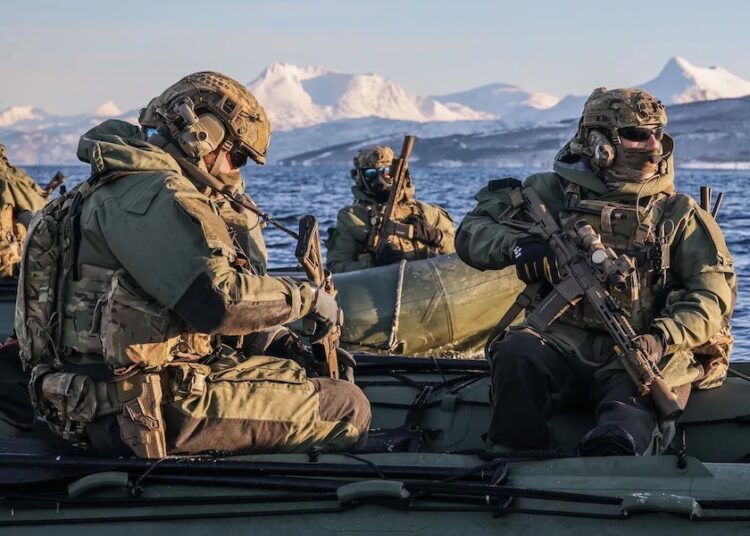
The six-hour mission involved Royal Marine Commandos, specialist officers from the National Crime Agency (NCA), Royal Air Force aircraft and Royal Navy vessels working in close coordination to intercept and secure the tanker.
UK Prime Minister, Keir Starmer hailed the operation as a significant success in UK’s campaign to target Russia’s energy revenues, which Western governments argue remain a crucial source of funding for President Vladimir Putin’s military operations in Ukraine.
“This operation delivers yet another blow to Russia and reminds those fuelling (President Vladimir) Putin’s war in Ukraine that they cannot hide.
“I want to pay tribute to all those involved, including our Armed orces and law enforcement officers who keep this country safe 24 hours a day, 365 days a year.”
Keir Starmer
The vessel at the centre of the operation, the Smyrtos, is currently being held and monitored off England’s south coast while investigations continue. According to maritime tracking data, the tanker sails under a Cameroon flag and is anchored near Weymouth after being intercepted in the English Channel.
According to report, the vessel has a history of attempts to evade sanctions. It was sanctioned in July 2025 and has since changed both its name and flag registration multiple times. Previously known as the Myrtos, the tanker is believed to have departed Russia’s Ust-Luga oil terminal near St. Petersburg on 5 June before travelling west towards the Channel.
The operation highlights growing efforts by Britain and its allies to crack down on Russia’s so-called “shadow fleet”a vast network of ageing and often poorly regulated oil tankers used to transport Russian crude despite Western sanctions.
According to the Ministry of Defence, the shadow fleet consists of more than 700 vessels and is responsible for carrying approximately 75 per cent of Russia’s sanctioned oil exports.
The network has also become increasingly important to Moscow as it seeks to maintain oil revenues despite restrictions imposed by Western nations following the invasion of Ukraine.
Furthermore, UK government contends that these ships function through a convoluted network of shell corporations, altering ownership arrangements and flag registrations in an effort to evade accountability and evade the imposition of sanctions.
Concern has also been raised about the age and condition of many of the tankers. Poorly maintained vessels operating outside of standard regulatory frameworks raise the potential of oil leaks, mechanical failures, and environmental calamities, as maritime experts have frequently warned.
Earlier this year, the government also noted that British soldiers will be given further authority to board approved ships that are travelling through UK territorial seas. The first significant application of those authorities was Sunday’s interception.
According to the Ministry of Defence, the mission included an RAF P-8 maritime patrol aircraft in addition to Chinook, Merlin Mk4, and Wildcat helicopters from the Maritime Air Group. HMS Sutherland and HMS Ledbury offered naval support.
Interception Comes Amid Growing Debate Over Britain’s Defence Priorities
The successful interception has unfolded against the backdrop of an increasingly heated debate over Britain’s defence capabilities and military spending.
The operation took place just days after the surprise resignations of Defence Secretary John Healey and Armed Forces Minister Al Carns, both of whom raised concerns about the government’s forthcoming Defence Investment Plan.
Healey warned that current spending proposals did not go far enough to meet emerging security threats, while Carns argued that the plan was “neither transformative enough nor sufficiently funded.”
Their departures have intensified scrutiny of the government’s commitment to strengthening national defence at a time when geopolitical tensions remain high across Europe and beyond.
Defence Secretary Dan Jarvis, who recently assumed the role, used the successful operation to highlight the professionalism of Britain’s armed forces.
“Operations like this require skill, professionalism and courage. I pay tribute to our armed forces personnel and all those involved.
“Russia relies on its shadow fleet to fund their conflict in Ukraine and our interdiction delivers a blow to Putin’s illegal war.”
Dan Jarvis
UK government maintains that targeting Russia’s oil exports remains one of the most effective tools available for limiting the Kremlin’s ability to finance military operations.
Furthermore, Attorney General Richard Hermer reinforced that position, stating that, “this government made clear that we would pursue Russia’s shadow fleet under the full force of international law.”
Britain has already sanctioned more than 500 vessels linked to Russia’s shadow fleet. These sanctions prohibit the ships from entering British ports and prevent UK companies from providing insurance, brokerage or financial services connected to their operations.
The latest interception sends a strong signal that Britain intends to move beyond sanctions alone and actively enforce restrictions through maritime operations when opportunities arise.
READ ALSO: Brazil and Morocco Share Spoils in Group C Opener