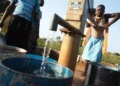
Ghana Gold Board (GoldBod), a prominent entity committed to sustainable development, has formalized a major GH¢8.4 million partnership agreement with Ghana Water Limited (GWL) to execute critical rehabilitation works on three major water supply installations across the Western and Central Regions of Ghana.
This landmark initiative aims to address severe operational deficits at the Bonsa, Daboase, and Sekyere Heman Water Supply Systems, which have faced prolonged production bottlenecks over the past several years.
By injecting these substantial funds, the collaboration seeks to revitalize deteriorating processing infrastructure, restore optimum daily production volumes, and significantly elevate the standard of potable water distribution to thousands of households in the affected local communities.
“Together, we are investing in sustainable solutions that protect the environment and strengthen critical public infrastructure.”
Ghana Gold Board (GoldBod)
At the official signing ceremony, leadership from both organizations underscored the strategic importance of this joint venture in resolving long-standing resource challenges.

Chief Executive Officer of GoldBod, Sammy Gyamfi, Esq., explained that the company’s governing board had executed a thorough, independent technical assessment of the targeted facilities before greenlighting the capital allocation.
This preliminary evaluation ensured that the GH¢8.4 million investment would be directed toward the most critical mechanical and structural vulnerabilities.
Concurrently, GWL Managing Director, Adam Mutawakilu, expressed profound gratitude for the private sector intervention, describing it as a timely rescue mission that will directly reverse years of dwindling supply capacities and improve overall operational reliability.
Strategic Financial Intervention and Public-Private Collaboration
This financial commitment represents a pivotal shift toward proactive resource management, highlighting how private-sector corporate responsibility can directly fortify municipal utility networks.
According to regional energy and utility analysts, the GH¢8.4 million agreement serves as a blueprint for funding capital-intensive public infrastructure without solely relying on central government budgetary allocations.
By focusing on rehabilitation rather than entirely new constructions, GoldBod and GWL are leveraging cost-effective engineering strategies to optimize existing assets.

During the press briefing, Sammy Gyamfi, Esq., emphasized that this collaboration “reaffirms GoldBod’s commitment to responsible mining, environmental sustainability and improving the lives of Ghanaians.”
This statement reflects a growing trend among resource-extraction firms in Ghana to actively offset local ecological pressures through impactful civic investments.
Restoring Operational Capacity in the Western Region’s Water Corridor
The Western Region has long grappled with severe municipal water deficits, driven primarily by the degradation of its primary raw water sources.
Under this rehabilitation project, the Bonsa and Daboase water supply systems will undergo comprehensive mechanical and structural overhauls.
Located on the River Pra, the Daboase Treatment Plant has traditionally served as the backbone of the Sekondi-Takoradi metropolis, yet its output has routinely plummeted far below its installed design capacity due to extreme raw water turbidity.
Heavy siltation from upstream illegal mining activities locally known as galamsey frequently chokes the intake structures, leading to rapid wear and tear of high-pressure pump impellers and escalating the consumption of chemical coagulants.

By upgrading the filtration systems, dredging blocked intake points, and replacing compromised electromechanical pumps, this intervention will stabilize raw water abstraction rates.
Similarly, the Bonsa system, which services the mining hub of Tarkwa and its surrounding enclaves along the Bonsa River basin, will benefit from restored treatment efficiencies, ensuring that clean, reliable flow is reintroduced to areas that have faced persistent rationing.
Bolstering Distribution and Supply Security in the Central Region
In the Central Region, the Sekyere Heman Water Supply System stands to benefit from targeted pipeline network enhancements and treatment plant optimization.
Drawing raw water directly from the lower Pra River basin, this facility is critical for supplying potable water to Cape Coast, Elmina, and adjacent coastal communities.

Historically, the plant’s operational efficiency has been limited by weak transmission lines and inadequate distribution infrastructure, preventing treated water from reaching rapidly expanding suburban areas.
Rehabilitating the electromechanical systems and reinforcing the local distribution mains will directly minimize water losses commonly categorized as non-revenue water which currently drain the utility provider’s financial reserves.
In his concluding remarks, GWL Managing Director Adam Mutawakilu highlighted the broader socio-economic implications, noting that “the project will help restore water production and improve service delivery to affected communities after years of operational challenges.”
By successfully executing these targeted interventions across both regions, the partnership will not only secure a safer ecological footprint but will also provide a reliable foundation for local industries and domestic users alike.
READ ALSO: Ghana’s Petroleum Hub Signs MoU with Qatari Investor