
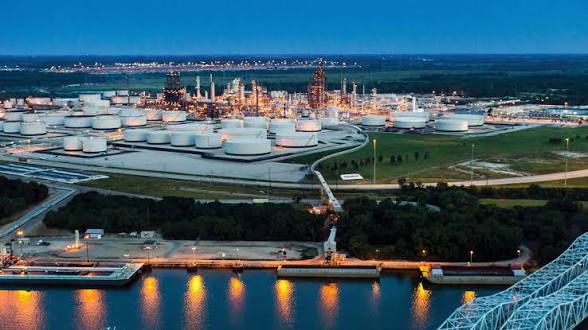
Ghana’s ambition to become a major petroleum hub in West Africa may depend less on matching the region’s largest refining capacity than on building a competitive network for petroleum trading, storage, transportation and finance, according to an energy expert interviewed exclusively by The Vaultz News.
The expert said West Africa is likely to develop a petroleum market in which countries compete for investment while taking on complementary roles based on their economic and infrastructure advantages.
Such a model could offer Ghana a route to expand its influence in the regional petroleum trade without having to outproduce larger refining centres.
The assessment comes as Ghana advances plans for its Petroleum Hub, including a proposed second phase featuring a 300,000-barrel-per-day refinery, two petrochemical plants, storage facilities with a combined capacity of four million cubic metres and a multi-berth jetty.
The proposed development is intended to support industrialisation, investment, employment and energy security.
However, the expert’s analysis suggests that the commercial value of such infrastructure will depend on how effectively Ghana connects it to regional demand, cross-border transport systems and competitive trading arrangements.
Regional Competition Will Not Have One Winner
West Africa’s petroleum market is evolving around different national strengths. Nigeria has a significant advantage in refining scale, while Ghana is seeking to strengthen its position through infrastructure and trade.
Côte d’Ivoire also has prospects for expanding its refining and petroleum distribution role, particularly in Francophone West Africa.

The expert expects competition and regional integration to intensify simultaneously over the next decade.
“I expect both integration and competition to increase simultaneously. Healthy competition will drive investment, innovation, and efficiency, while regional integration will lower transaction costs and improve energy security.”
The distinction is important for Ghana’s petroleum hub strategy. Regional integration could expand the market available to Ghanaian infrastructure by facilitating the movement of petroleum products across borders.
But competition means that investors and traders will still compare costs, reliability, regulatory conditions and access to customers before deciding where to operate.
A refinery, storage terminal or export jetty may create physical capacity, but infrastructure alone does not guarantee that commercial users will choose it over competing facilities.
The expert identified the likely division of regional roles in explicit terms:
“Nigeria is likely to remain the region’s largest refining and export hub because of its crude reserves and refining capacity. Ghana could strengthen its position as a trading, logistics, and financial hub, while Côte d’Ivoire is well positioned to expand its role in refining and petroleum distribution within Francophone West Africa.”
This outlook presents a different measure of success for Ghana. Rather than evaluating its ambitions solely by the volume of crude it processes, the country could assess whether it attracts petroleum traders, facilitates regional distribution, provides reliable storage and transport services, and develops the financial arrangements that support cross-border transactions.
Petroleum Hub Must Compete Beyond Refining Capacity
The scale of Ghana’s proposed Petroleum Hub Phase Two makes the distinction between infrastructure and commercial competitiveness particularly significant.
The planned refinery, petrochemical plants, storage facilities and jetty could create a platform for processing, handling and distributing petroleum products.

Yet the investment case will depend on whether sufficient demand exists to use that capacity and whether Ghana can offer competitive operating conditions.
The expert’s regional assessment suggests that a hub can derive value from several interconnected activities rather than relying exclusively on refining margins.
Storage, for example, can support product distribution and supply management. Efficient transportation can improve access to landlocked markets.
Trading and financial services can help connect suppliers, buyers and logistics operators. These activities could reinforce one another, provided the infrastructure is commercially accessible and efficiently operated.
For Ghana, the challenge is to ensure that the Petroleum Hub develops as part of a functioning regional market rather than as an isolated industrial complex.
That requires a clear understanding of the customers the facilities are intended to serve, the products they will handle, the transport routes available to them and the costs involved in moving products through Ghana.
The expert also cautioned that the growth of a large regional supplier could bring competition concerns, even as it improves access to petroleum products.
“A successful Dangote Refinery could significantly strengthen regional integration by reducing West Africa’s dependence on imported petroleum products from outside the continent,” the energy expert said.
The expert added that concentration in the market would need to be monitored, with competition policy and open access to storage, transportation and distribution infrastructure playing important roles in maintaining competitive conditions.
For Ghana, this means that the success of a regional petroleum hub should not be measured only by its ability to attract large investors.
Its infrastructure and market arrangements must also allow different suppliers and traders to participate on fair and commercially viable terms.
Infrastructure Needs Regional Market Reforms
The expert identified harmonised regulations, cross-border infrastructure, efficient transportation networks and the implementation of the African Continental Free Trade Area (AfCFTA) and ECOWAS energy market reforms as important conditions for a complementary regional petroleum market.
These requirements extend beyond the construction of facilities. Differences in regulations, transport bottlenecks and inefficient cross-border arrangements can raise transaction costs and weaken the commercial case for regional distribution.
For Ghana, the opportunity lies in connecting its planned infrastructure to a wider market in which petroleum products can move efficiently between producing, refining, storage and consuming centres.
The Petroleum Hub’s proposed storage capacity and jetty could support that ambition, but their strategic value will depend on access arrangements, transport connections and sustained commercial demand.
The proposed refinery and petrochemical plants will also need reliable feedstock supplies and markets for their output.
The expert’s assessment does not suggest that Ghana should abandon domestic refining. Rather, it points to the possibility of combining refining capacity with trading, logistics and other services to create a broader regional role.
That distinction matters because large infrastructure projects can carry significant commercial risks when projected demand, financing and operating conditions do not align.
Regional integration may enlarge the potential customer base, but it does not remove the need for sound investment decisions.
Ghana’s petroleum hub ambitions will therefore require coordination between infrastructure development, trade policy and the practical arrangements governing regional petroleum flows.
If those elements are aligned, Ghana could strengthen its position in West Africa without relying on a winner-takes-all contest for refining dominance.
If they are not, the country risks developing expensive capacity without securing the regional business needed to sustain it.
READ ALSO: MoFA Pushes Inclusive Agricultural Policy