Ghana’s Ministry of Food and Agriculture is seeking stronger stakeholder participation in the implementation of the Feed Ghana Programme, as government intensifies efforts to increase domestic food production, reduce import dependence and strengthen agricultural value chains.
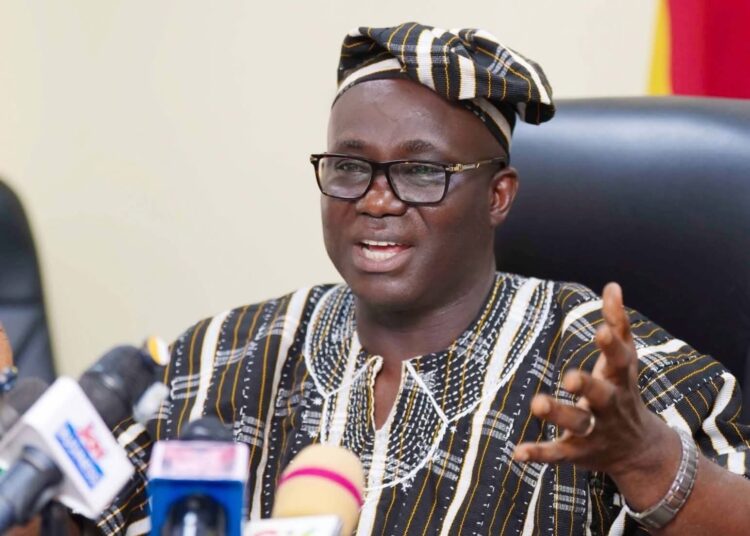
The programme led by Minister for Food and Agriculture, Hon. Eric Opoku, places collaboration among farmers, agribusinesses, financial institutions, development partners and public institutions at the centre of the country’s agricultural transformation agenda.
The approach reflects the recognition that sustainable agricultural development requires more than government policy announcements. It depends on coordinated investment, practical implementation and the participation of stakeholders whose activities influence production, processing, financing, distribution and access to markets.
”The Feed Ghana Programme must be a shared national undertaking, bringing together farmers, businesses, public institutions and development partners to translate agricultural policy into measurable improvements in production, livelihoods and food security.”
Minister for Food and Agriculture, Hon. Eric Opoku
Building Shared Ownership of National Policy
The Feed Ghana Programme is the flagship agricultural initiative under the government’s Agriculture for Economic Transformation Agenda.
It is designed to accelerate agricultural production, provide raw materials for domestic industries, improve food availability, create employment and expand opportunities for agribusiness development.
The Ministry of Food and Agriculture formally introduced the programme in April 2025, with President John Dramani Mahama subsequently launching it in Techiman, in the Bono East Region.
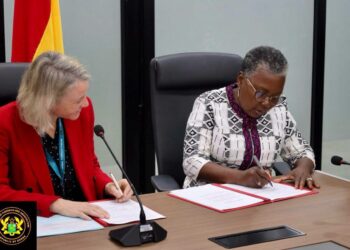
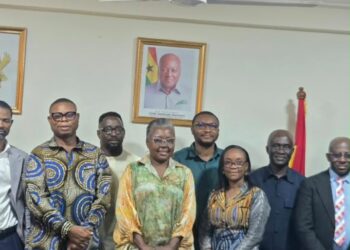
At its national validation workshop in Accra, Hon. Opoku called on development partners, private sector representatives, farmers, researchers, civil society organisations and other stakeholders to contribute to the programme’s design and implementation.
‘’The workshop was intended to ensure that the policy framework reflected practical agricultural conditions and the needs of those expected to implement or benefit from its interventions.’’
Minister for Food and Agriculture, Hon. Eric Opoku
The Ministry identified low productivity, dependence on imported food, limited access to irrigation and mechanisation, high land development costs and weak links between agriculture and industry as challenges requiring coordinated responses.
These constraints demonstrate why agricultural policy must connect the interests of producers with those of processors, financiers, distributors and consumers.
Farmers need reliable access to quality inputs, suitable land, extension services and technology. Businesses require consistent supplies of agricultural raw materials, while financial institutions need workable arrangements to manage lending risks in the agricultural sector.
For the Feed Ghana Programme, the objective is to establish a more coordinated agricultural system in which policy commitments translate into practical support for producers and commercially viable opportunities across the value chain.
Production Gains Raise the Stakes
According to reports, Feed Ghana National Coordinator Bright Kwadzo Demordzi said maize production had exceeded national consumption, while rice self-sufficiency had increased from 42 per cent to 56 per cent. Poultry self-sufficiency had also risen from five per cent to 21 per cent over the preceding 17 months.
The reported figures point to progress in domestic production, although maintaining that progress will require effective coordination between farmers, input suppliers, processors, transport operators and buyers.
Increased production alone does not guarantee better incomes for farmers or lower food prices for consumers.
“Our farmers are producing in abundance… The next step is to organise the processes to purchase their products so that their profitability levels will be high.”
Minister for Food and Agriculture, Hon. Eric Opoku
This challenge reinforces the economic case for a stakeholder-driven approach. Farmers’ associations, aggregators, food processors, retailers and institutional buyers can help establish clearer demand signals and improve the movement of produce from farms to markets.
Partnerships to Strengthen Implementation
The Feed Ghana Programme outlines interventions across agricultural production, farmer support services, infrastructure and financing. Its framework includes support for grains and legumes, livestock development, irrigation, mechanisation, agricultural financing and stronger institutional capacity.
These interventions require cooperation across several public institutions and private sector organisations.
For instance, financial institutions have a role in developing suitable financing arrangements for farmers and agricultural enterprises. Input suppliers and technology providers can improve access to production resources, while research institutions and extension officers can support the adoption of improved farming practices.
The programme also emphasises the participation of smallholder farmers, women, young people and persons with disabilities. Their inclusion is significant because access to land, financing, equipment, training and markets can determine whether agricultural opportunities translate into sustainable livelihoods.
However, effective implementation will depend on clear responsibilities, transparent resource allocation, regular monitoring and evidence that interventions are delivering results.
Stakeholder participation must therefore extend beyond consultations. It should involve practical collaboration, feedback on implementation challenges and accountability for agreed commitments.
“The success of Feed Ghana will depend not only on the resources committed to agricultural production but also on how effectively stakeholders work together to improve market access, strengthen value chains and sustain farmers’ incomes.”
Minister for Food and Agriculture, Hon. Eric Opoku
The programme’s wider economic significance lies in its potential to connect agriculture with manufacturing, trade and employment creation. Reliable supplies of locally produced rice, maize, soyabean, cassava and livestock products could strengthen domestic processing and reduce exposure to imported food and production inputs.
Nevertheless, the scale of these benefits will depend on sustained investment, implementation capacity, market demand and the ability to address persistent infrastructure and financing constraints.
As Ghana pursues agricultural transformation, the emphasis on shared ownership places responsibility on government and non-state actors to move from policy commitments to measurable outcomes.
READ ALSO:Osae-Kwapong Backs Prempeh CRC’s Merit-Based EC Appointments