Global Initiative Against Transnational Organized Crime (GI-TOC) has disclosed that artisanal and small-scale gold-mining (ASGM) sector in Northern Ghana faces a critical and growing threat of exploitation by Jama’at Nasr al-Islam wal Muslimin (JNIM), the most powerful extremist group in the Sahel.
This alarming assessment highlights that while direct JNIM involvement is not yet confirmed, the prevailing conditions marked by widespread informal mining, easily permeable borders, and deep-seated illicit financial flows create an environment ripe for future infiltration and exploitation by the group.
The vulnerability in this critical economic sector could fundamentally undermine Ghana’s national security and financial stability.
“The resulting illicit financial flows are a major vulnerability, which could be exploited by JNIM to generate or launder funds so that they may be able to secure essential supplies, such as motorbikes, fuel and explosives, in northern Ghana.”
GI-TOC Report
This precarious situation is compounded by the fact that Northern Ghana is already leveraged as a key logistical and resourcing hub for JNIM’s operations.
The financial architecture of the region’s informal gold trade is particularly concerning, with an estimated 60 to 70 percent of gold from northern Ghana being channeled through informal networks to traders in Burkina Faso.
These cross-border financial flows are solidified by the dominance of Burkinabe financiers, who employ “prefinancing arrangements” to secure gold purchases before the mineral is even extracted.
These entrenched, opaque channels mirror the mechanisms JNIM uses in Mali and Burkina Faso control of mining sites, taxation of access routes, and prefinancing to finance its expansion.
Since 2024, the group has been actively moving southwards, signaling a heightened and imminent risk for Ghana, which has thus far avoided direct attacks.
Ghana’s Mineral Security Challenge

Ghana’s gold sector, which accounts for approximately 95% of its mineral revenue and roughly 37% of total exports, has historically struggled with a complex range of challenges, most notably the destructive prevalence of illegal small-scale mining, locally known as galamsey.
This widespread, poorly-regulated activity while providing livelihoods has severely degraded water bodies and forests, created a health hazard through the use of toxic chemicals like mercury and cyanide, and resulted in substantial revenue loss to the state through smuggling.
The high incidence of unlicensed operations and the difficulty for legitimate small-scale miners to navigate complex bureaucratic licensing procedures only exacerbate the informality.
This existing backdrop of “financial opacity and cross-border flows” creates the perfect ‘soft target’ for extremist groups.
The intrusion of JNIM into this volatile landscape threatens to elevate the traditional issues of environmental harm and revenue loss to an unprecedented national security crisis.
By leveraging the illicit gold trade, JNIM would gain a reliable, high-value funding source, enabling them to deepen their influence and recruit locally, further destabilizing the entire northern part of the country and jeopardizing Ghana’s position as a stable, leading gold producer.
Disrupting the Illicit Network
Disrupting the potential for extremist exploitation requires a multifaceted and cohesive strategy that targets the regulatory, security, and socio-economic dimensions of the gold sector.
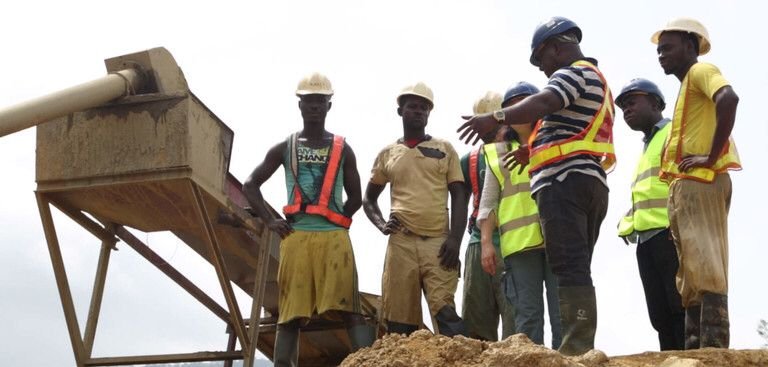
Experts are unanimous that formalization of ASGM operations is a critical first step. This includes expediting the licensing process for miners and traders and implementing robust regulatory oversight to channel gold into formal markets, which would drastically reduce the reliance on informal networks that facilitate illicit flows.
On the security front, the report highlights that strengthening border security, particularly along the frontier with Burkina Faso, and enhancing intelligence sharing is “vital steps in disrupting potential extremist infiltration.”
The current use of Northern Ghana as a transit hub for resources like fuel, motorbikes, and explosives—components often utilized in improvised explosive devices (IEDs) must be halted through better oversight of cross-border financial and commodity flows.
Community Resilience and Engagement

The GI-TOC’s extensive fieldwork revealed that an integrated approach must include proactive community engagement to address underlying grievances that extremist groups often exploit.
Inclusive programs that specifically target marginalized groups, particularly Fulani communities who face “harassment and exclusion,” are essential to build local resilience.
The report suggests that addressing farmer-herder tensions and other local socioeconomic pressures will “reduce conditions that extremist groups may exploit.”
Furthermore, establishing effective community-level early warning systems and launching robust public awareness campaigns are necessary to enhance local security consciousness.
This grassroots effort, combined with regulatory and security enhancements, is the only way to build a resilient, regulated gold sector and mitigate the serious threat posed by JNIM’s southward expansion into the heart of West Africa’s leading gold producer.
The failure to act decisively on these warnings will allow a critical national asset to become a major liability, threatening the fundamental stability and security of the nation.
READ MORE : BoG Stuns Markets as December FX Supply Slashed to $800m Despite Record Cedi Gains