
Vice President Professor Jane Naana Opoku-Agyemang has signaled a high-level executive “lock-in” for Ghana’s industrial agenda, pledging the full weight of the presidency to dismantle the bureaucratic bottlenecks stifling local production.
During a high-stakes working visit to the Ministry of Trade, Agribusiness and Industry (MOTAI), the Vice President characterized the ministry’s recent reforms as the engine room of the nation’s economic resilience.
The visit, part of a broader “inclusive governance audit of female-led ministries,” served as a platform to validate a series of aggressive policy shifts aimed at curbing import reliance and professionalizing the agribusiness value chain.
“I came to see the work you are doing, what is happening, and how we can better support you. We are here to encourage you, appreciate you and assure you that we are committed to helping you do even more for the country. If we all come on board and work together, we can build a very productive country and make a real difference”
Vice President Professor Jane Naana Opoku-Agyemang
The Vice President’s intervention comes at a pivotal moment, as the MOTAI leadership under Hon. Elizabeth Ofosu-Adjare moves to transition the country from a project-based industrial model to a systemic, “backward-integration,” strategy.
According to MOTAI, by focusing on securing raw materials domestically – most notably for tyre manufacturing and sugar production – the government is attempting to insulate the Ghanaian economy from the global supply chain shocks that have historically fueled domestic inflation.
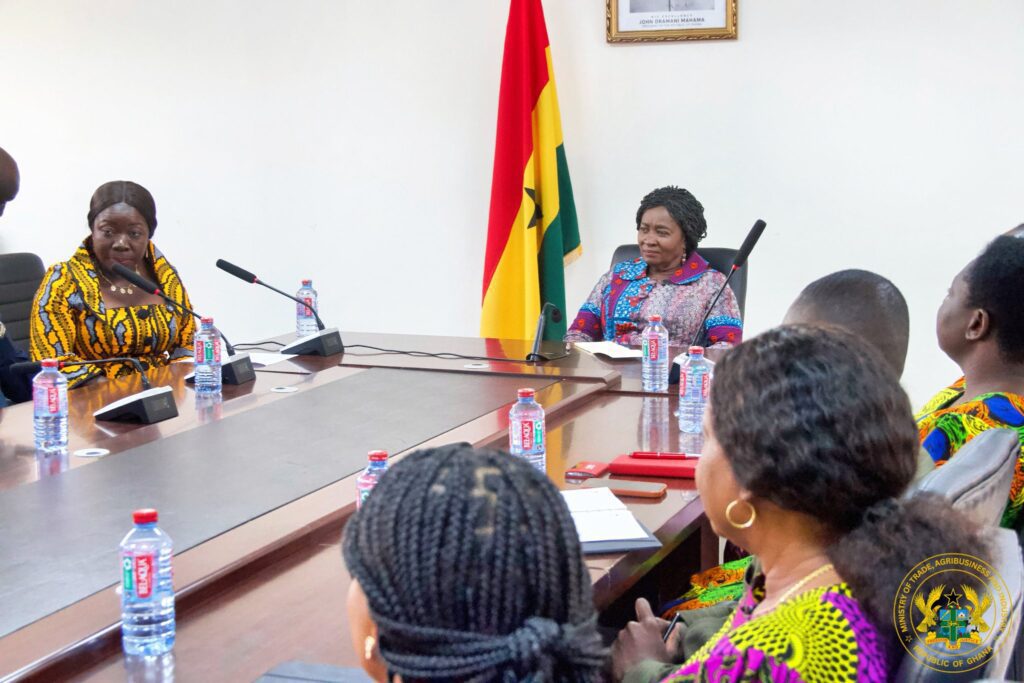
Central to the Vice President’s commendation was the Ministry’s “Feed the Industry” initiative. Prof. Opoku-Agyemang expressed specific optimism regarding the revival of the rubber industry for tyre manufacturing and the strategic reclamation of the sugar value chain.
She argued that the true metric of industrial success is not merely the commissioning of factories, but the creation of “livelihood ecosystems that span from the farm gate to the packaging plant.”
To ensure this productivity, the Vice President issued a directive for inter-agency collaboration, warning against working in silos. She pledged to personally intervene with the Ministry of Finance to expedite the approval of tax incentives and fiscal policies required to attract the large-scale investment needed for the planned 2026 industrial expansion.
This presidential prompt is expected to unlock stalled incentives for special economic zones and pharmaceutical hubs.
Komenda Resurrection and AfCFTA Expansion
In a comprehensive presentation to the Vice President, Hon. Elizabeth Ofosu-Adjare outlined a roadmap that effectively “resets” the timeline for several legacy projects.
Most notably, the Minister announced that land has been secured and commercial farmers engaged to ensure the Komenda Sugar Factory becomes fully operational in 2026. Unlike previous attempts, this revival is anchored in a contract-farming model designed to solve the perennial “raw material deficit,” that has previously mothballed the plant.
Hon. Ofosu-Adjare also highlighted significant regulatory relief for exporters, including the extension of export proceeds repatriation from 60 to 120 days.
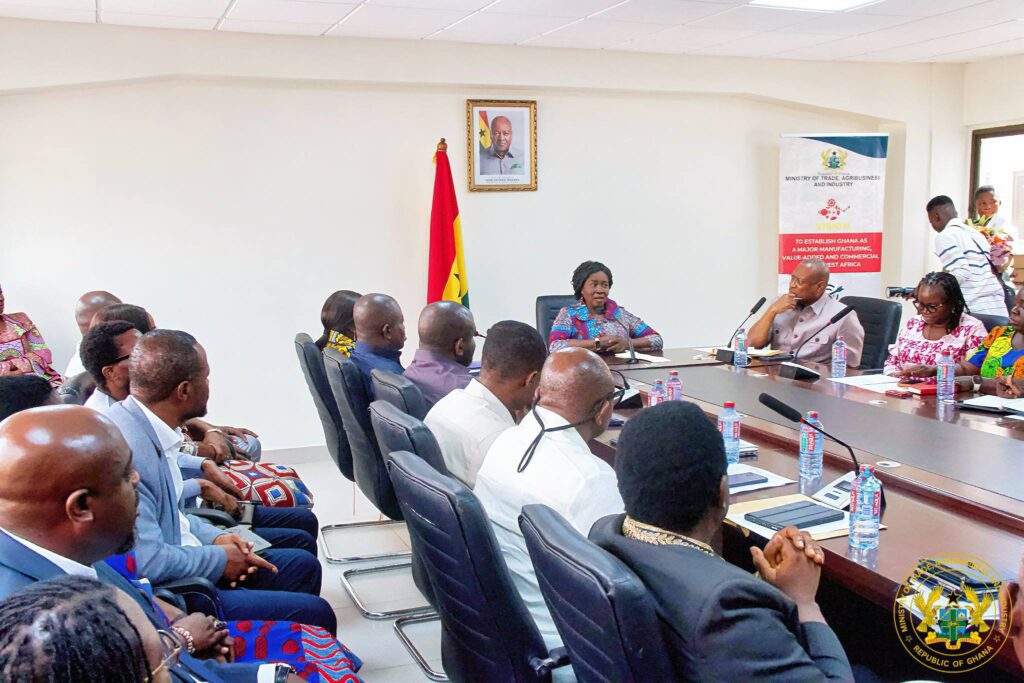
This move, coordinated with the Bank of Ghana, is intended to give local businesses more breathing room to navigate complex international trade cycles, particularly within the African Continental Free Trade Area (AfCFTA).
“Limited access to raw materials remains a major challenge to industry, with many factories operating below capacity. We are addressing this through land acquisition for commercial farming and targeted support for agro-processing. Your visit tells us that our work matters and that we are being supported at the highest level”
Hon. Elizabeth Ofosu-Adjare, Minister of Trade, Agribusiness and Industry
The visit also highlighted a deliberate social tilt in the industrial agenda. With MOTAI developing a Women in Trade and Agribusiness Policy, the government is targeting women-led enterprises and youth-driven tech hubs as the primary beneficiaries of new equipment and training programs.
MOTAI explained that agencies like the GRATIS Foundation have been tasked with retooling their workshops to empower young Ghanaians to produce spare parts and machinery locally, further reducing the national import bill.
“Our focus on Made-in-Ghana goods is critical to economic resilience. We must ensure the right training, equipment, and evaluation systems are in place to ensure productivity. We are committed to empowering more Ghanaians to produce locally and reducing our dependence on imports”
Hon. Elizabeth Ofosu-Adjare, Minister of Trade, Agribusiness and Industry
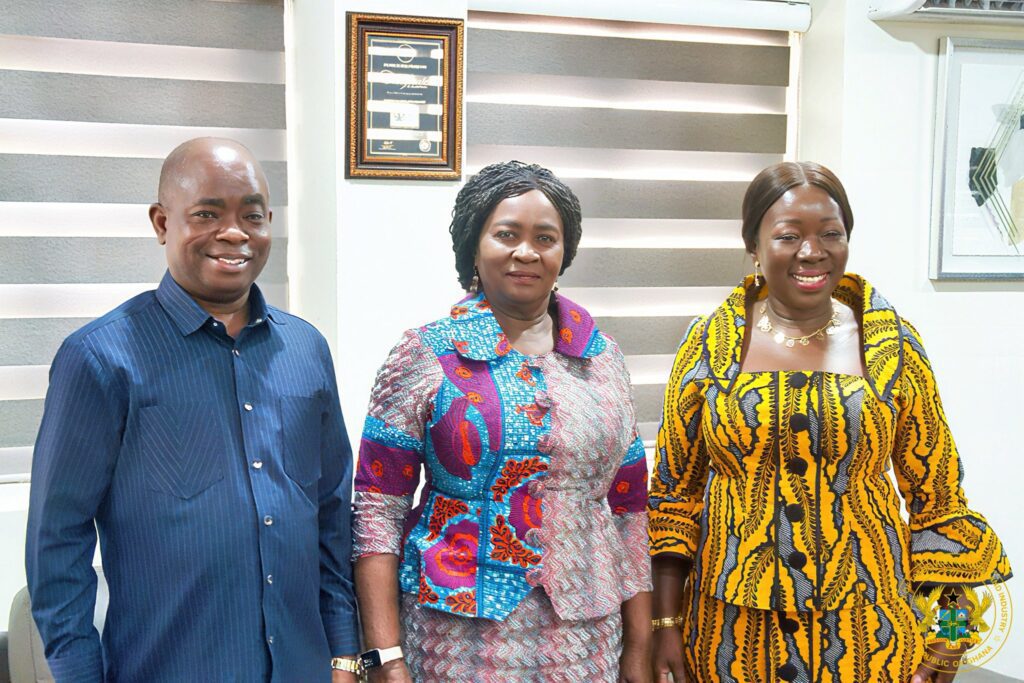
As the working visit concluded, the mood at MOTAI was one of renewed mandate. The Vice President’s promise to act as a bridge between the Trade Ministry and the Finance Ministry suggests that the NDC government’s industrial “reset” of 2025 is moving from policy drafting to aggressive, well-funded execution.
For the Ghanaian consumer, this means the future of the economy is no longer on the high seas, but in the local factory.
READ ALSO: Zelenskyy Deems Russian Reparations As “Most Rightful” Way To Fund Ukraine