• About
  • Advertise
  • Privacy Policy
  • Contact
Friday, May 15, 2026
  • Login
The Vaultz News
  • Top Stories
  • News
    • General News
    • Education
    • Health
    • Opinions
  • Economics
    • Economy
    • Finance
      • Banking
      • Insurance
      • Pension
    • Securities/Markets
  • Business
    • Agribusiness
    • Vaultz Business
    • Extractives/Energy
    • Real Estate
  • World
    • Africa
    • America
    • Europe
    • UK
    • USA
    • Asia
    • Around the Globe
  • Innovation
    • Technology
    • Wheels
  • Entertainment
  • 20MOBPL2DNew
  • Jobs & Scholarships
    • Job Vacancies
    • Scholarships
No Result
View All Result
The Vaultz News
  • Top Stories
  • News
    • General News
    • Education
    • Health
    • Opinions
  • Economics
    • Economy
    • Finance
      • Banking
      • Insurance
      • Pension
    • Securities/Markets
  • Business
    • Agribusiness
    • Vaultz Business
    • Extractives/Energy
    • Real Estate
  • World
    • Africa
    • America
    • Europe
    • UK
    • USA
    • Asia
    • Around the Globe
  • Innovation
    • Technology
    • Wheels
  • Entertainment
  • 20MOBPL2DNew
  • Jobs & Scholarships
    • Job Vacancies
    • Scholarships
No Result
View All Result
The Vaultz News
No Result
View All Result
in Vaultz Business

Trade Ministry Anchors Ghana’s Trade Expansion In Nanjing

Silas Kafui Assemby Silas Kafui Assem
January 23, 2026
Reading Time: 4 mins read
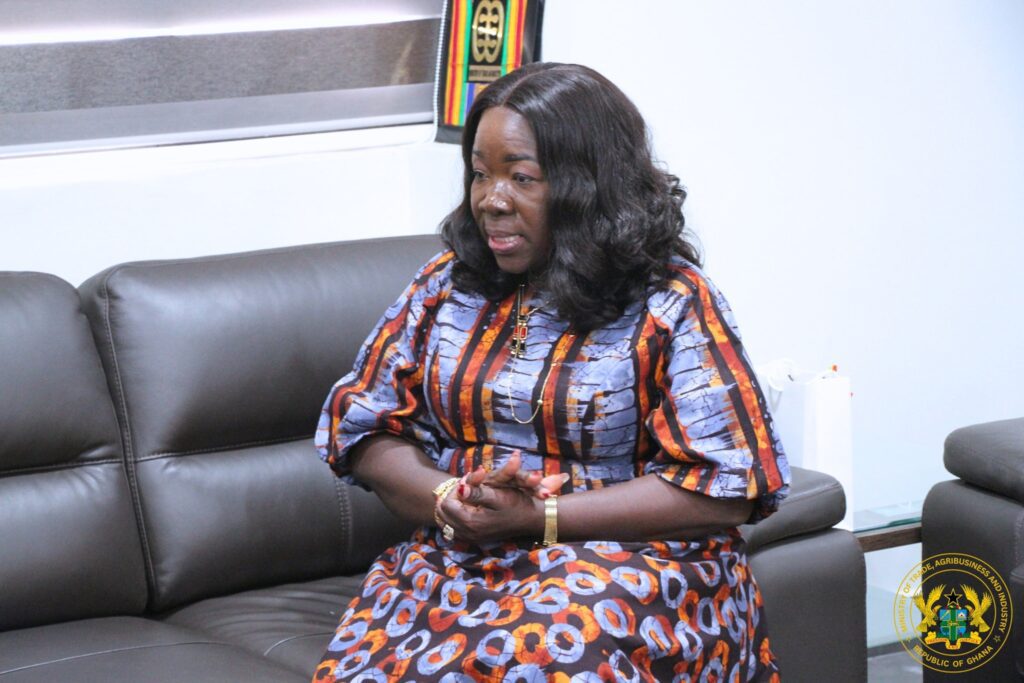
Hon. Elizabeth Ofosu-Adjare, Minister for Trade, Agribusiness and Industry, with Outgoing Chinese Ambassador, H.E. Tong Defa

Hon. Elizabeth Ofosu-Adjare, Minister for Trade, Agribusiness and Industry, with Outgoing Chinese Ambassador, H.E. Tong Defa

Hon. Elizabeth Ofosu-Adjare, the Minister for Trade, Agribusiness and Industry, has initiated a bold new chapter in Ghana-China relations by announcing the opening of a dedicated Trade Office in Nanjing, China, as a proactive step toward rebalancing trade and securing a larger share of the Chinese market for Ghanaian producers.

Scheduled to launch in 2026, this strategic outpost in the heart of Jiangsu Province – a global industrial and research powerhouse – is designed to serve as the primary gateway for Ghanaian exports into the world’s second-largest economy. The Minister revealed this in Accra, during a farewell call from the Outgoing Chinese Ambassador, H.E. Tong Defa.

“The move is aimed at promoting and strengthening bilateral trade and investment relations between Ghana and China. This new trade office in Nanjing will be instrumental in bridging the gap between our local producers and the vast Chinese consumer base.

“Ghana is ready to sign the Zero-Tariff Agreement with China, and we are optimistic that this institutional presence will ensure our businesses can fully capitalize on these duty-free opportunities”

Hon. Elizabeth Ofosu-Adjare, Minister for Trade, Agribusiness and Industry

The decision to anchor the new trade office in Nanjing is particularly strategic. Nanjing is not only a historical capital but also a modern center for electronics, manufacturing, and chemical industries.
619516865 1281035390718525 7755416329595013584 n
Hon. Elizabeth Ofosu-Adjare, Minister for Trade, Agribusiness and Industry

By establishing a permanent presence there, the Ministry of Trade, Agribusiness and Industry (MoTAI) is providing Ghanaian businesses with the institutional support needed to navigate complex Chinese market protocols.


ADVERTISEMENT

For Hon. Ofosu-Adjare, the Nanjing office is the physical manifestation of Ghana’s readiness to move from a purely import-driven dynamic toward a more balanced, export-led partnership.

Local Currency Trading

A cornerstone of this renewed partnership is the official commencement of trading in local currencies between the two nations.

MoTAI explained that drastic measures have been taken to reduce the reliance on third-party currencies like the US dollar, which has historically exposed Ghanaian traders to high transaction costs and exchange rate volatility.

During the meeting, Hon. Ofosu-Adjare emphasized that by enabling direct Cedi-to-RMB settlements, the government is providing a natural buffer for the national currency.

“If we are able to trade in our own currencies, Ghana’s currency will be strengthened because the bulk of our trading goes to China. This reduces our dependency on external buffers and ensures that we retain more value within our domestic economy”

Hon. Elizabeth Ofosu-Adjare, Minister for Trade, Agribusiness and Industry
621250054 1281035594051838 3435780448194942633 n
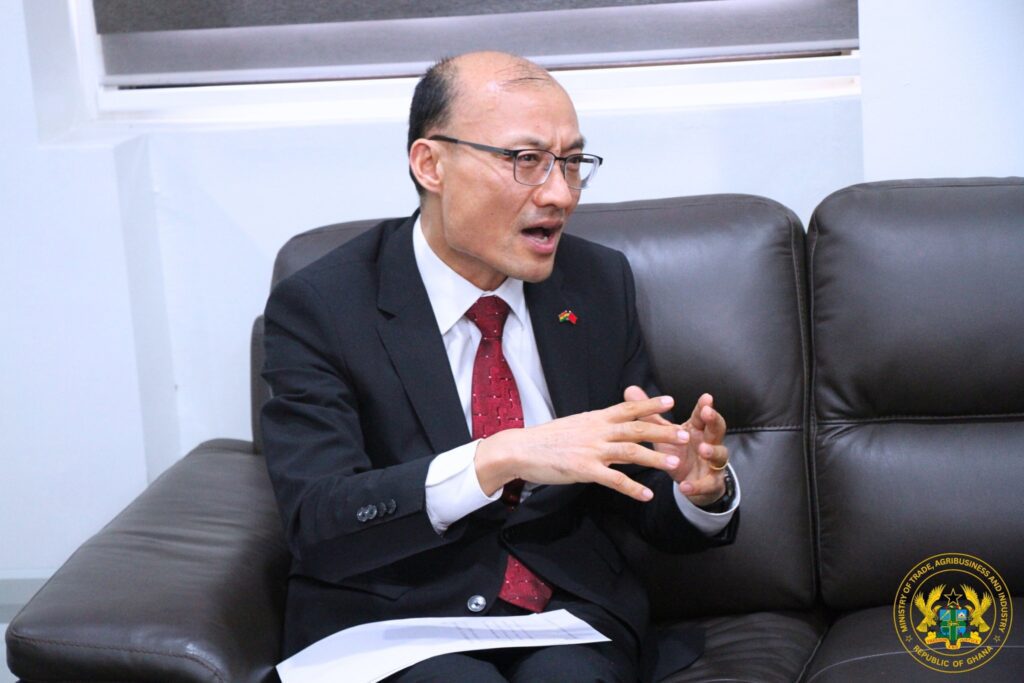
Outgoing Chinese Ambassador, H.E. Tong Defa

This shift is critical for small and medium-scale enterprises (SMEs) that have previously struggled with the scarcity and cost of foreign exchange.

The announcement comes at a time when Ghana is preparing to sign a comprehensive Zero-Tariff Agreement with China. This deal, which stems from a broader policy to grant duty-free access to Ghanaian exports, covers nearly 98 percent of taxable products.

Ambassador Tong Defa noted that this framework has already bolstered bilateral trade to an unprecedented $15 billion, with significant interest from Chinese companies eager to invest in Ghana’s industrial and educational sectors.

Under the leadership of President John Dramani Mahama, the government is positioning this agreement as a catalyst for the “24-Hour Economy,” and the “Big Push” infrastructure program. The Zero-Tariff deal is expected to ignite demand for value-added Ghanaian products such as processed cocoa, cashew, and textiles, helping to narrow the trade imbalance.

“I am happy that Chinese businesses are doing very well under President Mahama,” Hon. Ofosu-Adjare noted.

ADVERTISEMENT

As Ambassador Tong Defa concludes his tenure, the Minister commended his dedication to attracting strategic investment, including recent grants for a university in Damongo and a multipurpose market in Aflao. These projects illustrate the multifaceted nature of the relationship, which extends beyond trade into infrastructure and human capital development.
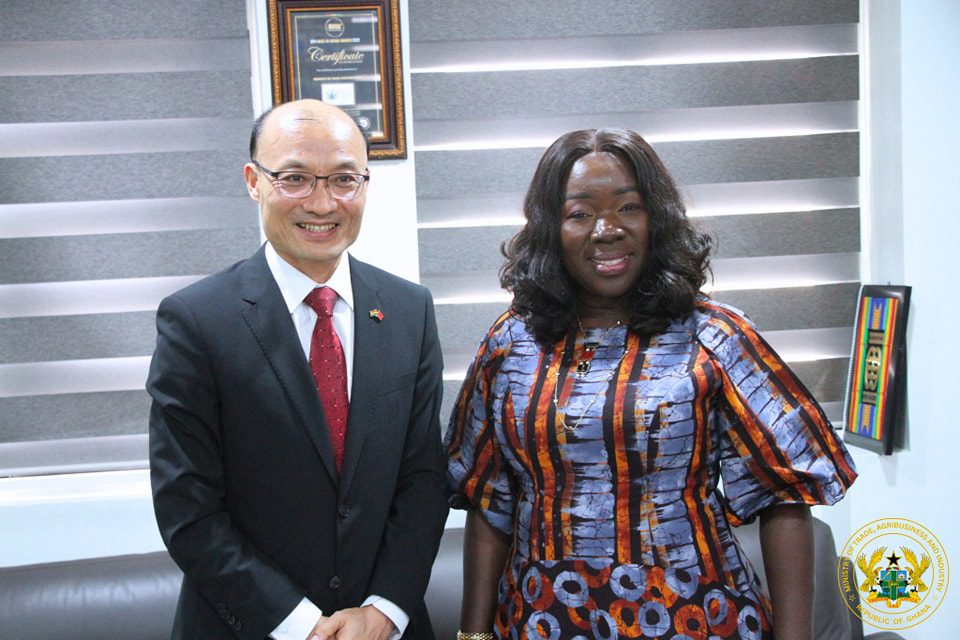
617043283 1281035244051873 8523615324497397442 n
Hon. Elizabeth Ofosu-Adjare, Minister for Trade, Agribusiness and Industry, with Outgoing Chinese Ambassador, H.E. Tong Defa

The Nanjing office will also support the newly launched 24H+ Mission, ensuring that the research and investment goals discussed in Beijing are implemented on the ground.

By combining zero-tariff market access with local currency trading and a permanent presence in China’s industrial heartland, MoTAI is ensuring that Ghana’s economic “Black Star” shines brighter on the global stage.


READ ALSO: Mahama to Break Ground for Volivo Bridge Project

Sign Up to Our Newsletter

Fresh updates, Straight to your inbox

Tags: Agribusiness and IndustryGhana-China relationsGhana’s Trade ExpansionH.E. Tong DefaHon. Elizabeth Ofosu-AdjareMinister for TradeMinistry of TradeMoTAINanjingOutgoing Chinese Ambassador
Share10Tweet7Share2SendSend
Please login to join discussion
Previous Post

Star Oil’s Exit Took Us by Surprise – COMAC Chairman

Next Post

Takaichi Dissolves Japan’s Parliament

Related Posts

Hon. Sampson Ahi, Deputy Minister for Trade, Agribusiness and Industry at the 2026 Let Africa Go Conference
Vaultz Business

“Let Africa Go” Conference Targets Ethical Anchor In Trade Growth

May 14, 2026
Dr. Mary Awusi, GFZA CEO, with Representatives at Philbro Group’s New Integrated Refinery Project Site
Vaultz Business

GFZA Validates Philbro Integrated Refinery Project in Eastern Region

May 14, 2026
Asantehene, Otumfuo Osei Tutu II
Vaultz Business

Asantehene Demands Bold Policy To Revive Textile Sector

May 14, 2026
GNCCI-WAY and TMA Training Workshop
Vaultz Business

GNCCI and TradeMark Africa Empower Export-Ready SMEs

May 14, 2026

Sign Up to Our Newsletter

Fresh updates, Straight to your inbox

Recent News

Professor Ernest Kofi Davis, Acting Director-General, Ghana Education Service

GES Assures Placement for All Qualified BECE Candidates

May 15, 2026
UK Prime Minister, Keir Starmer

UK Bars Far-Right Agitators as Starmer Vows Zero Tolerance

May 15, 2026
Fidelity Demands Africa Own Its Digital Future At a time when Africa’s digital economy is accelerating at an unprecedented pace, Fidelity Bank Ghana has delivered one of the strongest messages yet on the continent’s technological future. The bank made a bold and urgent case for Africa to stop depending on foreign controlled digital systems and begin building its own infrastructure capable of retaining value, strengthening currencies, and driving long term economic sovereignty. As one of the key sponsors of the 3i Africa summit, Fidelity Bank did not just show up to participate. It arrived with a message that resonated deeply across conference halls and policy discussions. Fidelity Bank emerged as one of the loudest voices championing a future where African nations control the very digital rails that power their economies. Digital Infrastructure Is The New Economic Power One of the defining moments of the summit came during a high level panel discussion on digital public infrastructure, where Adeline Aryee delivered a statement that immediately captured the attention of participants. She declared that if Africa builds its own digital rails, it naturally retains the value created by those systems. Her message was clear and uncompromising. In previous decades, national infrastructure was measured by roads, bridges, ports, and airports. Today, the true engines of economic power are payment platforms, identity systems, financial technology ecosystems, and digital marketplaces. According to Aryee, digital public infrastructure is no longer a luxury. It is now a strategic national asset. Her remarks struck at the heart of one of Africa’s most pressing economic concerns. Despite growing digital adoption, many transactions across the continent still pass through foreign payment systems, resulting in value leakage and continued pressure on local currencies. Ghana’s Success Story Becomes A Continental Blueprint Aryee highlighted Ghana’s progress in financial inclusion, mobile payments, and digital banking, describing the country as an emerging model for other African economies. Over the years, Ghana has invested heavily in domestic payment systems such as GhIPSS and its flagship platform, Gh-link. These systems have significantly expanded access to financial services while promoting digital transactions across urban and rural communities. Yet Aryee argued that inclusion alone is no longer enough. The next chapter for Africa, she insisted, must focus on ownership. She questioned why local transactions continue to depend on foreign rails when domestic infrastructure already exists. According to her, such dependence creates unnecessary external exposure and limits the continent’s ability to fully capture the economic benefits of its growing digital market. Her comments triggered intense debate among summit participants, many of whom acknowledged the urgent need for policy reforms and infrastructure investments. Market Driven Innovation Takes Center Stage Beyond infrastructure, Fidelity Bank also made a strong case for innovation that begins with real market needs. During the Ecosystem Roundtable on platforms, talent, and digital markets, Prince Osei Hyeaman-Addai shared insights from the bank’s years of digital financial innovation. He stressed that successful digital products are not built in boardrooms or based on assumptions. Instead, they are created by listening carefully to the market and understanding customer pain points. According to him, the market itself reveals the problems that need solving, the type of platform required, and the path toward scalable growth. His comments reflected a growing shift in African fintech circles, where customer centered design is becoming essential for product adoption and long term relevance. Trust And Credibility Remain The Real Currency Prince also emphasized that technology alone does not guarantee success. In his view, trust, credibility, and strong operational structures remain the real foundations of successful innovation. He noted that while investor interest in African fintech continues to rise, startups must prove they can deliver sustainable solutions, maintain transparency, and build products that respond to local realities. This perspective reflects Fidelity Bank’s own journey in digital transformation. Over the years, the bank has built strategic collaborations with leading fintech players, including IT Consortium, helping pioneer wallet to bank integrations and mobile financial solutions in Ghana. These partnerships have helped position Fidelity as one of Ghana’s most innovation driven financial institutions. A Defining Moment For Africa’s Digital Future Fidelity Bank’s participation at the 3i Africa Summit 2026 was more than a corporate appearance. It was a strategic declaration. At a time when Africa is racing to build competitive digital economies, the bank’s message was impossible to ignore. Africa cannot simply consume technology created elsewhere. It must own the infrastructure, shape the platforms, and capture the value generated by its digital future. As conversations from the summit continue to ripple across financial and policy circles, one thing is becoming increasingly clear. Africa’s next economic revolution may not be built on oil, gold, or minerals. It may be built on digital rails designed, owned, and powered by Africans. READ ALSO: IMF Ghana Review Ends in Dramatic Cliffhanger Fidelity Demands Africa Own Its Digital Future At a time when Africa’s digital economy is accelerating at an unprecedented pace, Fidelity Bank Ghana has delivered one of the strongest messages yet on the continent’s technological future. The bank made a bold and urgent case for Africa to stop depending on foreign controlled digital systems and begin building its own infrastructure capable of retaining value, strengthening currencies, and driving long term economic sovereignty. As one of the key sponsors of the 3i Africa summit, Fidelity Bank did not just show up to participate. It arrived with a message that resonated deeply across conference halls and policy discussions. Fidelity Bank emerged as one of the loudest voices championing a future where African nations control the very digital rails that power their economies. Digital Infrastructure Is The New Economic Power One of the defining moments of the summit came during a high level panel discussion on digital public infrastructure, where Adeline Aryee delivered a statement that immediately captured the attention of participants. She declared that if Africa builds its own digital rails, it naturally retains the value created by those systems. Her message was clear and uncompromising. In previous decades, national infrastructure was measured by roads, bridges, ports, and airports. Today, the true engines of economic power are payment platforms, identity systems, financial technology ecosystems, and digital marketplaces. According to Aryee, digital public infrastructure is no longer a luxury. It is now a strategic national asset. Her remarks struck at the heart of one of Africa’s most pressing economic concerns. Despite growing digital adoption, many transactions across the continent still pass through foreign payment systems, resulting in value leakage and continued pressure on local currencies. Ghana’s Success Story Becomes A Continental Blueprint Aryee highlighted Ghana’s progress in financial inclusion, mobile payments, and digital banking, describing the country as an emerging model for other African economies. Over the years, Ghana has invested heavily in domestic payment systems such as GhIPSS and its flagship platform, Gh-link. These systems have significantly expanded access to financial services while promoting digital transactions across urban and rural communities. Yet Aryee argued that inclusion alone is no longer enough. The next chapter for Africa, she insisted, must focus on ownership. She questioned why local transactions continue to depend on foreign rails when domestic infrastructure already exists. According to her, such dependence creates unnecessary external exposure and limits the continent’s ability to fully capture the economic benefits of its growing digital market. Her comments triggered intense debate among summit participants, many of whom acknowledged the urgent need for policy reforms and infrastructure investments. Market Driven Innovation Takes Center Stage Beyond infrastructure, Fidelity Bank also made a strong case for innovation that begins with real market needs. During the Ecosystem Roundtable on platforms, talent, and digital markets, Prince Osei Hyeaman-Addai shared insights from the bank’s years of digital financial innovation. He stressed that successful digital products are not built in boardrooms or based on assumptions. Instead, they are created by listening carefully to the market and understanding customer pain points. According to him, the market itself reveals the problems that need solving, the type of platform required, and the path toward scalable growth. His comments reflected a growing shift in African fintech circles, where customer centered design is becoming essential for product adoption and long term relevance. Trust And Credibility Remain The Real Currency Prince also emphasized that technology alone does not guarantee success. In his view, trust, credibility, and strong operational structures remain the real foundations of successful innovation. He noted that while investor interest in African fintech continues to rise, startups must prove they can deliver sustainable solutions, maintain transparency, and build products that respond to local realities. This perspective reflects Fidelity Bank’s own journey in digital transformation. Over the years, the bank has built strategic collaborations with leading fintech players, including IT Consortium, helping pioneer wallet to bank integrations and mobile financial solutions in Ghana. These partnerships have helped position Fidelity as one of Ghana’s most innovation driven financial institutions. A Defining Moment For Africa’s Digital Future Fidelity Bank’s participation at the 3i Africa Summit 2026 was more than a corporate appearance. It was a strategic declaration. At a time when Africa is racing to build competitive digital economies, the bank’s message was impossible to ignore. Africa cannot simply consume technology created elsewhere. It must own the infrastructure, shape the platforms, and capture the value generated by its digital future. As conversations from the summit continue to ripple across financial and policy circles, one thing is becoming increasingly clear. Africa’s next economic revolution may not be built on oil, gold, or minerals. It may be built on digital rails designed, owned, and powered by Africans. READ ALSO: IMF Ghana Review Ends in Dramatic Cliffhanger Fidelity Demands Africa Own Its Digital Future

Fidelity Demands Africa Own Its Digital Future

May 15, 2026
Bruno Fernandes has won Manchester United's Player of the Year award twice in succession

Fernandes Crowned Manchester United Player of the Year Again After Remarkable Season

May 15, 2026
Chief Executive of the NHIA, Dr. Victor Asare Bampoe

NHIA Pays Over GHC157 Million in Claims

May 15, 2026
Next Post
SANAE TAKAICHI 1 1

Takaichi Dissolves Japan's Parliament

The Vaultz News

Copyright © 2025 The Vaultz News. All rights reserved.

Navigate Site

  • About
  • Advertise
  • Privacy Policy
  • Contact

Follow Us

Welcome Back!

Login to your account below

Forgotten Password?

Retrieve your password

Please enter your username or email address to reset your password.

Log In
No Result
View All Result
  • Top Stories
  • News
    • General News
    • Education
    • Health
    • Opinions
  • Economics
    • Economy
    • Finance
      • Banking
      • Insurance
      • Pension
    • Securities/Markets
  • Business
    • Agribusiness
    • Vaultz Business
    • Extractives/Energy
    • Real Estate
  • World
    • Africa
    • America
    • Europe
    • UK
    • USA
    • Asia
    • Around the Globe
  • Innovation
    • Technology
    • Wheels
  • Entertainment
  • 20MOBPL2D
  • Jobs & Scholarships
    • Job Vacancies
    • Scholarships

Copyright © 2025 The Vaultz News. All rights reserved.

This website uses cookies. By continuing to use this website you are giving consent to cookies being used. Visit our Privacy and Cookie Policy.

Discover the Details behind the story

Get an in-depth analysis of the news from our top editors

Enter your email address