National Anti-Illegal Mining Operations Secretariat (NAIMOS) has scaled up its enforcement actions against illegal mining with a series of strategic raids across the Tarkwa Nsuaem Municipality and the Cape Three Points Forest Reserve in the Western Region.
These operations mark a critical escalation in the government’s mandate to sever the logistical lifelines of illegal miners who continue to threaten Ghana’s vital ecological zones.
By targeting high-impact sites at Mile 5 and within protected forest enclaves, NAIMOS has demonstrated a renewed focus on both land-based and riverine protection, effectively disrupting syndicates that have long operated with a sense of impunity.
“The current offensive in the Western Region is generally yielding significant gains as a lot of the illegal mining areas previously raided have been abandoned by the galamseyers. The Secretariat anticipates even better results in the foreseeable future, especially with regards to clearing of some water bodies based on positive gains observed. We are appealing for more resources like Pickup vehicles, Lowbeds, and Drones to augment our efforts.”
NAIMOS Communications

This recent offensive, led by NAIMOS operatives, resulted in the immediate destruction of heavy-duty “Changfan” machines, water pumping units, and makeshift structures that formed the operational backbone of these illegal sites.
At Mile 5, intelligence-led interventions prevented the continued discharge of toxic mining waste into the Yorn River, a primary tributary of the Ankobra River, which has been under severe environmental stress.
The afternoon session of the NAIMOS operation saw the task force penetrate the rugged terrain of the Cape Three Points Forest Reserve, where three suspects Joseph Mensah, 22; Abdulia Dauda, 27; and Kabre Daniel, 27 were apprehended following a pursuit through the forest.
These individuals have been handed over to the Agona Nkwanta Police Station as part of a broader strategy to ensure that field operations are supported by rigorous legal prosecution.
Tactical Disruption and Asset Neutralization
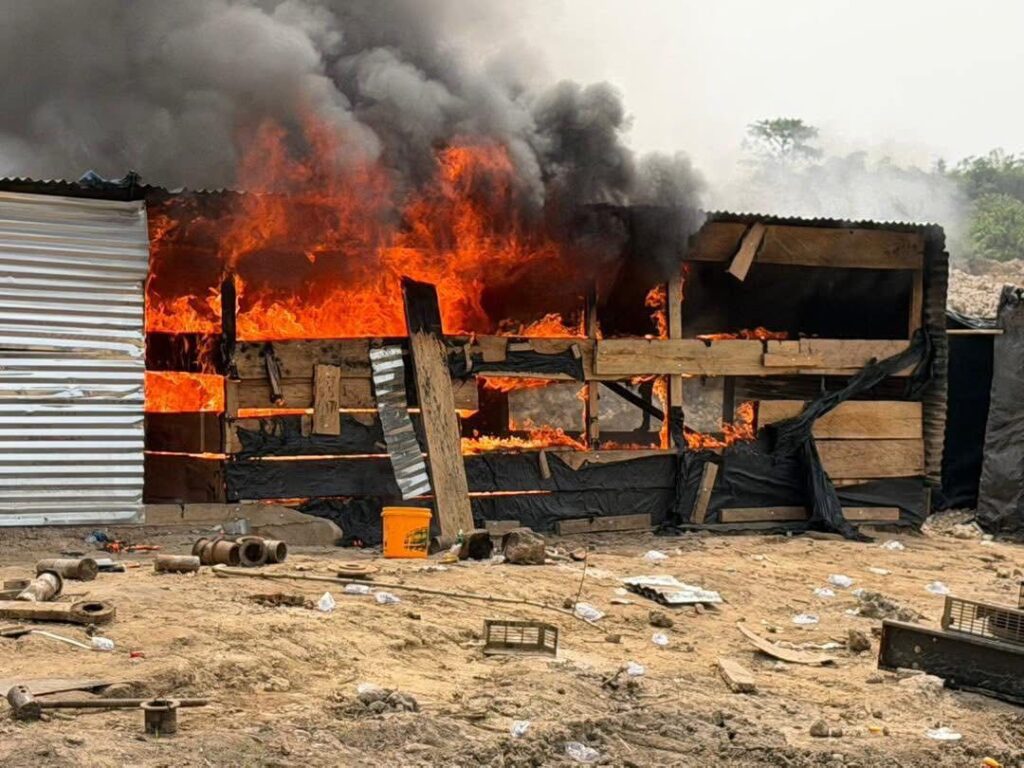
This strategy employed by NAIMOS focuses on “asset neutralization” rather than mere displacement.
By destroying six Chanfa machines and eight water pumping machines on-site, the task force is significantly increasing the “cost of entry” for illegal syndicates.
These machines represent substantial capital investment for illegal operators; their systematic destruction serves as a powerful economic deterrent.
The pollution of the Butre River and the encroachment on rubber plantations highlight the multi-sectoral damage caused by galamsey, making these surgical strikes essential for protecting both the environment and legitimate agricultural investments in the Ahanta West Municipality.
A Step Toward Ecological Restoration

The pivot toward intelligence-driven raids in 2026 is a definitive step in the right direction for ending the galamsey menace.
Unlike previous sporadic attempts, the current NAIMOS framework integrates real-time intelligence with rapid response, as seen in the Mile 5 raid where the task force arrived to catch operators mid-shift.
This approach addresses the “fluidity” of illegal mining, where operators often relocate at the first sign of trouble. By rendering these sites inoperable through the seizure of equipment and the destruction of logistics, NAIMOS is creating “hostile zones” for illegal activity, allowing heavily polluted water bodies like the Yorn and Butre Rivers a window for natural recovery.
Logistics and the Future of Enforcement

While the gains are evident, Colonel Dominic Buah’s call for drones and lowbed vehicles underscores the technical evolution required to win this war.
In the “rugged and challenging terrain” of the Western Region, aerial surveillance (drones) provides the “eye in the sky” needed to prevent suspects from fleeing into the deep forest, while lowbeds are crucial for the physical removal of heavy excavators that are often hidden in dense foliage.
Sustaining this momentum requires a transition from periodic raids to a permanent, tech-enabled monitoring presence. This ensures that once a forest reserve like Cape Three Points is cleared, it remains a “recovered” block, shielded from the cyclical return of illegal actors.
READ ASLO: Bangladesh Votes in Landmark Post-Hasina Election