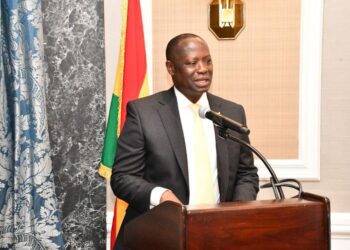
Constance Gbedzo, Risk & Enterprise Development Expert, has postulated that the establishment of the Ghana Gold Board (GoldBod) has emerged as a transformative structural pivot, positioning the nation’s gold reserves as the ultimate stabilizer for the volatile cedi.
The Expert argued that by centralizing the purchase and export of all small-scale gold production, the state has effectively transitioned from a fragmented, passive observer of its mineral wealth to a proactive market leader.
This shift addresses the long-standing “institutional absurdity” where recorded bullion production failed to translate into treasury strength, finally providing the physical assets necessary to anchor the national currency against external shocks.
“The GoldBod architecture represents a landmark achievement in resource governance and technological innovation, shifting the national burden from high-interest loans to high-value assets. By formalizing this wealth, the state has successfully built a US$13.8 billion reserve shield that renders the high-interest Eurobond era obsolete. This ‘Golden Reset’ ensures that Ghana no longer needs to borrow its stability but instead owns its destiny.”
Constance Gbedzo, Risk & Enterprise Development Expert

This strategic move marks a definitive departure from the reactive, debt-heavy economic models of the 2017–2024 period, which left the sovereign treasury starved of foreign exchange while alleged illicit cartels flourished.
Under the current GoldBod architecture, the government has moved to capture the estimated US$2 billion previously lost annually to the black market by implementing a sovereign monopoly on gold aggregation.
By formalizing the artisanal sector and offering competitive, near-market pricing, the board has successfully mopped up liquidity and redirected it into the national balance sheet, providing a buffer that traditional Eurobond borrowing could never replicate without high interest costs.
Centralized Aggregation and the US$13.8 Billion Reserve Shield

The primary mechanism through which Ghana Gold Board has strengthened the economy is the aggressive accumulation of physical bullion to support the Bank of Ghana’s reserves.
In its first full year of operation, the board captured an unprecedented 104 metric tonnes of gold, a feat made possible by replacing the defunct Precious Minerals Marketing Company (PMMC) and private agency models with a specialized strategic vehicle.
This centralized model, backed by a technical committee of experts in mineral economics and law, has generated US$10.8 billion in “clean” foreign exchange.
This influx of hard currency has served as a formidable anchor for the cedi, providing the liquidity needed to stabilize exchange rates without the crushing interest rates associated with external borrowing.
By building a US$13.8 billion reserve shield, the country has insulated itself from the global market fluctuations that previously made the cedi one of the world’s most vulnerable currencies.
This asset-backed approach represents a “radical novelty” in Ghana’s monetary history, moving beyond mere domestic gold-purchasing programs to a comprehensive system of anticipation rights and enforcement power.
Value Addition and the 24-Hour Industrial Reset
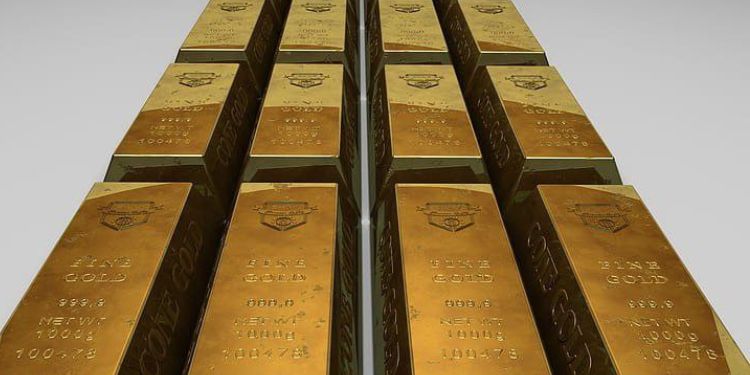
Mr. Gbedzo added that, beyond simple extraction and aggregation, the GoldBod framework has catalyzed a shift toward local value addition, breaking the historical cycle of exporting raw gold dore only to buy back refined products at a premium.
A landmark 2026 agreement with the Gold Coast Refinery now sees one metric tonne of gold refined locally every week to 99.99% purity.
By securing a 15% equity stake in the refinery, the state has transitioned into a direct beneficiary of the processing chain, retaining millions of dollars in refining fees that were previously lost to offshore economies in Dubai and Switzerland.
This industrial independence is further bolstered by the integration of the “24-Hour Economy” initiative. Local refineries now operate on three shifts, creating thousands of high-skilled jobs in metallurgy, assaying, and security.
This move toward a finished-product economy not only increases the per-ounce value of Ghanaian exports but also builds the necessary infrastructure for LBMA certification.
By processing wealth within its borders, Ghana is transforming a raw mineral endowment into a sustainable industrial ecosystem that supports long-term growth and poverty reduction.
Ethical Compliance and the End of the Debt Trap

The deployment of a blockchain-ready “Track-and-Trace” system in early 2026 has been pivotal in moving the artisanal and small-scale mining (ASM) sector from “chaotic informality” to global ethical compliance.
This technological innovation ensures that every gram of gold is verified and transparent, making it more attractive to international investors and reducing the flight of capital through illicit outflows.
The system rewards miners who adhere to environmental standards, effectively using premium pricing as a tool for ethical restoration and a weapon against the environmental devastation often associated with unregulated mining.
Ultimately, the success of GoldBod proves that a sovereign, asset-backed economy is the most viable alternative to the “debt trap” of the past decade.
By generating interest-free revenue and implementing a “90% FOB Share” policy that benefits local producers, the board has demonstrated that fiscal policy can be reset to favor national interests over foreign creditors.
As this model of efficiency is considered for other commodities like cereals and tubers, GoldBod stands as the definitive proof that sophisticated management of mineral wealth is the most direct path to economic resilience and sovereign independence.
READ ALSO: CDD Fellow Demands Decisive Action on Troubling Arrears’ Audit Findings