The Ministry of Trade, Agribusiness and Industry (MoTAI) has officially launched the West Africa Fashion Consortium Ghana, marking a decisive move to transition the nation’s creative economy into a structured industrial powerhouse.
The unveiling ceremony, held in Accra, gathered an assembly of designers, textile producers, and trade policy experts to witness the birth of a unified platform designed to drive innovation, sustainability, and global market access.
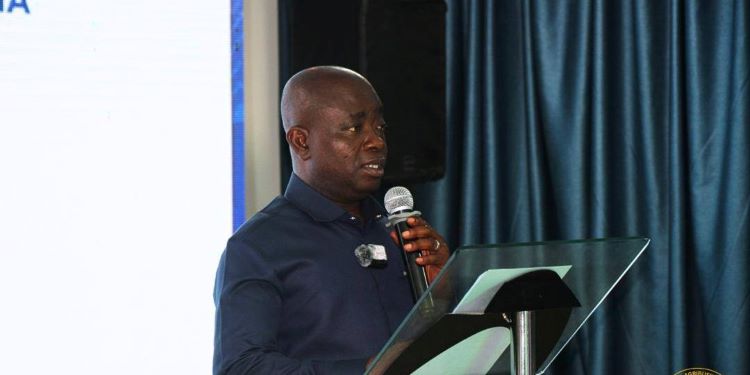
Led by the Deputy Minister for Trade, Agribusiness and Industry, Hon. Sampson Ahi, representing the sector Minister, the launch revealed the government’s intent to move the fashion industry from the fringes of “non-traditional exports,” to the center of Ghana’s broader economic transformation.
“The West Africa Fashion Consortium Ghana was officially launched with the goal of driving innovation, sustainability, and economic empowerment within the region’s fashion industry. The initiative aligns with the government’s broader strategy to expand non-traditional exports”
Ministry of Trade, Agribusiness and Industry
MoTAI noted that for decades, the Ghanaian fashion scene has been characterized by brilliant but fragmented small-scale enterprises. The West Africa Fashion Consortium Ghana is engineered to dismantle these silos, creating a collective bargaining and innovation hub that allows local designers to compete on the international stage.
By unifying the entire value chain – from raw cotton production and textile weaving to high-end garment construction and retail – the consortium aims to provide the scale necessary to fulfill large-scale global orders while maintaining the unique aesthetic and cultural integrity of West African design.
During his keynote address, Hon. Sampson Ahi emphasized that the modern global consumer is no longer just looking for style; they are looking for substance and ethics. He urged the newly formed consortium to prioritize value addition and “ethical production practices,” as their primary competitive advantages.
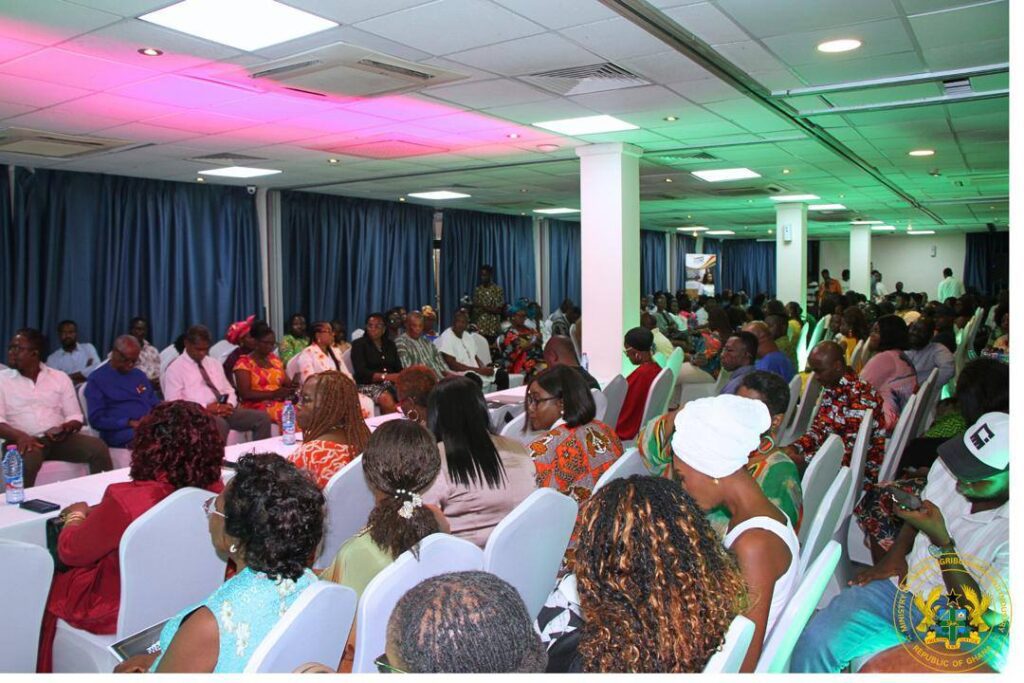
For him, in a world increasingly concerned with the environmental and social impact of fast fashion, Ghana has a unique opportunity to position itself as a leader in “slow, sustainable fashion,” that respects both the artisan and the environment.
The Deputy Minister noted that the fashion sector is a massive engine for “job opportunities for women and youth,” and professionalizing the industry through the consortium will create thousands of stable, high-skilled jobs in garment manufacturing and design.
This industrial shift is about building a sustainable ecosystem where young Ghanaian creatives can build global brands without leaving the shores of West Africa. The consortium will provide the technical training and certification frameworks needed to ensure that “Made in Ghana” is synonymous with global quality.
Uniting the Value Chain
Madam Awurabena Okra, the President of the West Africa Fashion Consortium Ghana, highlighted the platform’s mission to act as a “connective tissue for the industry.”
She pointed out that many talented designers fail not because of a lack of creativity, but because of a lack of access to affordable raw materials and reliable logistics. The consortium’s goal is to provide small businesses with the tools and networks needed to thrive, including centralized procurement of textiles and shared access to international trade fairs.
Okra’s vision for the consortium is one of radical collaboration, where uniting designers with producers and entrepreneurs creates a seamless flow of information and resources. This includes the creation of a digital database of certified Ghanaian artisans, making it easier for international brands to find local partners for co-branding and production.
The President stressed that the consortium is a “home for all,” in the fashion space, from the traditional Kente weaver in the Volta Region to the contemporary streetwear designer in the heart of Osu.

Okra reiterated that as Ghana seeks to diversify its economy away from a heavy reliance on raw gold and cocoa, the “creative arts,” and “light manufacturing,” sectors have been identified as high-growth areas. The West Africa Fashion Consortium Ghana will serve as the technical lead in preparing local firms for the African Continental Free Trade Area (AfCFTA) and other international trade agreements like AGOA.
Hon. Sampson Ahi noted that the ministry is committed to providing the enabling environment – including tax incentives for exporters and simplified customs procedures – that will allow the fashion industry to become a significant contributor to the nation’s GDP.
The goal is to see Ghanaian fashion on the runways of Paris, New York, and Milan, not as a curiosity, but as a dominant commercial force.
MoTAI added that innovation is the heartbeat of the consortium’s mandate.
“This extends beyond design to include ‘process innovation’ – the use of technology to improve efficiency and reduce waste in the manufacturing process. The consortium plans to establish Innovation Hubs where designers can access 3D-modeling software, advanced laser-cutting tools, and sustainable dyeing technologies”
Ministry of Trade, Agribusiness and Industry
These hubs will act as incubators for the next generation of fashion-tech entrepreneurs, ensuring that Ghana remains at the cutting edge of global industry trends. The focus on “sustainability” also involves the exploration of indigenous materials, as the consortium will encourage the use of organic cotton, raffia, and recycled textiles, positioning Ghana as a hub for circular fashion.
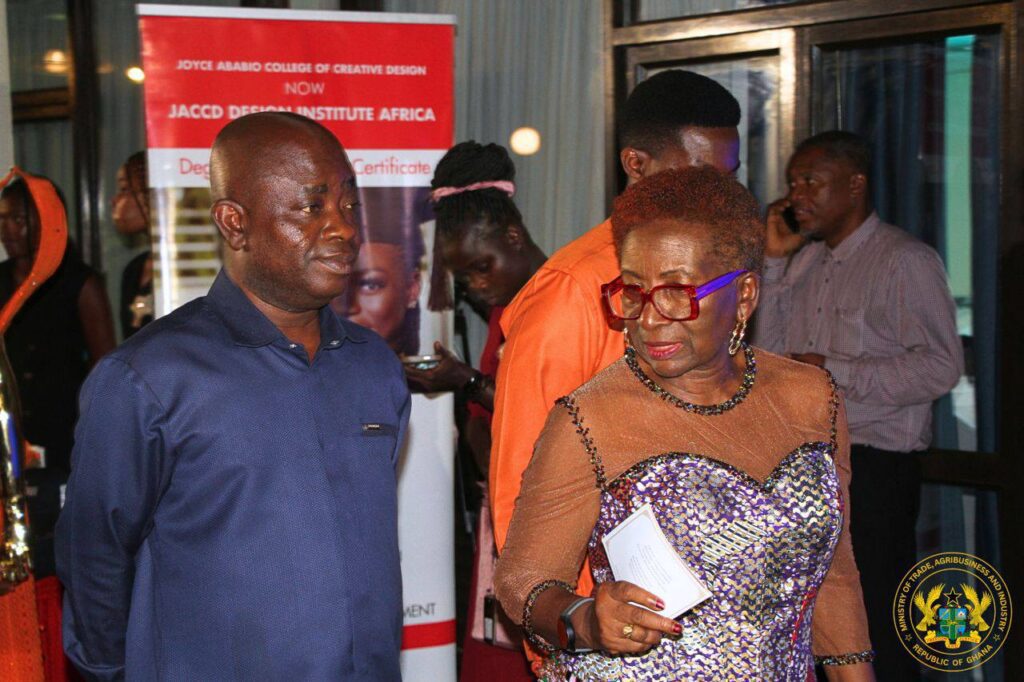
As the launch event concluded, the sentiment among the participants was one of optimism. The creation of the West Africa Fashion Consortium Ghana is a bold statement by the Ministry of Trade, Agribusiness and Industry, that the fashion industry is no longer a soft sector, but a hard industrial priority.
The collaboration between the government and the private sector, led by Madam Okra, provides a robust framework for the implementation of these ambitious goals.
READ ALSO: Ghana’s Power Sector Faces Higher Risk as Demand Outpaces Infrastructure