United Nations has warned that its peacekeeping operations are coming under increasing pressure as funding shortfalls, evolving conflict environments, and rising operational risks significantly undermine their ability to protect civilians and maintain stability in fragile regions.
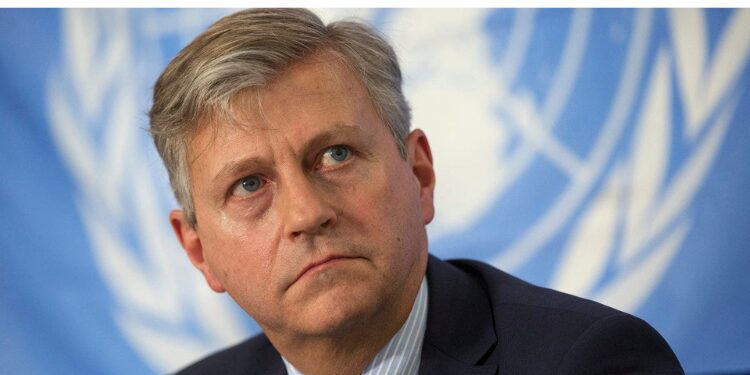
Briefing ambassadors at the Security Council alongside senior UN Headquarters and field officials, Under-Secretary-General for Peace Operations Jean-Pierre Lacroix stressed that peacekeeping missions must remain flexible and adaptable in the face of rapidly changing global security conditions.
However, UN officials warned that the effectiveness of these missions is increasingly constrained by financial pressures.
Over the past year, peacekeeping operations have faced what were described as “significant financial challenges,” forcing contingency measures that are already impacting their performance in the field.
According to Lacroix, budget constraints are limiting missions’ ability to deliver on core mandates, including the protection of civilians and the safety of UN personnel deployed in high-risk environments.
He warned that these pressures are weakening operational capacity at a time when demands on peacekeepers remain high across multiple global hotspots.
One of the most serious consequences has been the closure of bases and reductions in air support, which have weakened situational awareness and early warning systems. Lacroix said this has created “blind spots” that limit proactive intervention, reduce rapid response capabilities, and delay deployment to emerging crises.
Moreover, Lacroix called on Member States to meet their financial obligations without delay, urging them to pay assessed contributions “in full and on time.” He indicated that predictable funding is essential to ensure peacekeeping missions can function effectively and respond quickly to threats on the ground.
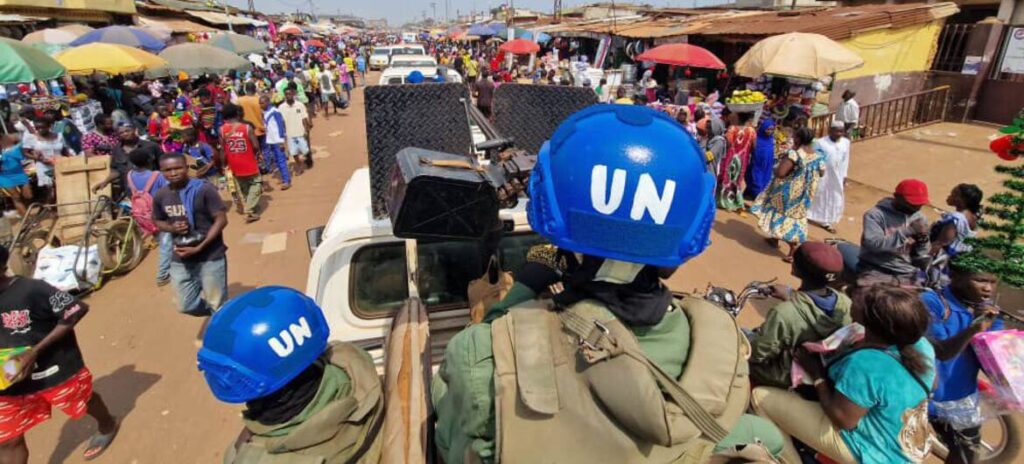
The briefing also highlighted deteriorating conditions in several mission areas, including the Central African Republic and Abyei, where peacekeepers continue to operate under complex and shifting security threats.
In the Central African Republic, UN forces have supported a period of relative stability following elections held in December 2025, which were largely peaceful. However, the situation remains fragile, with armed group activity and human rights violations persisting in parts of the country.
Lieutenant General Humphrey Nyone, Force Commander of the UN mission in CAR (MINUSCA), described the situation as a “post-election consolidation phase,” noting that while some regions have seen improved security, others remain highly unstable.
Meanwhile, in Abyei, UN peacekeepers operate in a “relatively stable” but highly precarious environment, where intercommunal violence, criminal activity, and the spillover effects of the Sudan conflict continue to pose serious risks.
However, peacekeeping operations have sustained through ongoing engagement, regular patrols, and close coordination with local communities. Despite these efforts, insecurity persists at a lower intensity, with intercommunal clashes, cattle raiding, and various forms of criminal activity continuing to threaten stability.
The presence of armed groups operating outside authorised frameworks also remains a violation of existing agreements, further undermining peace efforts in the area.
In addition, the conflict in Sudan has worsened the situation by disrupting political processes and heightening insecurity along the border region, adding another layer of complexity to already fragile conditions and complicating efforts to restore lasting stability.
Across all missions, peacekeeping is being tested by a combination of financial strain, political complexity, and increasingly sophisticated security threats, including the emergence of drone warfare in some conflict zones.
“While missions are employing new technologies, such as drones and satellite imagery to improve situational awareness and force protection, technology alone is not a solution.”
Jean-Pierre Lacroix
Jean-Pierre Lacroix added that missions need sufficient and trained personnel, integrated planning and sustained resources to stand the test of time.
UN Calls for Global Commitment to Strengthen Peacekeeping Efforts
Furthermore, United Nations officials have stressed that the effectiveness of peacekeeping operations depends not only on improvements in operational capacity, but also on sustained political will from member states.
According to UN officials, peacekeeping missions operate in complex and often volatile environments where the protection of civilians is a central priority. They noted that the success of these missions is closely tied to the degree of support they receive from the international community, particularly from the Security Council, which authorises and mandates their deployment.
They cautioned that peacekeeping operations would find it difficult to fulfil their obligations or bring about long-term stability in areas devastated by violence in the absence of a strong and consistent political commitment. They also underlined that mandates by themselves do not ensure achievement unless they are accompanied by strong and consistent support.
“Without sustained and unequivocal backing from this Council, our missions cannot deliver on the mandates entrusted to them, nor can they fully support the political processes at the heart of lasting peace.”
Jean-Pierre Lacroix
READ ALSO : Zelenskyy Rejects Sanctions Relief For Russia