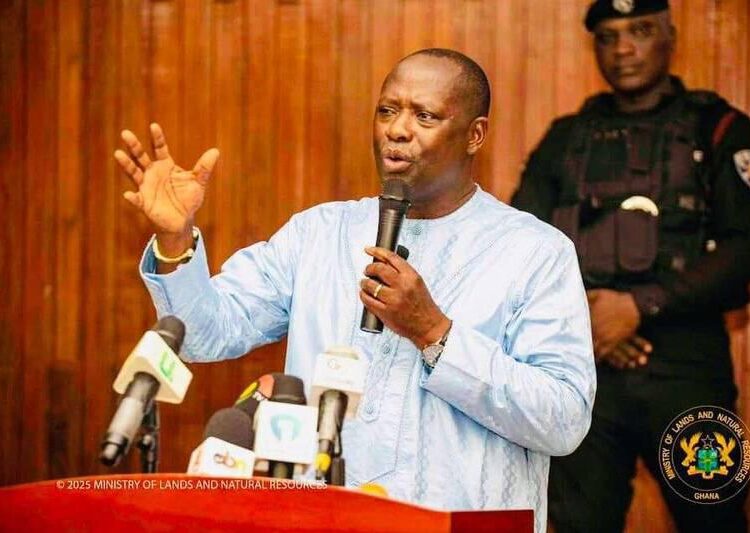
Minister for Lands and Natural Resources, Hon. Emmanuel Armah-Kofi Buah, has signaled a transformative era for the mining sector by emphasizing the government’s resolve to elevate the Ghana Geological Survey Authority (GGSA) into the country’s premier institution for mineral oversight.
This strategic repositioning seeks to address historical limitations that have long hampered the authority’s effectiveness, transforming it from a neglected department into a cornerstone of national development that provides the essential data required to drive Ghana’s economic prosperity through responsible resource management.
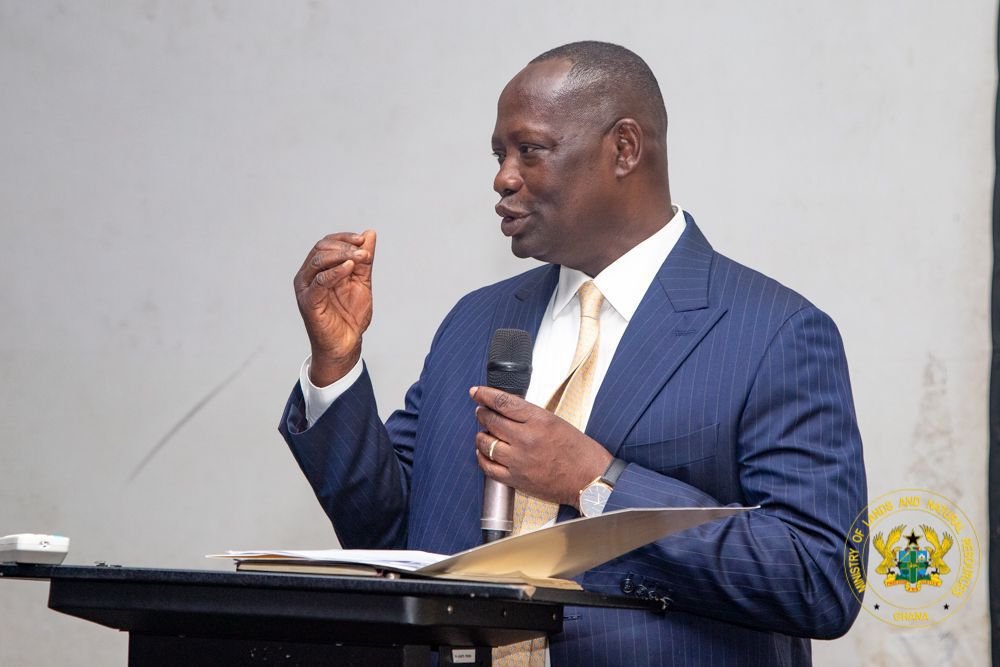
“And I think one of the very first things I said when I visited the Ghana Geological Survey was that my task, by the time I leave, is to make the people of Ghana know that you are the first, most important institution in the country’s mining industry.”
Hon. Emmanuel Armah-Kofi Buah
This initiative follows decades of decline that saw the once-proud institution struggle with obsolete equipment, dwindling budgets, and significant staff attrition, all of which undermined its capacity to serve a modern 21st-century economy.
By prioritizing the operationalization of the Ghana Geological Survey Authority Act, 2016 (Act 928) through a dedicated legislative instrument, the government aims to rectify years of stagnation, ensuring that the GGSA regains its status as the indispensable authority responsible for geological mapping, mineral resource assessment, and critical geo-hazard monitoring that protects both infrastructure and human life.
“Without the Ghana Geological Survey, working around identifying mineral areas to find where the gold is, we will all be blind. The draft legislative instrument before us is the key that finally unlocks the GGSA full potential.”
Hon. Emmanuel Armah-Kofi Buah
Unlocking Economic Potential Through Geo-Scientific Data
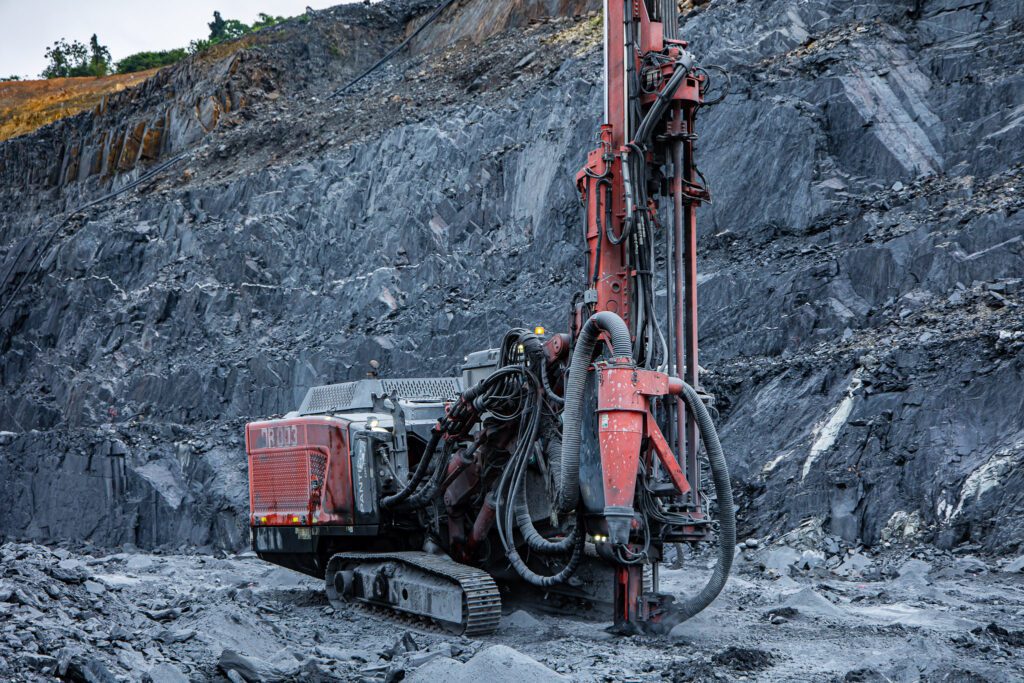
Positioning the GGSA as the premier mining institution is fundamentally about shifting from guesswork to data-driven governance. In the extractive sector, accurate geological data serves as the bedrock for investment and sustainable development.
By conducting systematic mapping, the GGSA identifies not only traditional mineral deposits but also non-traditional resources, allowing the state to diversify its mining portfolio and attract high-quality investment.
Furthermore, a well-resourced GGSA acts as a national repository for essential geoscientific data. This expertise allows the government to regulate the mining industry with precision, ensuring that exploration activities are conducted in areas with proven economic viability while minimizing environmental disruption.
As experts often note, “a properly conducted survey enables an accurate assessment of the quantity and quality of ore present,” which drastically reduces exploratory risks and operational waste, ensuring that the nation extracts maximum value from its natural endowments.
Strengthening Infrastructure and Public Safety

The role of the GGSA extends far beyond the mines, reaching into the very heart of Ghana’s infrastructure landscape.
The proposed legislative instrument mandates that site and foundation investigations be conducted by the authority before any major construction projects, such as dams, highways, or urban developments, are initiated.
This regulatory oversight is critical to curbing the “alarming incidents of illegal building” and structural failures that have plagued various parts of the country.
By integrating geological insights into the national planning process, the GGSA provides a vital safety net.
Whether it is monitoring earthquake risks or analyzing soil composition to prevent foundation failures, the authority’s technical advisory services serve as a prerequisite for resilient infrastructure.
This shift ensures that the nation’s growth is not only rapid but also safe and sustainable, safeguarding the investments of the state and the lives of its citizens.
A New Framework for Transparency and Accountability

The commitment to finalizing the Legislative Instrument (L.I.) represents a bold step toward institutional autonomy and global best practices in geoscientific governance.
By providing clear guidelines, standards, and procedures, the L.I. serves as a “regulatory backbone” that empowers the GGSA to hold both public and private stakeholders accountable.
This transparency is vital for the responsible management of the nation’s mineral wealth, as it ensures that all mining activities are documented, assessed, and conducted according to international standards.
For stakeholders in the mining sector, this regulatory framework provides much-needed clarity, fostering an environment where responsible mining can thrive.
As the Minister highlighted, the government is fully committed to strengthening the legal and institutional framework of the extractive sector, viewing this L.I. not as a mere formality, but as a “platform that affords us a valuable opportunity” to align national interests with the evolving needs of the global mining industry.
Through this collaboration, the GGSA is poised to transition into an institution that is not only relevant but essential to the day-to-day life and future prosperity of every Ghanaian.
READ ALSO: NDPC And Stakeholders Convene Workshop to Strengthen Food Systems and Nutrition Planning