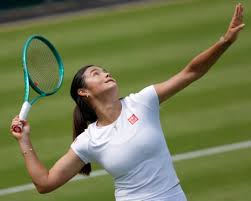
Wimbledon has officially started today but Emma Raducanu’s late withdrawal from the tournament has delivered a sharp competitive blow to British tennis, stripping the tournament of its most marketable homegrown star.
The decision, confirmed on the eve of her opening match, was caused by a stress fracture in her right leg that medical scans revealed had worsened despite attempts to manage the injury.
The timing could hardly be more disruptive. Raducanu had been scheduled to play Croatia’s Antonia Ružić in the first round on Court One, with expectations high that she could mount a deep run on home soil.
Instead, Wimbledon begins without its most prominent British women’s singles contender, immediately shifting the narrative around the draw.
Her withdrawal also follows a pattern of physical setbacks that have increasingly defined her career since her breakthrough at the 2021 US Open. The latest injury did not emerge in isolation, but rather escalated from a lingering issue that worsened during the grass-court build-up.
That context matters because this is not a sudden breakdown, but the endpoint of accumulated strain.
A Brutal Reality Check for British Expectations
The immediate consequence is simple, Britain loses its central figure in the women’s draw before a ball is struck. That matters not just emotionally but structurally.
Wimbledon’s home interest often hinges on a small cluster of British players capable of going deep into the second week, and Raducanu sits at the top of that hierarchy.
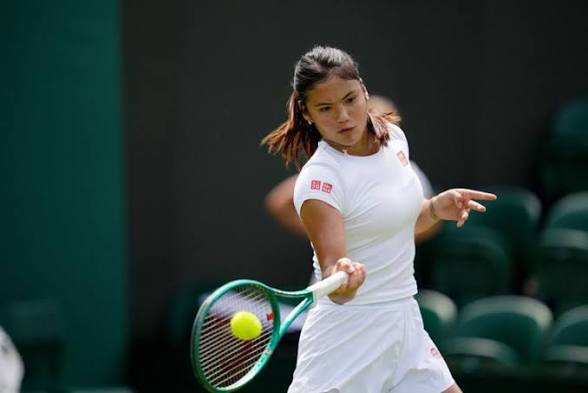
Her absence forces a recalibration of expectations. Without her, British hopes now depend on lower-ranked players facing tougher early-round paths and less favourable seeding positions.
That shifts attention away from genuine title contention and toward isolated match-by-match progress, a significant downgrade in narrative momentum for the host nation.
It also exposes a recurring issue, depth. British tennis has produced headline names in recent years, but not enough consistent performers to cushion the impact when a leading figure withdraws. Raducanu’s exit makes that imbalance visible again.
Injury Pattern Becoming the Defining Story
Beyond the immediate tournament impact, the withdrawal reinforces a more uncomfortable theme; availability is becoming as important as ability. Raducanu’s career trajectory has repeatedly been interrupted by injuries, limiting continuity and preventing sustained ranking consolidation.
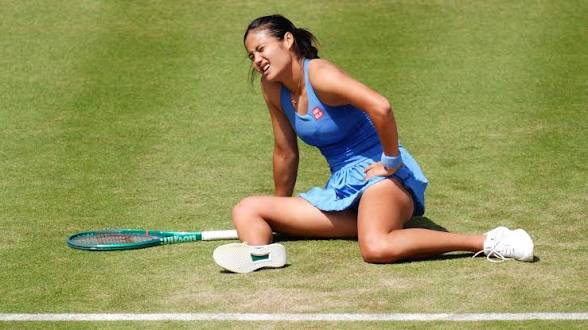
This latest setback, a stress fracture confirmed by scans, fits into that broader pattern of recurring physical interruptions. Even when she has shown strong form, such as reaching the Queen’s Club final earlier in the season, it has been followed by fitness concerns that reduces her capacity to build full momentum.
That inconsistency has a tactical effect too. Opponents do not only prepare for her game style; they prepare for uncertainty around her physical state. In elite tennis, that alone changes perception, rhythm, and long-term planning.
Wimbledon’s Commercial and Competitive Shock
Raducanu’s withdrawal is not just a sporting loss, it is also a commercial one. She remains one of the most recognisable British athletes in global sport, and Wimbledon has historically leaned heavily on home narratives to amplify its opening-week visibility.
Her absence reduces the emotional hook for domestic audiences and removes a potential second-week storyline that broadcasters often build around. That leaves organisers more reliant on established global stars to carry early interest, rather than a home narrative that could have driven additional attention.

Competitively, the women’s draw also becomes more open. While Raducanu was not among the top favourites, her presence would have altered early-round dynamics, particularly for seeded players who might have been projected into her section of the draw.
A Fork in the Road Rather Than a Collapse
The broader question is not whether this withdrawal defines her career, but whether it becomes a turning point in how her season is managed going forward. Stress fractures are not minor setbacks; they require restraint, rehabilitation and careful workload control.
If handled correctly, this could force a necessary reset in scheduling and physical management. If mishandled, it risks becoming another episode in a repeating cycle of return, strain, and breakdown.
For Wimbledon 2026, though, the impact is immediate and unavoidable. One of Britain’s most visible sporting figures is absent, the home narrative is thinner, and the draw has lost a layer of unpredictability.
Raducanu’s challenge now is not about the grass courts of London, but about restoring durability to a career that continues to swing between promise and interruption.