
Ghana’s government is signalling a more aggressive push to revive the upstream petroleum sector, with Energy and Green Transition Minister Dr. John Abdulai Jinapor placing production recovery, gas expansion and regulatory reform at the centre of discussions with industry leaders.
The Minister disclosed the priorities after a meeting with the Ghana Upstream Petroleum Chamber, describing the engagement as part of efforts to review the condition of the sector since the current administration took office and to align government and industry around a longer-term growth strategy.
The discussions come at a critical moment for Ghana’s petroleum industry, where concerns about maturing fields, declining oil output and the need for new investment are increasingly shaping energy policy.
Reversing the decline in oil production is high on our agenda, alongside increasing gas production to meet growing domestic demand, particularly for power generation.
Energy and Green Transition Minister Dr. John Abdulai Jinapor
From confidence restoration to capital commitment
The Minister indicated that government intends to deepen reforms aimed at restoring investor confidence and improving the attractiveness of Ghana’s upstream sector.
According to him, the ongoing review of the legal and regulatory framework is intended to make the sector more competitive and better positioned to attract long-term investment.

The emphasis is significant because Ghana is competing for capital with other African petroleum jurisdictions that are also offering regulatory reforms, fiscal incentives and infrastructure advantages.
A key priority for Government is to continue and deepen the reforms that have contributed to restoring confidence in Ghana’s upstream petroleum sector and creating a more attractive environment for investment.
Energy and Green Transition Minister Dr. John Abdulai Jinapor
The statement suggests that government views investor interest as necessary but insufficient; the challenge is converting interest into committed capital capable of supporting exploration, development and production growth.
Production decline moves to the centre of policy
Ghana’s established producing assets; Jubilee, TEN and Sankofa-Gye Nyame, remain the backbone of national petroleum output, but concerns have grown about sustaining production levels as fields mature.
The Minister’s remarks indicate that government is treating production decline as a strategic issue rather than a routine operational challenge.
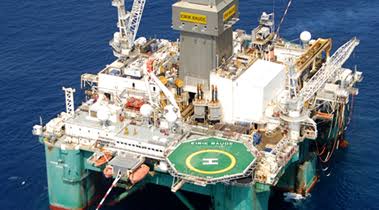
Analysts say that sustained declines would affect export earnings, petroleum revenue, foreign-exchange inflows and the economics of associated gas supply.
The stronger policy signal is that Ghana is trying to balance two objectives simultaneously: maintaining output from existing assets while creating conditions for future investment and resource development.
Gas becomes the bigger story
While oil production remains important, the engagement suggests that natural gas is increasingly becoming the more urgent energy-security priority.
Dr. Jinapor linked higher gas production directly to domestic demand, particularly for electricity generation.
Increasing gas supply for domestic consumption, especially power generation, will be critical to improving energy security and reducing our dependence on imported natural gas and other energy products.
Energy and Green Transition Minister Dr. John Abdulai Jinapor
This is a notable shift in emphasis.
For much of the past decade, upstream policy discussions were often dominated by crude oil production.
The current framing places gas at the centre of power-sector stability, industrial development and import reduction.
The deeper implication is that Ghana’s future energy security may depend less on maximizing crude exports and more on ensuring reliable domestic gas availability for power plants and industry.
Domestic value addition gains prominence
The Minister also stressed the need to process and utilise more of Ghana’s oil and gas resources within the country.
That position aligns with broader government efforts to strengthen domestic refining, expand gas utilisation and increase industrial value addition.

Our objective is to maximise the value of the oil and gas produced in Ghana by processing and utilising more of our resources domestically.
Energy and Green Transition Minister Dr. John Abdulai Jinapor
The policy argument is that exporting raw resources captures only part of the value chain, while domestic processing can support jobs, industry and foreign-exchange savings.
However, analysts caution that value addition requires more than policy ambition; it depends on commercially viable infrastructure, reliable demand, financing and operational efficiency.
Industry concerns remain part of the equation
The meeting was not presented as a one-way government briefing.
Dr. Jinapor said the engagement provided an opportunity to discuss concerns raised by the Chamber, signalling that government is seeking a more collaborative relationship with upstream operators.
The Minister described the interaction as constructive and emphasised the importance of partnership between government and industry.

A strong partnership between Government and industry is essential to building a more competitive, predictable and sustainable petroleum sector.
Energy and Green Transition Minister Dr. John Abdulai Jinapor
The reference to predictability is particularly important.
Industry participants have repeatedly identified regulatory certainty, contract stability, payment discipline and timely approvals as key factors influencing investment decisions.
What the engagement reveals
The meeting points to a broader evolution in Ghana’s petroleum strategy.
Three themes stand out.
First, investment confidence remains the immediate objective. Government appears focused on ensuring that Ghana remains competitive for upstream capital.
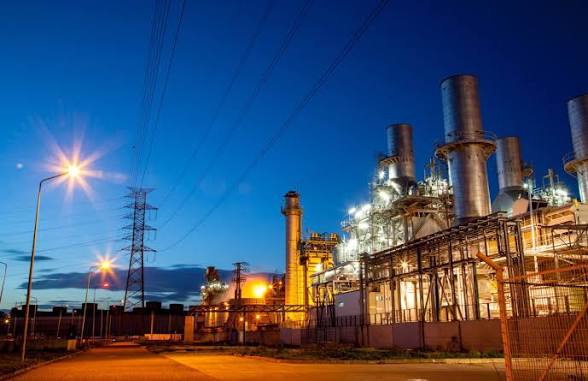
Second, gas security is becoming more important than oil growth alone. The linkage between gas production and power generation was one of the clearest messages from the engagement.
Third, domestic value addition is being integrated into upstream policy. The emphasis is no longer solely on producing hydrocarbons, but on how much economic value is retained within Ghana.
The real test is implementation
The stronger rhetoric around reform and partnership will ultimately be judged by implementation.

Investors will watch for concrete changes in the legal and regulatory framework, progress on infrastructure projects, improvements in payment flows across the energy value chain and evidence that production-enhancing investments are being advanced.
The engagement with the Ghana Upstream Petroleum Chamber suggests that government is trying to move the conversation beyond short-term sector management toward a broader strategy of production sustainability, gas-led energy security and domestic industrial value creation.
If those objectives are pursued consistently, the meeting may prove to be more than a routine stakeholder engagement.
It could mark an attempt to reposition Ghana’s upstream sector for a period in which competitiveness, predictability and domestic energy value are becoming as important as the discovery of new barrels.
READ MORE: NPP Seeking Clarity On 70% Cocoa Pricing Clause In Bill — Communications Member