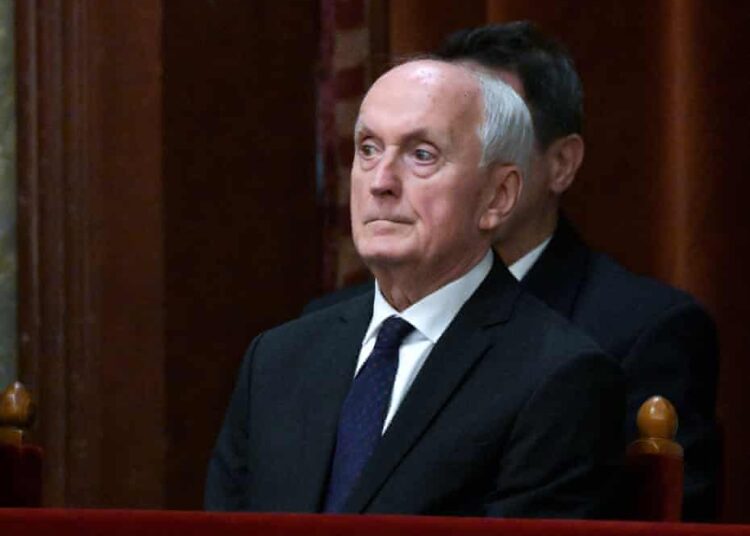
Former European Court of Human Rights and Hungarian Supreme Court judge, András Baka has been elected Hungary’s new President.
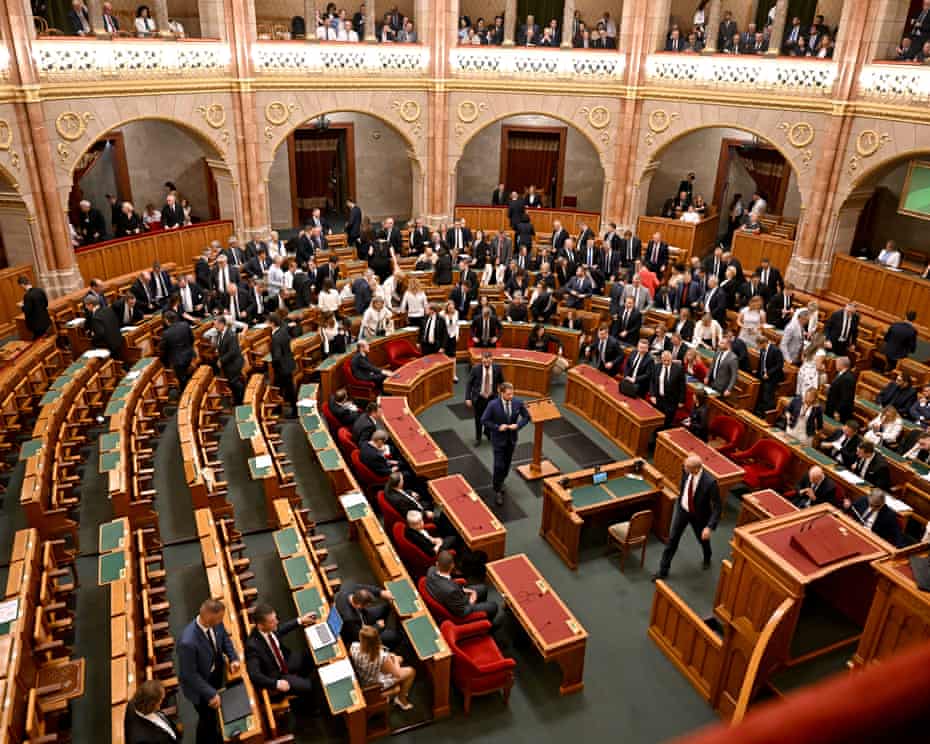
Baka, 72, secured 140 votes out of 146 cast in parliament, with six lawmakers voting against his appointment. Former Prime Minister Viktor Orbán’s Fidesz party, the main opposition force, boycotted the vote. He succeeds Tamás Sulyok, a former ally of Orbán who was removed from the presidency last month.
Baka’s election is notable because of his previous confrontation with the Orbán government and his record as a senior judge. Baka was removed as President of Hungary’s Supreme Court in 2011, three years before the end of his term. His dismissal took place under the government led by Orbán, and Baka later brought a case against Hungary before the European Court of Human Rights, where he successfully challenged his removal.
His return to the country’s highest constitutional office comes as Hungary’s new government seeks to distance itself from the policies and political practices associated with the Orbán era.
Baka was Péter Magyar’s second pick for the post, as the Hungarian Prime Minister’s original candidate, chess legend Judit Polgár, declined the offer saying she “did not feel enough strength within me to take on the historic responsibility of uniting a divided nation.”
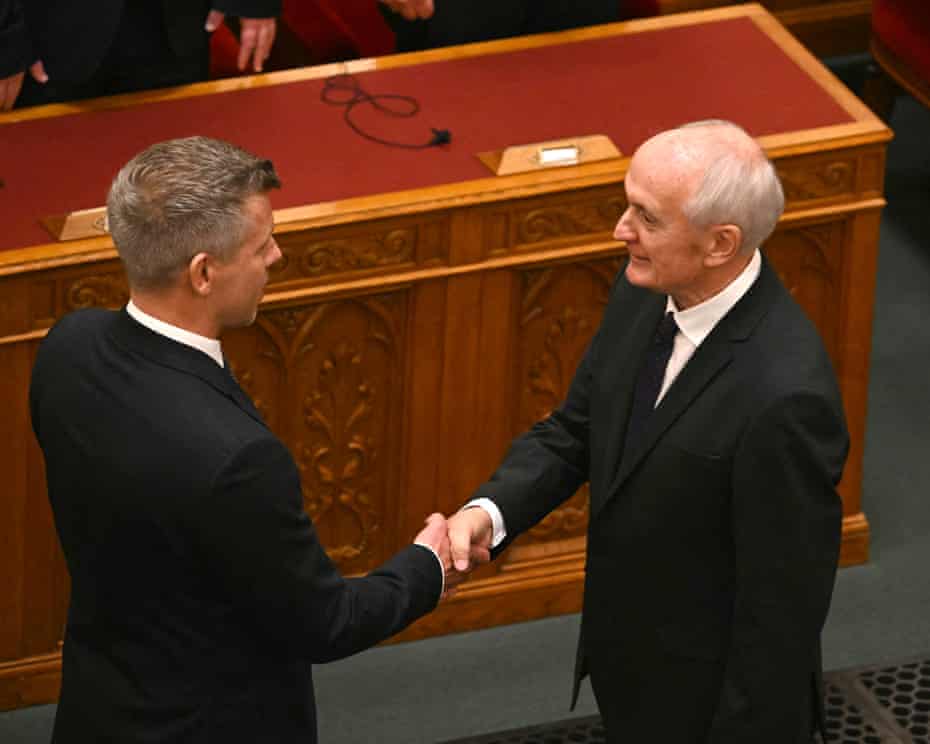
In his acceptance speech, Baka said that Hungary had reached a point where it needed to examine how the state functions after what he described as two decades marked by a “serious crisis” and deep divisions within society. “I believe we have reached a period in its history when a serious reflection is needed about the functioning of the state,” Baka said.
He criticised the divisions that developed during the previous government, arguing that political narratives had increasingly separated Hungarians into opposing groups. He pointed to divisions between Budapest and other parts of the country, younger and older generations, as well as majorities and minorities. According to Baka, these divisions weakened trust among citizens and contributed to a political environment in which disagreement was treated as hostility.
“They wanted to make us believe that anyone who thinks differently is not simply wrong, but an enemy. However, this country cannot build a common future while its citizens see each other as enemies. Therefore, the task before us requires both justice and self-restraint.”
András Baka
Baka said that political change should not result in a reversal of fear, warning against creating a system in which those who previously held power or influence become targets of retaliation.
“Political change cannot mean that from now on, different people must fear others, be silent or feel like outsiders in their own country. One thing is certain: we cannot build the new Hungary on revenge.”
András Baka
The new President argued that restoring the rule of law would require more than an electoral victory. He said that Hungary needed to rebuild what he described as “a democratic and functioning constitutional culture”, where limits on executive authority are accepted and criticism, disagreement and compromise can take place without being portrayed as betrayal.
Baka said that he would maintain political neutrality as President while remaining committed to defending democratic values and representing the diverse views of Hungarian society. He also addressed the question of constitutional reform, warning against creating a new constitution primarily to reflect the preferences of a temporary parliamentary majority.
Any new constitutional framework, he said, should be designed with a long-term perspective rather than to serve “the momentary majority.” “If the government were to do that, they would be making the same mistake the consequences of which we are now trying to resolve,” Baka said.
Baka Talks About Hungary’s Foreign Policy
Foreign policy and Hungary’s relationship with Europe also featured prominently in his remarks. Baka said the country needed to restore relations with Europe and other international partners and emphasised Hungary’s longstanding cultural and historical connections to the continent. “Hungary’s place in Europe is not a momentary decision of the current government, but a consequence of our history, culture and interests,” he said.
Baka also highlighted the responsibilities of the Hungarian state towards ethnic Hungarians living outside the country’s borders. The issue has frequently featured in Hungary’s relations with neighbouring countries, including Ukraine and Slovakia.
While the Hungarian presidency is largely a constitutional and ceremonial position, Baka’s election carries significance because of his judicial background and his previous legal challenge against the government that removed him from the Supreme Court.
His remarks suggest that he intends to use the presidency to promote institutional checks, political restraint and greater trust among citizens.
Baka concluded his acceptance speech by emphasising the purpose of government and public institutions, making a point that the state’s first task is to serve its people.
READ ALSO: Syria Hands Death Sentence to Assad