Ghana’s economic recovery, though showing strong signs of progress, remains fragile and structurally incomplete, the World Bank has warned, calling for urgent and decisive reforms in the cocoa and energy sectors to protect fiscal stability and secure long-term growth.
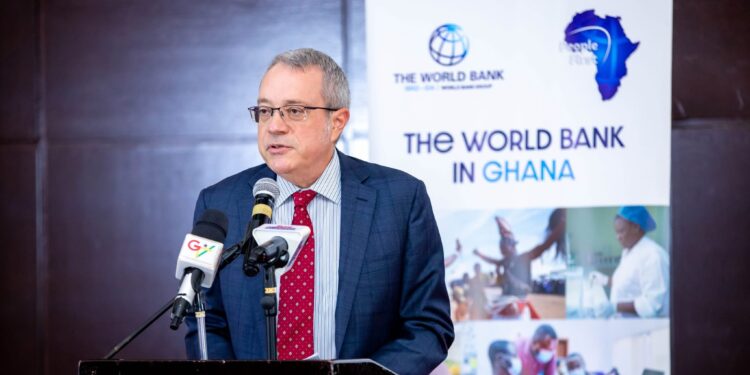
The World Bank Division Director for Ghana, Liberia and Sierra Leone, Robert R. Taliercio, said inefficiencies within the Ghana Cocoa Board (COCOBOD) are placing significant strain on cocoa farmers and on the country’s public finances, posing one of the biggest domestic threats to the recovery process.
He was speaking at the launch of the Bank’s Tenth Ghana Economic Update in Accra, an event that reviewed Ghana’s macroeconomic performance and the outlook for sustained growth.
According to Mr. Taliercio, while government has made notable gains in restoring macroeconomic stability under its economic reform programme, those gains could be quickly reversed if deep rooted problems in strategic sectors of the economy are not addressed.
He argued that without bold and decisive reforms, particularly in cocoa and energy, the fiscal improvements achieved so far will remain vulnerable. At the heart of the concerns is COCOBOD’s financial and operational model.
Mr. Taliercio said the institution’s current structure is burdened with financial and operational inefficiencies that affect its ability to support farmers effectively while also creating spill over effects on government finances.
COCOBOD has for years played a central role in Ghana’s cocoa economy, providing inputs, financing, and guaranteed prices to farmers. However, the cost of its operations, its debt obligations, and its quasi-fiscal activities have raised concerns about sustainability.
“The challenges facing the cocoa sector are among the key domestic risks that could undermine Ghana’s economic recovery if not addressed.”
Mr. Taliercio
Mr. Taliercio observed, adding that the sector’s financial position requires urgent attention. He noted that the institution’s performance has direct implications for the livelihoods of hundreds of thousands of cocoa farming families as well as for the broader fiscal framework, given the contingent liabilities it creates for the state.
The Call for Reform of Cocoa Board Act
To address these challenges, the World Bank is advocating for a comprehensive review of the legal and operational framework governing COCOBOD.
Mr. Taliercio said reforms to the Cocoa Board Act are essential to ensure the sustainability of the entire cocoa value chain. He welcomed ongoing public discussions around the law and called for far reaching amendments that would reorient the sector towards market based principles and limit its fiscal risks.
“We welcome continued discussion and debate on the Cocoa Board Act, and we suggest that far-reaching reforms of the Act are needed to promote market-based principles and minimise quasi-fiscal risks.”
Mr. Taliercio
Such reforms, he explained, would help improve efficiency, enhance transparency, reduce the financial burden on the state, and ultimately create a more competitive environment that benefits farmers.
He stressed that a modernised legal regime should clarify COCOBOD’s mandate, streamline its operations, and introduce stronger commercial discipline in its activities.
Energy and Cocoa Linked to Fiscal Stability
Beyond cocoa, Mr. Taliercio linked the future of Ghana’s fiscal consolidation to reforms in the energy sector as well, warning that the two sectors combined represent major sources of fiscal pressure. He said failure to implement decisive measures in both areas could erode the hard won fiscal gains achieved through recent economic reforms and weaken investor confidence.
He further emphasised the need for Ghana to strengthen its overall fiscal position and reduce reliance on policies and interventions that place additional strain on public finances.
According to him, building fiscal buffers and ensuring that state owned enterprises operate on a commercially viable basis are critical steps towards protecting the economy from shock.
Despite improvements in key macroeconomic indicators such as inflation, growth, and fiscal balances, Mr. Taliercio described Ghana’s economic recovery as “structurally incomplete”. He argued that headline improvements mask underlying vulnerabilities that must be fixed to make the recovery durable.
One of those vulnerabilities is Ghana’s heavy dependence on primary commodity exports, particularly cocoa and gold. He noted that such dependence exposes the economy to sharp swings in international commodity prices, making revenues unpredictable and planning difficult.
“Ghana’s heavy dependence on cocoa and gold exports exposes the economy to fluctuations in international commodity prices,” he said, highlighting the need to broaden the country’s productive base.
The Push for Export Diversification
To build a more resilient economy, the World Bank official called for deliberate efforts to diversify Ghana’s export base and implement reforms that support market based economic activity.
Diversification, he said, would not only reduce exposure to commodity price volatility but also create more jobs and expand opportunities for value addition within the country.
He explained that an economy driven by competitive markets, private sector innovation, and diversified exports would be better positioned to withstand external shocks and sustain inclusive growth.
Mr. Taliercio urged government to sustain the momentum of reforms and to confront structural weaknesses in the cocoa sector head on. He said protecting fiscal gains, restoring confidence in the cocoa industry, and laying the groundwork for long term economic growth will depend on how quickly and effectively these reforms are implemented.
For Ghana, he concluded, the path to a more resilient and prosperous economy lies in moving beyond stabilisation towards deeper structural transformation, with the cocoa and energy sectors as critical starting points.
READ ALSO: Ghana’s Fiscal Recovery Gains Momentum as Debt Plunges to 49%