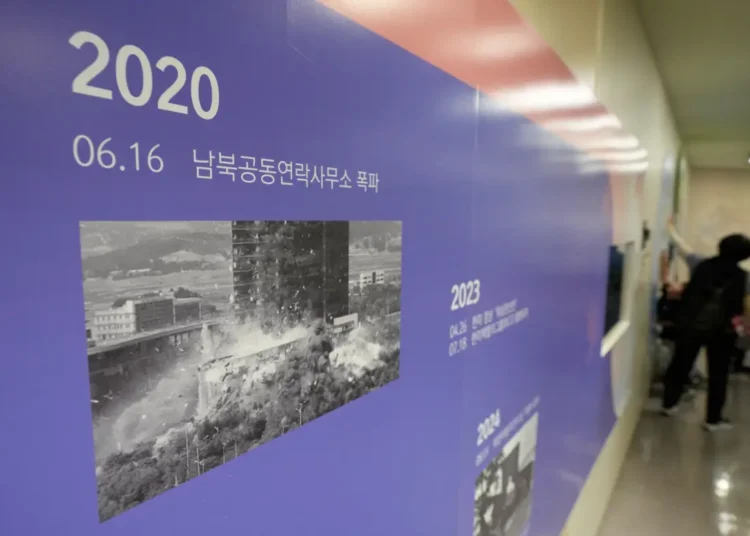
A South Korean court has ordered North Korea to pay 44.6 billion won ($32.5 million) in compensation for the 2020 destruction of a joint liaison office, in a ruling that highlights the deepening breakdown in relations between the two Koreas.
The Seoul Central District Court issued the ruling today, Wednesday, September 16, 2026, finding North Korea responsible for the destruction of the South Korean-built facility in Kaesong, a border city in the North.
The decision is largely symbolic, however, as South Korea has no clear mechanism to compel North Korea to comply with the order amid the absence of meaningful diplomatic engagement between the two countries.
The case marked the first time the South Korean government had sued the North Korean government. Individuals have previously brought legal cases against Pyongyang over human rights abuses and other matters.
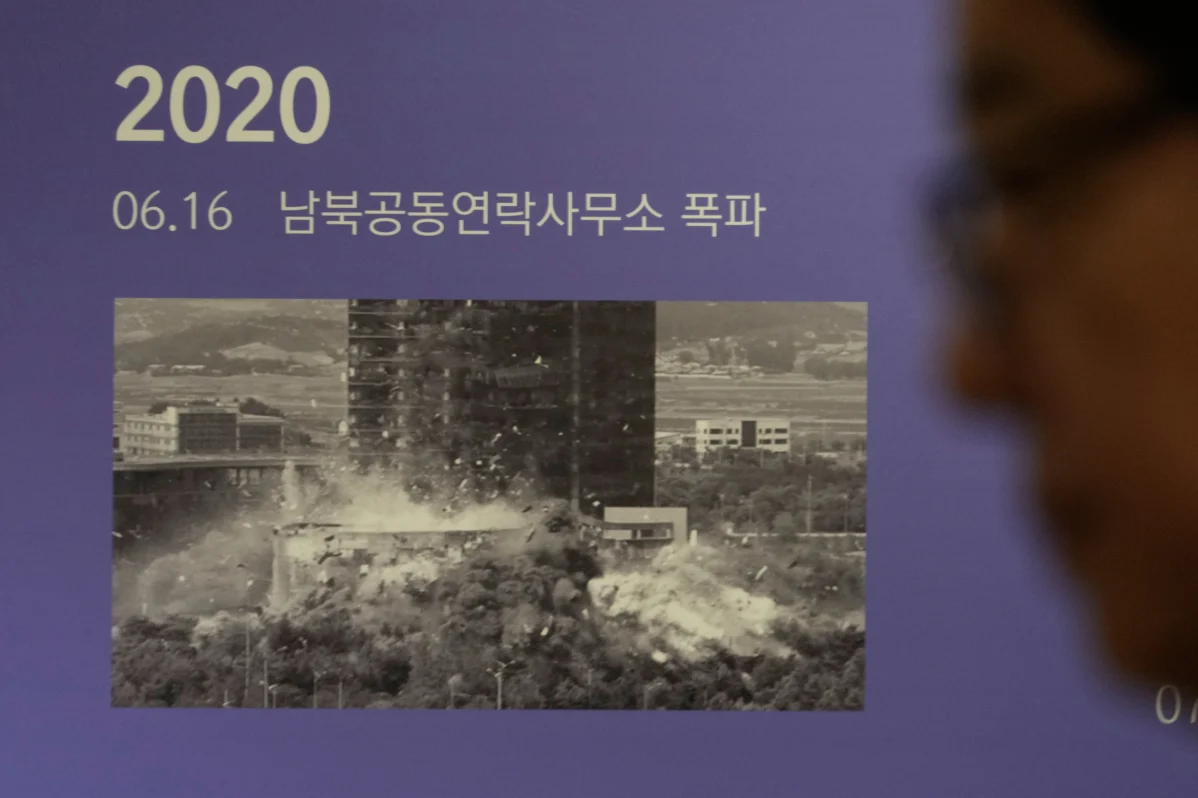
The liaison office was destroyed in June 2020 after relations between the two Koreas deteriorated sharply. North Korea had accused Seoul of failing to prevent North Korean defectors from sending anti-Pyongyang propaganda leaflets across the border using balloons.
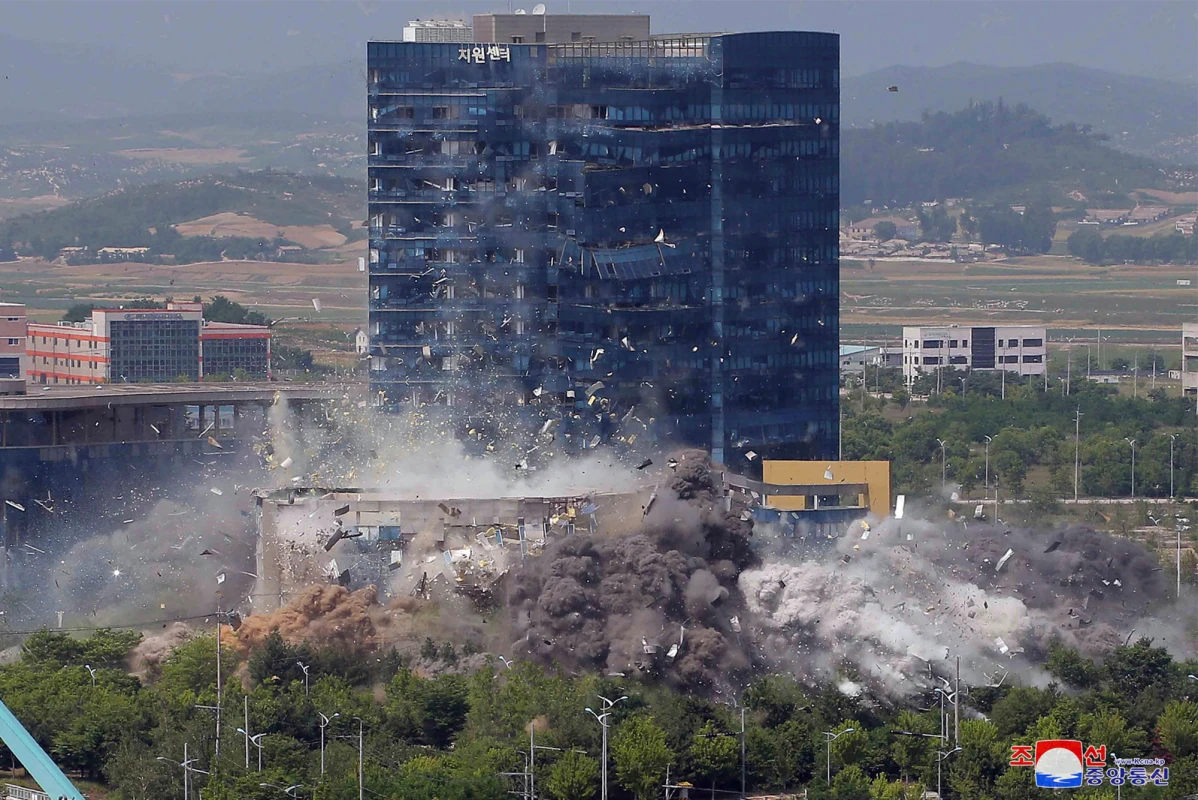
North Korea had already closed the liaison office in January 2020 as it shut its borders over concerns about the coronavirus pandemic, leaving the building empty when it was demolished with explosives several months later.
The destruction was widely viewed at the time as a deliberate demonstration of Pyongyang’s anger toward Seoul. It came amid a broader collapse in diplomatic efforts surrounding North Korea’s nuclear programme and negotiations with the United States.
Former South Korean President, Moon Jae-in had met North Korean leader Kim Jong Un three times in 2018 and played a role in facilitating Kim’s first summit with then-U.S. President Donald Trump in June of that year.
However, the diplomatic process stalled after Kim and Trump’s second summit in 2019 ended without an agreement. The United States rejected North Korea’s demand for significant sanctions relief in exchange for a partial surrender of its nuclear capabilities.
South Korea filed the compensation lawsuit in 2023, arguing that the destruction of the liaison office constituted an unlawful and violent act that violated agreements between the two countries and seriously damaged “mutual respect and trust.”
The case was brought while South Korea was under a conservative government that adopted a tougher approach toward North Korea’s nuclear and missile programmes. Seoul also strengthened security cooperation with the United States and Japan while raising concerns over North Korea’s military support for Russia’s war in Ukraine.
Relations have remained strained despite a change in South Korea’s political leadership. Current liberal President Lee Jae Myung, who took office last year after conservative President Yoon Suk Yeol was removed following his brief declaration of martial law in December 2024, has adopted a softer tone toward Pyongyang and called for renewed dialogue.

North Korea, however, has so far rejected Lee’s overtures.
Kim has continued expanding North Korea’s nuclear weapons and missile capabilities while deepening ties with Russia. Pyongyang has sent thousands of troops and substantial quantities of weapons to support Russian President Vladimir Putin’s war in Ukraine.
Trump has also expressed interest in reviving dialogue with Kim during his second term. Last month, he ordered the Pentagon to “substantially reduce” a major military exercise with South Korea, citing what he described as a “good relationship” with the North Korean leader.
North Korea has nevertheless dismissed Trump’s offers of dialogue and called on Washington to abandon its demand for denuclearization as a condition for renewed negotiations.
South Korea Calls for Dialogue
South Korea’s Unification Ministry, which oversees inter-Korean affairs, said that it respected the court’s ruling while calling for the two Koreas to return to diplomacy.
The ministry urged Seoul and Pyongyang to resolve outstanding issues through engagement, saying that “all issues between the South and North can be resolved through dialogue and cooperation.”
The statement reflects Seoul’s continued push for diplomatic engagement despite the lack of a positive response from Pyongyang.
North Korean state media had not immediately commented on the court’s decision.
The ruling therefore comes at a time when legal, political and diplomatic channels between the two countries remain severely constrained. While the compensation order establishes South Korea’s legal position regarding the destruction of the liaison office, its practical enforcement will depend on circumstances that currently offer little indication of North Korea accepting the judgment.