United Kingdom has agreed to provide Saudi Arabia with limited military support to help defend against attacks by Iran-backed Houthi forces in Yemen.
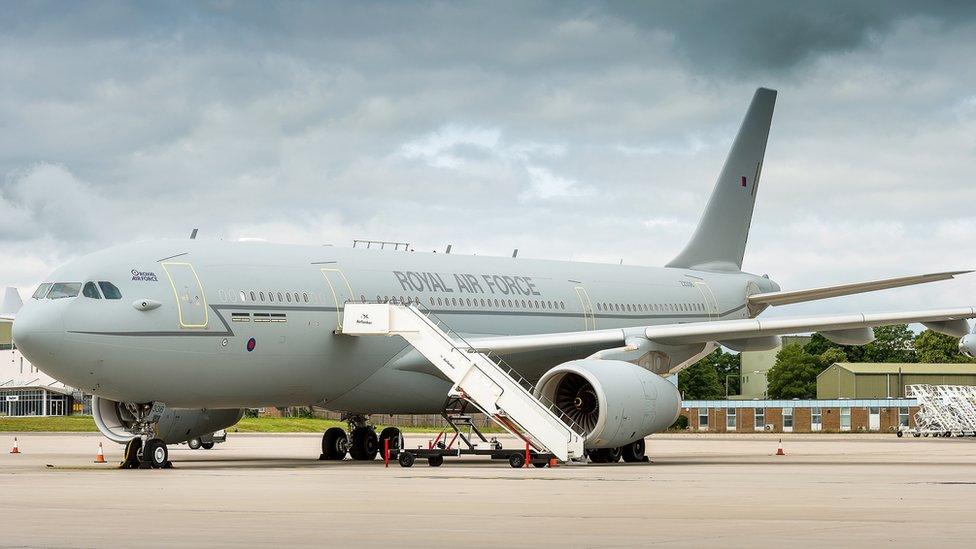
UK Prime Minister Andy Burnham approved the deployment of a Royal Air Force Voyager aircraft to provide defensive air-to-air refuelling for Saudi aircraft after Riyadh formally requested military assistance. The arrangement is expected to begin within days and initially remain in place for several weeks.
British officials have characterised the deployment as defensive and time-limited, with the aircraft expected to operate from RAF Akrotiri in Cyprus.
Its role will involve refuelling Saudi fighter aircraft engaged in efforts to intercept Houthi missiles and drones targeting Saudi territory and critical infrastructure.
The decision comes as Houthi attacks have intensified across Saudi Arabia, adding pressure to a regional security environment already affected by conflict involving Iran and the United States. Houthi forces have claimed responsibility for missile and drone operations targeting Riyadh and the Red Sea city of Yanbu, while Saudi authorities have confirmed attempts to strike the capital.
Burnham approved the British response following advice from Defence Secretary Wes Streeting and Foreign Secretary Ed Miliband. He linked the intervention to Britain’s economic interests, particularly the need to protect energy supplies and maintain shipping routes whose disruption could feed into already significant cost-of-living pressures.

“I go back to the point I made about cost-of-living pressures and acting to secure the interests of Britain and the wider region. Because, of course, Saudi Arabia has been experiencing attacks, is looking at potential further disruption, and we need to keep those pathways open, and hence our agreement to the request.”
Andy Burnham
The latest British commitment therefore places an RAF asset in a defensive operation intended to strengthen Saudi Arabia’s ability to respond to aerial threats without committing British combat aircraft to direct strikes against Houthi positions.
Red Sea Security Draws Britain Deeper Into Yemen Conflict
The British deployment places London in a delicate position as the conflict in Yemen becomes increasingly connected to wider struggles for influence and security across the Middle East.
The Houthis control large parts of northern Yemen and have been fighting Yemen’s internationally recognised government, which receives backing from Saudi Arabia.
Recent attacks have intensified the security pressure on Riyadh. Saudi Arabia confirmed that a ballistic missile launched by Houthi forces was intercepted after an attempted attack on Riyadh on 19 September. Smoke was reported near the capital’s airport, while the Houthis also claimed attacks against energy infrastructure in Yanbu.
The attacks have raised concerns about Saudi Arabia’s ability to maintain sufficient air-defence capacity as the wider Middle East conflict places additional demands on regional military resources.
Saudi Arabia has consequently sought support from several international partners. Britain has now agreed to provide aerial refuelling, while other countries have also been involved in discussions over regional security. The United States, meanwhile, has so far avoided direct military intervention against the Houthis despite Saudi requests for assistance.
Meanwhile, the new operation also follows earlier British military action against Houthi targets. In January 2024, UK joined the United States in launching strikes against Houthi positions in Yemen after attacks on commercial shipping in the Red Sea. Then-Prime Minister Rishi Sunak described those strikes as an act of self-defence intended to protect lives and international shipping.
Further British-US strikes followed during 2024 as the Houthi campaign against shipping continued.
The current deployment differs from those operations because the RAF aircraft is being assigned to a defensive support role rather than directly striking Houthi targets. Its principal function will be to extend the operational range of Saudi aircraft through aerial refuelling, potentially allowing Saudi forces to maintain defensive patrols and respond to incoming threats.
Yet the deployment also creates a potential risk of deeper British involvement if the conflict persists. A mission initially defined as lasting several weeks could face pressure for an extension if Houthi attacks continue or if Saudi Arabia requests additional assistance.
Moreover, NATO Secretary-General Mark Rutte previously indicated that European countries were discussing how they could respond to the evolving threat.
He noted, “I would not be surprised if some phone calls were taking place between European allies, ‘hey, how are we going to deal with this?. Let’s see what happens, and if NATO can help, we will always be helpful.”
Britain’s own position has also evolved in recent weeks. Energy Minister Martin McCluskey previously confirmed to MPs that UK was providing air-defence support to Saudi Arabia through the two countries’ defence partnership.
The Voyager deployment now provides a clearer indication of what that support entails.