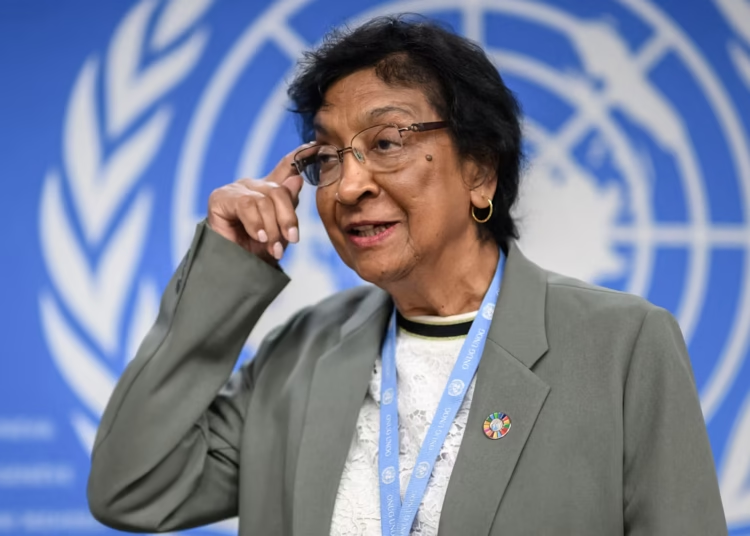
Former United Nations High Commissioner for Human Rights Navi Pillay has been awarded the 2026 Nobel Peace Prize in recognition of her decades-long efforts to advance international law, strengthen human rights protections and ensure accountability for war crimes, crimes against humanity and genocide.
The Norwegian Nobel Committee announced the South African jurist as this year’s laureate, honouring her efforts to promote peace and international law through a distinguished legal career that has taken her from defending opponents of apartheid to serving in some of the world’s most consequential international judicial institutions.
In its announcement, the committee praised Pillay for her commitment to building a more comprehensive global legal order.
“The Norwegian Nobel Committee has decided to award the Nobel Peace Prize for 2026 to Navanethem “Navi” Pillay for her efforts to promote peace and international law. Navi Pillay’s commitment to universal legal principles and her firm moral compass are constants in a long career.”
Nobel Committee
In her impromptu acceptance speech, 2026 Nobel Peace Prize laureate Navi Pillay joked that she initially struggled to believe the news after being informed that she had won the prestigious award.
“It must be a joke,” Pillay remarked. “Your applause means everything to me. But, being a lawyer and a judge, I still want to verify this thing. If you clap a little bit more, I may share this prize with Trump.”
The award recognises a career spanning more than five decades, during which Pillay has worked across domestic and international legal systems to challenge discrimination, expose abuses and expand the reach of human rights protections.
From Apartheid-Era South Africa to International Justice
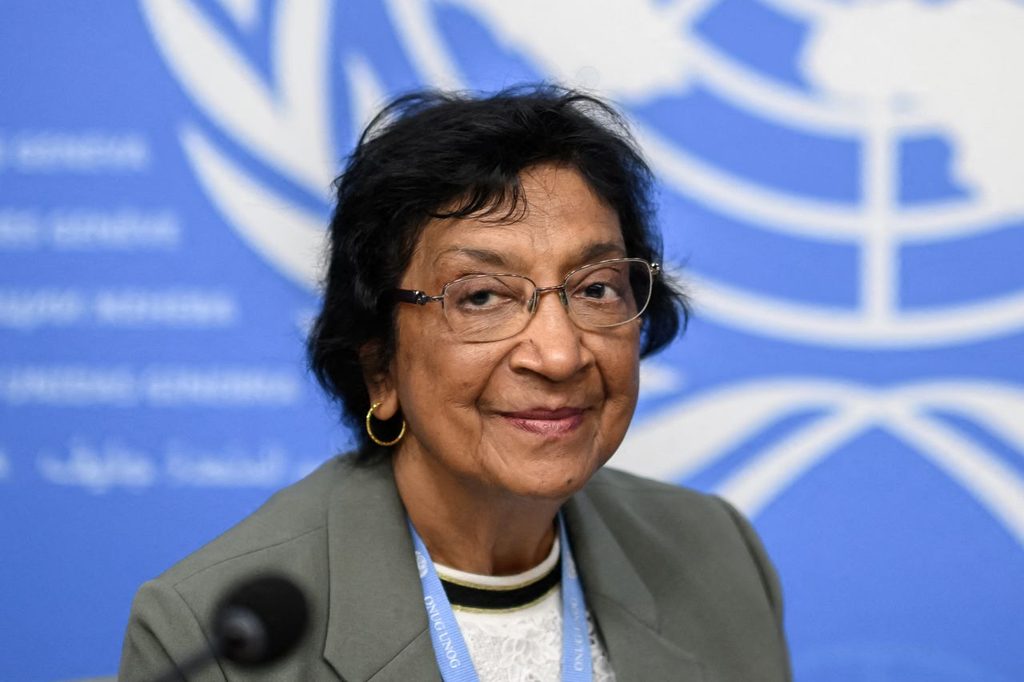
Born into a Tamil Indian family in Durban, South Africa, Pillay entered the legal profession during a period when apartheid imposed extensive restrictions on the rights and opportunities of the country’s non-white population.
She became the first non-white woman to establish a legal practice in the country, using her position as a lawyer to challenge abuses and defend people targeted by the apartheid system.
Her work included representing anti-apartheid activists and exposing allegations of torture and mistreatment in detention. Among the prisoners whose treatment drew attention were those held on Robben Island, where political opponents of the apartheid government were incarcerated.
The experience gave Pillay direct insight into how state power could be used to deny basic rights and how legal representation could help challenge that authority. It also established a foundation for her later belief that accountability must extend to those who exercise power, rather than stopping at the level of individuals with limited political influence.
Following the end of apartheid, Pillay moved into judicial service in South Africa before taking on international responsibilities. Her appointment to the International Criminal Tribunal for Rwanda placed her at the centre of efforts to prosecute those responsible for the 1994 genocide.
At the tribunal, she contributed to legal proceedings that helped establish important precedents on sexual violence and genocide. The tribunal’s landmark judgment in the case of Jean-Paul Akayesu recognised that rape and other forms of sexual violence could constitute acts of genocide when committed with the requisite intent.
The recognition of sexual violence within the legal definition of genocide represented a significant development in international criminal jurisprudence, reinforcing the principle that crimes committed against women and girls during conflict must be considered within the broader framework of international accountability.
Pillay later served as a judge at the International Criminal Tribunal for Rwanda (ICTR) and the International Criminal Court (ICC), where her work contributed to the development of international criminal justice.
The Nobel Committee drew a direct connection between her early legal work in South Africa and her subsequent service in international judicial institutions.
“A common thread runs from her early work defending Nelson Mandela and others who stood up against apartheid to her service as a judge in some of the key international court cases of our time.”
Nobel Committee
Moreover, in an earlier interview, she reflected on the international solidarity that helped bring apartheid to an end, acknowledging that she had once doubted whether she would live to see its demise.
“I didn’t think apartheid would end in my lifetime. So, what happened? We had the collective support of people all over the world, even children. If we can achieve that, we can have a better human rights protection system.”
Navi Pillay
Pillay’s UN Leadership and Fight for Human Rights
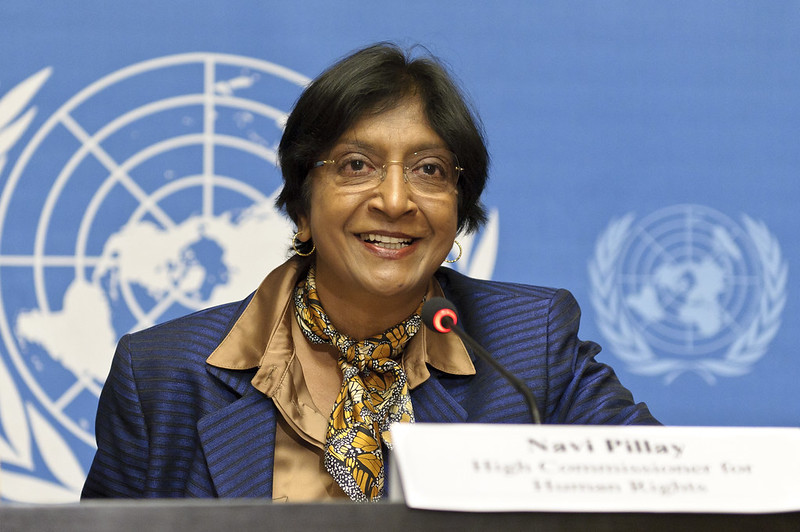
Moreover, Pillay’s appointment as UN High Commissioner for Human Rights in September 2008 brought her experience in domestic and international courts into one of the organisation’s most prominent human rights leadership positions.
She held the office until August 2014, advocating for the protection of civilians, the participation of civil society and stronger mechanisms for addressing abuses.
During her tenure, she emphasised that international human rights standards had not emerged solely from agreements between governments. Activists, survivors, community organisations and other civil society groups had played a central role in pressing states to recognise and protect fundamental rights.
“When the UN started, it was just a club for the States. Everything we have today for human rights protection didn’t happen just because the States woke up one day. It comes from the pressure of civil society. That’s why I value these institutions.”
Navi Pillay
After leaving the High Commissioner’s office, she continued her involvement in international human rights work. She later chaired the UN Independent International Commission of Inquiry on the Occupied Palestinian Territory, placing her among those examining allegations of serious violations in the Israeli-Palestinian conflict.
The Nobel Peace Prize now recognises that wider body of work, from her defence of people targeted under apartheid to her involvement in international efforts to prosecute atrocities and strengthen legal protections.
READ ALSO: LeBron James Makes Impressive 76ers Preseason Debut