
Ghana’s Energy and Green Transition Minister, Dr John Abdulai Jinapor, has urged West African governments to increase cross-border electricity trading, arguing that deeper cooperation among regional power markets is essential to improving energy security, affordability and economic integration.
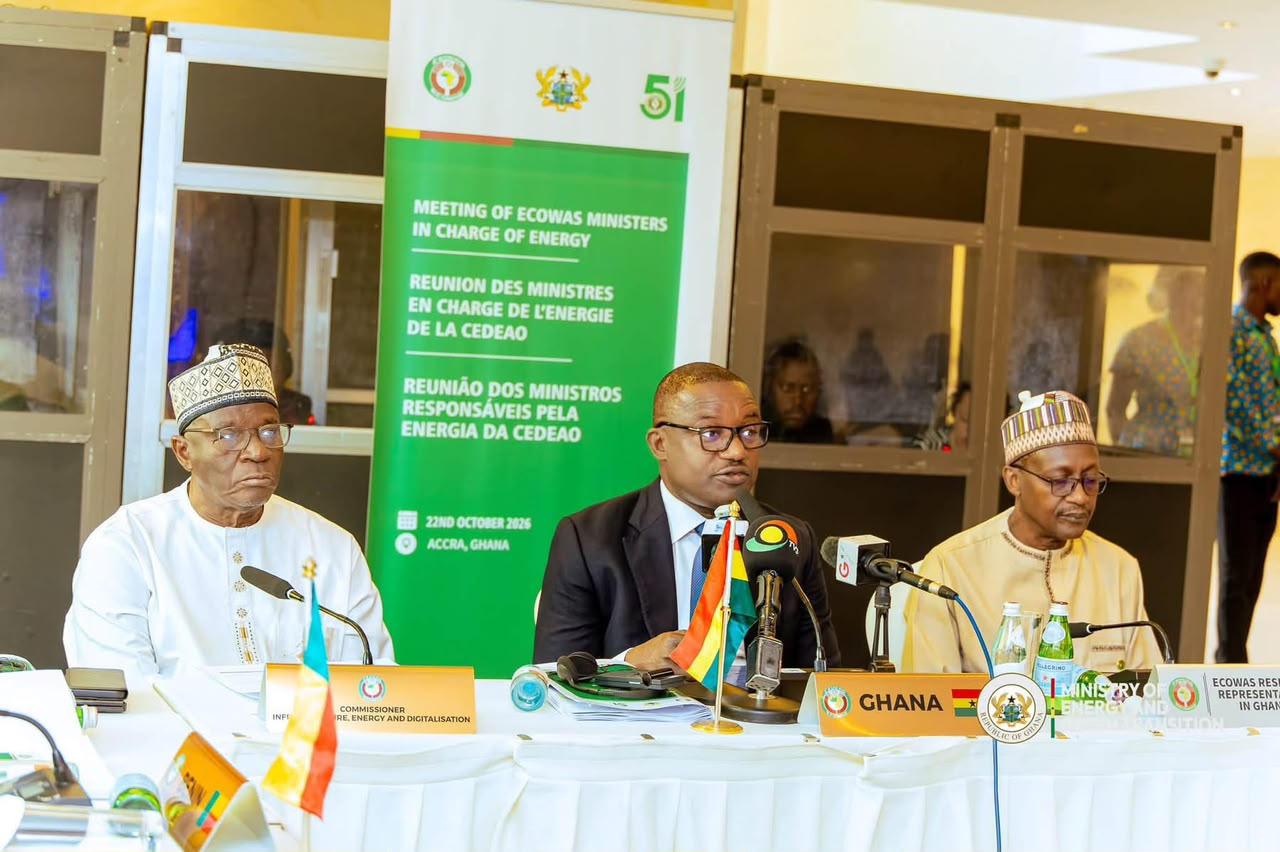
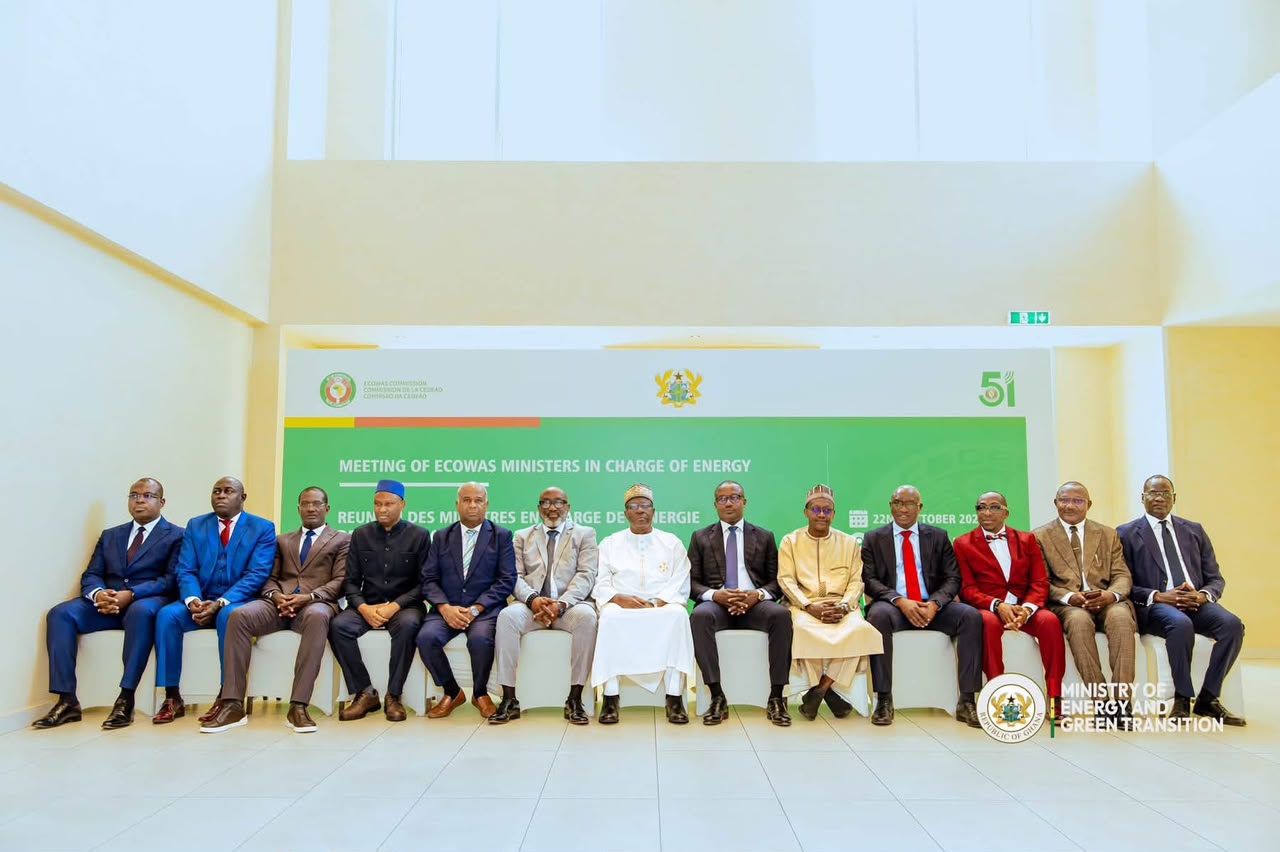
Speaking at the 16th Meeting of ECOWAS Ministers in Charge of Energy, where he delivered the opening remarks, Jinapor called on member states to prioritise the exchange of electricity within the subregion rather than approach energy supply primarily through their individual national systems.
The call comes as the West African Power Pool (WAPP) advances efforts to establish a more integrated regional electricity market, supported by cross-border transmission infrastructure and common rules for electricity transactions.
In a statement posted after the meeting, Jinapor said energy security, affordability, accessibility and sustainability were central to regional integration, economic growth and sustainable development across West Africa.
He also urged his counterparts to “trade more energy among ourselves”, placing electricity commerce at the centre of the region’s broader development agenda.
“A more energy-secure West Africa is a stronger, more integrated, and more prosperous West Africa.”
The minister’s appeal highlights a central challenge for ECOWAS: although countries possess different generation resources and are increasingly connected through regional transmission infrastructure, the economic benefits of those connections depend on whether electricity can be traded reliably, affordably and under commercially sustainable arrangements.
Regional Electricity Trade Has Yet to Reach Its Potential
The institutional foundations for regional electricity trading are already in place. WAPP was established to integrate national power systems and facilitate a regional electricity market, while the ECOWAS Regional Electricity Regulatory Authority (ERERA) oversees cross-border electricity trade and supports the regulatory framework for interstate exchanges.
However, building transmission connections is only one part of creating an effective regional market. Countries must also agree on trading rules, transmission charges, contractual obligations and mechanisms for resolving disputes.
Utilities must be able to pay for electricity purchased, while power-system operators need to coordinate supply and demand across interconnected networks.
The scale of the opportunity is reflected in World Bank reporting published in May 2026, which indicated that approximately 8% of electricity generated in the region was being traded across borders.
The bank also highlighted the role of more than 4,000 kilometres of high-voltage transmission lines connecting the electricity grids of 15 West African countries.
The figures demonstrate that regional electricity commerce is already operating, but also indicate scope for expansion.
For Jinapor’s proposal to translate into tangible benefits, governments will need to move beyond encouraging more trade towards addressing the commercial and institutional barriers that can prevent available electricity from reaching neighbouring markets.
Infrastructure Alone Cannot Guarantee Reliable Supply
The region has made progress towards synchronising its electricity systems. In November 2025, WAPP reported a successful test in which the interconnected grids of West African countries operated synchronously for four continuous hours, demonstrating the technical feasibility of coordinated regional operation.
That milestone matters because synchronised systems can support better coordination, reserve sharing and electricity exchanges between countries.
Where one market has surplus generation and another faces a supply shortfall, cross-border trade can help reduce the need for more expensive domestic generation, provided transmission capacity and commercial arrangements permit the exchange.
But interconnection does not automatically mean electricity will be available whenever it is needed.
Power exports depend on actual generation surpluses, transmission constraints, contractual commitments and the reliability of the exporting country’s own system.
This distinction is particularly important for countries that face domestic supply pressures. Governments must balance the potential revenue and regional benefits of exporting electricity against their obligation to supply households, businesses and industries at home.
Jinapor’s call therefore raises a policy question for ECOWAS ministers: how can member states build confidence in regional electricity trading while maintaining sufficient reliability within their national markets?
The answer will require coordinated planning of generation and transmission capacity, transparent trading rules and stronger cooperation between utilities and system operators.
Payment Security and Market Rules Remain Critical
The commercial framework underpinning regional electricity exchanges will be just as important as physical infrastructure.
A functioning market requires buyers to meet payment obligations, sellers to honour supply contracts and regulators to provide clear rules for pricing and access to transmission networks.
Where payment arrears or contractual disputes undermine confidence, utilities may become reluctant to commit electricity to cross-border transactions.
WAPP’s regional market framework has continued to develop. At its July 2026 anniversary, ECOWAS highlighted the approval of regional market rules and procedures in November 2025, alongside a methodology for calculating regional transmission tariffs adopted in March 2026. These measures are intended to support more harmonised and predictable electricity exchanges.
The next step is effective implementation. Common rules have limited value if national utilities cannot meet payment obligations, transmission constraints remain unresolved or regulatory differences discourage participation.
Jinapor’s appeal for more regional trade must consequently be matched by action on market liquidity, payment security, dispute resolution and the financial sustainability of participating electricity companies.
Without those safeguards, expanding trade volumes could increase contractual exposure without delivering the full benefits of a more integrated market.
Regional Trade Could Support Industrial Growth
The economic case for electricity integration extends beyond balancing supply shortages. More competitive electricity prices and dependable cross-border supply could help reduce operating costs for businesses, improve the reliability of industrial activity and support investment in energy-intensive production.
For Ghana, stronger regional electricity commerce could create opportunities to supply neighbouring markets when generation is available, while also allowing imports where commercially and technically appropriate.

The net benefit would depend on the price of electricity exchanged, transmission costs, domestic demand and the reliability of supply arrangements.
Jinapor has previously linked regional electricity trade to industrialisation, arguing that stronger interconnections, regulatory harmonisation and secure payment arrangements are necessary to support a more integrated industrial economy.
That approach aligns with the wider ambition of the African Continental Free Trade Area, under which improved regional infrastructure and lower barriers to trade are intended to strengthen cross-border economic activity.
Electricity is a particularly important component because unreliable or expensive power can undermine the competitiveness of manufacturers and other businesses.
However, regional trade should not be treated as a substitute for investment in domestic generation, distribution networks or electricity access.
Instead, it can complement those investments by allowing countries to use available resources more efficiently and reduce the cost of meeting demand.
Turning Political Commitment Into Market Results
The 16th ECOWAS energy ministers’ meeting provides a platform for governments to align their priorities, but the impact of Jinapor’s appeal will depend on the decisions that follow.
Progress should be measured not simply by the number of interconnections or ministerial declarations, but by whether electricity exchanges become more dependable, payment performance improves, market participation expands and consumers benefit from better affordability and reliability.
For ECOWAS, the immediate task is to convert existing infrastructure and regulatory progress into a market that utilities can trust and use consistently.
That requires coordinated national policies, commercially viable contracts and a clear commitment to implementing regional rules.
Jinapor’s message is that West African countries can strengthen their collective energy security by making greater use of one another’s electricity resources.
The test will be whether that commitment produces sustained growth in cross-border trade without compromising domestic supply or the financial stability of national utilities.
READ ALSO: IMF Opens Ghana Review as 2027 Budget Faces Critical Scrutiny