• About
  • Advertise
  • Privacy Policy
  • Contact
Sunday, May 17, 2026
  • Login
The Vaultz News
  • Top Stories
  • News
    • General News
    • Education
    • Health
    • Opinions
  • Economics
    • Economy
    • Finance
      • Banking
      • Insurance
      • Pension
    • Securities/Markets
  • Business
    • Agribusiness
    • Vaultz Business
    • Extractives/Energy
    • Real Estate
  • World
    • Africa
    • America
    • Europe
    • UK
    • USA
    • Asia
    • Around the Globe
  • Innovation
    • Technology
    • Wheels
  • Entertainment
  • 20MOBPL2DNew
  • Jobs & Scholarships
    • Job Vacancies
    • Scholarships
No Result
View All Result
The Vaultz News
  • Top Stories
  • News
    • General News
    • Education
    • Health
    • Opinions
  • Economics
    • Economy
    • Finance
      • Banking
      • Insurance
      • Pension
    • Securities/Markets
  • Business
    • Agribusiness
    • Vaultz Business
    • Extractives/Energy
    • Real Estate
  • World
    • Africa
    • America
    • Europe
    • UK
    • USA
    • Asia
    • Around the Globe
  • Innovation
    • Technology
    • Wheels
  • Entertainment
  • 20MOBPL2DNew
  • Jobs & Scholarships
    • Job Vacancies
    • Scholarships
No Result
View All Result
The Vaultz News
No Result
View All Result
in Around the Globe

Nuclear Science ‘Casts Net’ On Seafood Fraud

Lawrence Ankutseby Lawrence Ankutse
August 13, 2025
Reading Time: 3 mins read
Nuclear Science ‘Casts Net’ On Seafood Fraud

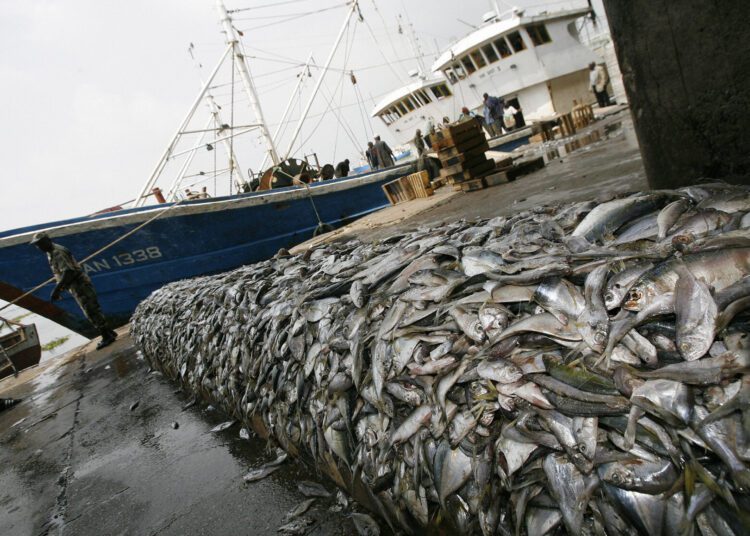
Deep sea fishing

Across the world, seafood lovers and small-scale fishers are facing a growing threat: seafood fraud. From mislabeled catches to undeclared additives, deceptive practices are undermining livelihoods, endangering food safety, and eroding trust in what ends up on our plates.

Now, a new global initiative backed by the United Nations is deploying advanced nuclear science to protect consumers and ensure the fish they depend on is authentic, safe, and fully traceable.

Seafood consumption per person has doubled since the 1960s and is expected to double again by 2050, making the problem even more urgent. While the Food and Agriculture Organization (FAO) estimates that the fisheries and aquaculture sector directly employs 62 million people, about 600 million livelihoods worldwide rely on it.

Seafood fraud can take many forms, from swapping high-value species with cheaper substitutes to using unauthorized or hidden additives. It can happen at any point in the supply chain, particularly as global seafood trade becomes more complex and harder to monitor. Experts say national and international food control systems must adopt stronger, targeted analytical methods to stop such fraud before it reaches consumers.

ADVERTISEMENT

UN-Backed Project Targets Global Seafood Fraud

In response, the Food and Agriculture Organization (FAO) and the International Atomic Energy Agency (IAEA) have teamed up on a five-year coordinated research project to help countries strengthen food control systems and curb seafood fraud.
International Atomic Energy Agency

The project will operate through the Joint FAO/IAEA Centre of Nuclear Techniques in Food and Agriculture, providing countries with scientific expertise and training to verify seafood authenticity and boost transparency across supply chains.

“This IAEA project provides Member States with a valuable opportunity to collaborate in combating fraud and de-risking the seafood supply chain using robust nuclear science-based tools,” said Debashish Mazumder from the Australian Nuclear Science and Technology Organization, one of the IAEA’s key partners in sustainable development initiatives.

The IAEA’s Food Safety and Control Laboratory will support participating countries in applying nuclear and related analytical techniques to safeguard trade in safe, genuine seafood. Among its most effective tools is stable isotope ratio analysis of light elements such as oxygen. This method allows scientists to determine the geographical origin of fish and verify whether it was wild-caught, as the isotope ratios reflect the environmental and ecological conditions where the fish lived.

By harnessing this technology, authorities can detect fraud more accurately, reassure consumers about the safety and origin of their seafood, and protect fisherfolk who depend on sustainable aquatic resources.

Seafood authentication not only preserves consumer trust but also strengthens food control systems, supports sustainable fishing practices, and enhances resilience in a market that is projected to keep expanding in the decades ahead. With the combination of cutting-edge science and global collaboration, the initiative aims to ensure that what ends up on our plates truly matches what is promised on the label.

READ ALSO: Government’s 2025 Deficit Target at Risk Despite Strong First-Half Expenditure Restraint


Sign Up to Our Newsletter

Fresh updates, Straight to your inbox

Tags: FAOFood SafetyIAEAnuclear technologyseafood fraud
ShareTweetShareSendSend
Please login to join discussion
Previous Post

Uganda Opposition Party Challenges Military Court Law

Next Post

NPP Commiserates with NDC Over Helicopter Crash, Apologises for Insensitive Comments

Related Posts

Ebola Outbreak Caused by the Bundibugyo Virus
Around the Globe

Ebola Outbreak in DR Congo, Uganda Declared Global Health Emergency

May 17, 2026
Sudan Medical Supplies 99
Around the Globe

UN Warns of Worsening Hunger Crisis Affecting Milions in Somalia

May 15, 2026
GIG
Around the Globe

Human Rights Watch Calls for Strong Global Treaty to Protect Gig Workers

May 13, 2026
Hantavirus-Stricken Cruise Ship
Around the Globe

Evacuation of Hantavirus-Stricken Cruise Ship Completed

May 12, 2026

Sign Up to Our Newsletter

Fresh updates, Straight to your inbox

Recent News

Ebola Outbreak Caused by the Bundibugyo Virus

Ebola Outbreak in DR Congo, Uganda Declared Global Health Emergency

May 17, 2026
Vice President Professor Naana Jane Opoku-Agyemang at the 16th Oxford Africa Conference

Vice President Pitches Business-Driven Frameworks At Oxford

May 16, 2026
Mohamed Salah will leave Liverpool at the end of the season

Salah Demands Liverpool Rediscover “Heavy Metal” Identity Ahead of Exit

May 16, 2026
Prof. Godfred Bokpin

Ghana Has Not Benefited Optimally From Its Mineral Resources – Prof. Bokpin

May 16, 2026
Theo Acheampong

Gov’t Spends Close to $1.5bn Annually Covering ECG Losses – Dr. Acheampong

May 16, 2026
Next Post
Justin Frimpong Koduah @NDC Headquarters

NPP Commiserates with NDC Over Helicopter Crash, Apologises for Insensitive Comments

The Vaultz News

Copyright © 2025 The Vaultz News. All rights reserved.

Navigate Site

  • About
  • Advertise
  • Privacy Policy
  • Contact

Follow Us

Welcome Back!

Login to your account below

Forgotten Password?

Retrieve your password

Please enter your username or email address to reset your password.

Log In
No Result
View All Result
  • Top Stories
  • News
    • General News
    • Education
    • Health
    • Opinions
  • Economics
    • Economy
    • Finance
      • Banking
      • Insurance
      • Pension
    • Securities/Markets
  • Business
    • Agribusiness
    • Vaultz Business
    • Extractives/Energy
    • Real Estate
  • World
    • Africa
    • America
    • Europe
    • UK
    • USA
    • Asia
    • Around the Globe
  • Innovation
    • Technology
    • Wheels
  • Entertainment
  • 20MOBPL2D
  • Jobs & Scholarships
    • Job Vacancies
    • Scholarships

Copyright © 2025 The Vaultz News. All rights reserved.

This website uses cookies. By continuing to use this website you are giving consent to cookies being used. Visit our Privacy and Cookie Policy.

Discover the Details behind the story

Get an in-depth analysis of the news from our top editors

Enter your email address