
National Anti-Illegal Mining Operations Secretariat (NAIMOS) has significantly scaled up its enforcement actions against illicit artisanal mining, popularly known as galamsey, during the current festive season to safeguard Ghana’s fragile ecosystem.
The specialized taskforce executed a series of high-stakes raids in Akyem Oda within the Birim Central Municipality, resulting in the successful apprehension of five Chinese nationals caught in the act of polluting the Birim River.
These coordinated interventions underscore a renewed national commitment to purging the extractive sector of unregulated actors who continue to bypass environmental safeguards for personal gain.
By neutralizing active mining sites during a period often exploited for illicit activities, the Secretariat is demonstrating that the “rule of law in the mining sector” remains an around-the-clock priority for the state.
“NAIMOS continues its crackdown along major water bodies during the festive season to prevent further pollution. The Taskforce has intensified its anti-galamsey crackdown at areas currently reoccupied by the illegal miners. These operations target sites causing severe havoc to water bodies, forests and farmlands in complete disregard of all environmental laws.”
Ministry of Lands and Natural Resources
Expanding on these recent developments, the operations in the Eastern Region were matched by aggressive maneuvers in the Western and Western North Regions, specifically targeting the Hiawa enclave in the Amenfi Central District.
In Akyem Oda, the taskforce immobilized heavy-duty equipment, including two excavators and two luxury vehicles, a Toyota Hilux and a Toyota Land Cruiser identifying them as primary logistics for the illegal miners.
Meanwhile, in the Western corridors, the “intensified crackdown” led to the systematic destruction of assorted equipment, ranging from wooden gold washing platforms (locally known as changfans) to high-capacity water pumping machines that draw directly from contaminated riverbeds.
These raids are not merely punitive; they serve as a strategic disruption of the illegal supply chain that has long caused “severe havoc to water bodies, forests, and farmlands” in total defiance of regulatory oversight.
Environmental Devastation and the High Cost of Galamsey

The ecological toll of illegal mining in Ghana has reached a critical threshold, necessitating the hardline stance currently adopted by NAIMOS.
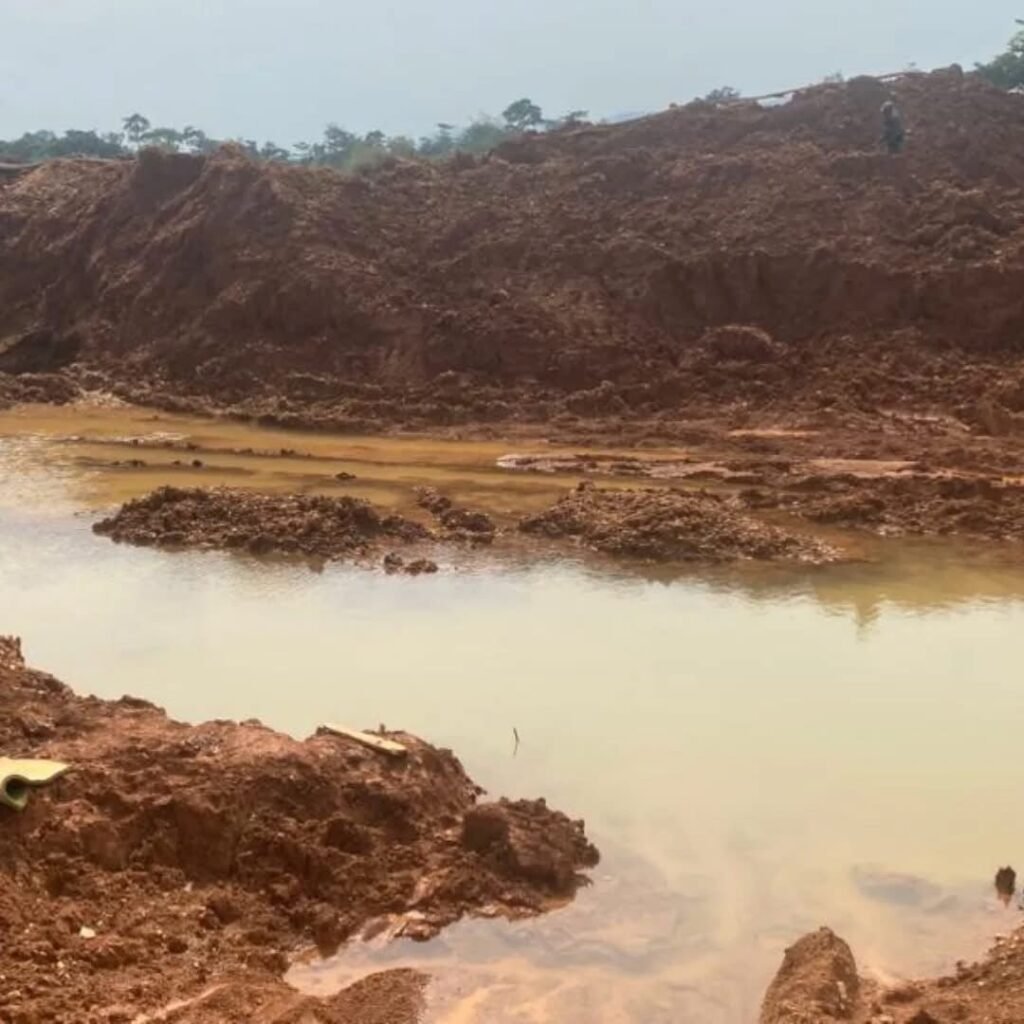
In the Birim and Pra river basins, the indiscriminate use of mercury and the direct washing of ore into water bodies have elevated turbidity levels to a point where traditional water treatment plants struggle to function.
Beyond the “poisoning of our lifeblood,” the physical landscape of districts like Amenfi Central is being permanently scarred by deep, uncovered pits and the stripping of topsoil, which renders vast tracts of cocoa-rich land barren for generations.
As an extractive expert, I have observed that this “eco-terrorism” does not just destroy the soil; it erodes the very economic future of rural communities who depend on these natural resources for their livelihoods.
NAIMOS: A Centralized Hub for Intelligence-Led Operations
The emergence of NAIMOS as the “operational nerve center” for the anti-galamsey fight represents a departure from the fragmented enforcement of the past.
By merging intelligence-led field operations with real-time monitoring, the Secretariat has been able to pinpoint the reoccupation of previously cleared sites by recalcitrant miners.
The recent seizure of high-end vehicles and heavy machinery in Akyem Oda highlights the sophisticated, well-funded nature of modern illegal mining, often involving foreign interests.
Experts within the sector note that the “immobilization of excavators” is the most effective deterrent, as these machines are the primary engines of large-scale land degradation.
NAIMOS’s ability to conduct these raids simultaneously across multiple regions signifies a logistical maturity essential for managing the vast, often inaccessible terrain of Ghana’s mining heartlands.
Transitioning from Enforcement to Responsible Mining

While the current crackdowns are vital for immediate damage control, they are ultimately a precursor to a broader vision of “responsible and sustainable extraction.”
The government’s strategy, as evidenced by the work of the Ministry of Lands and Natural Resources, aims to funnel small-scale miners into the Responsible Cooperative Mining and Skills Development Programme (rCOMSDEP).
These raids send a clear message: the state will “no longer tolerate the privatization of environmental profits” at the expense of the public good. By purging the sector of illegalities, NAIMOS creates the necessary “sanitized space” for legitimate, licensed cooperatives to operate under strict ESG (Environmental, Social, and Governance) frameworks.
This shift ensures that the mining industry contributes to national growth without sacrificing the sanctity of the Birim, the Pra, or our remaining forest reserves.
READ ALSO: Analyzing the Game-Changing GoldBod, Putting Loss in Perspective