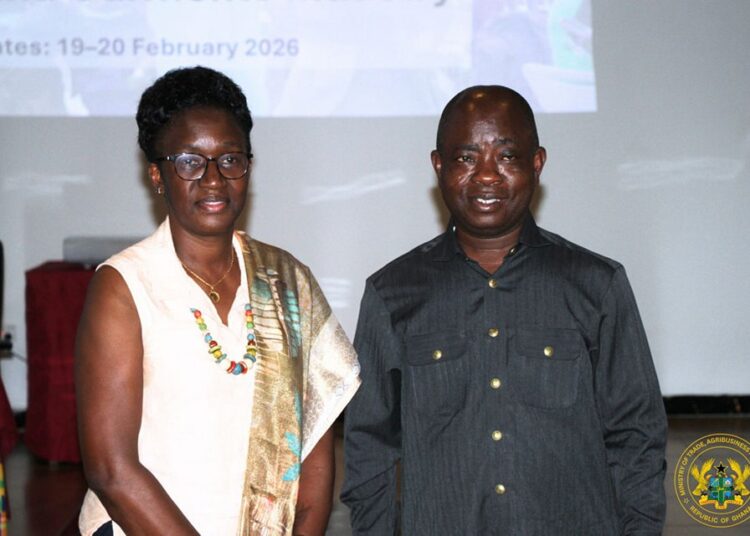
In a stark assessment of Ghana’s industrial landscape, TradeMark Africa (TMA) has called for an immediate overhaul of the nation’s trade facilitation systems to prevent the further erosion of the garment sector’s competitiveness.
Speaking at the conclusion of the high-level Dialogue on Ghana’s textile industry in Sogakope, the Director for West Africa and AfCFTA at TMA, Ms. Harriet Gayi, warned that while Ghana possesses the “untapped industrial capacity,” to dominate the sub-region, persistent systemic failures are currently acting as a handbrake on growth.
The call for reform comes at a critical juncture as the Ministry of Trade, Agribusiness and Industry (MoTAI) seeks to pivot the textile industry toward a high-volume, export-led model.
“Ms. Gayi outlined persistent bottlenecks such as customs system downtimes, port hour misalignments, documentation delays, and early gate closures, which reduce production days, increase costs, and undermine investor confidence”
MoTAI
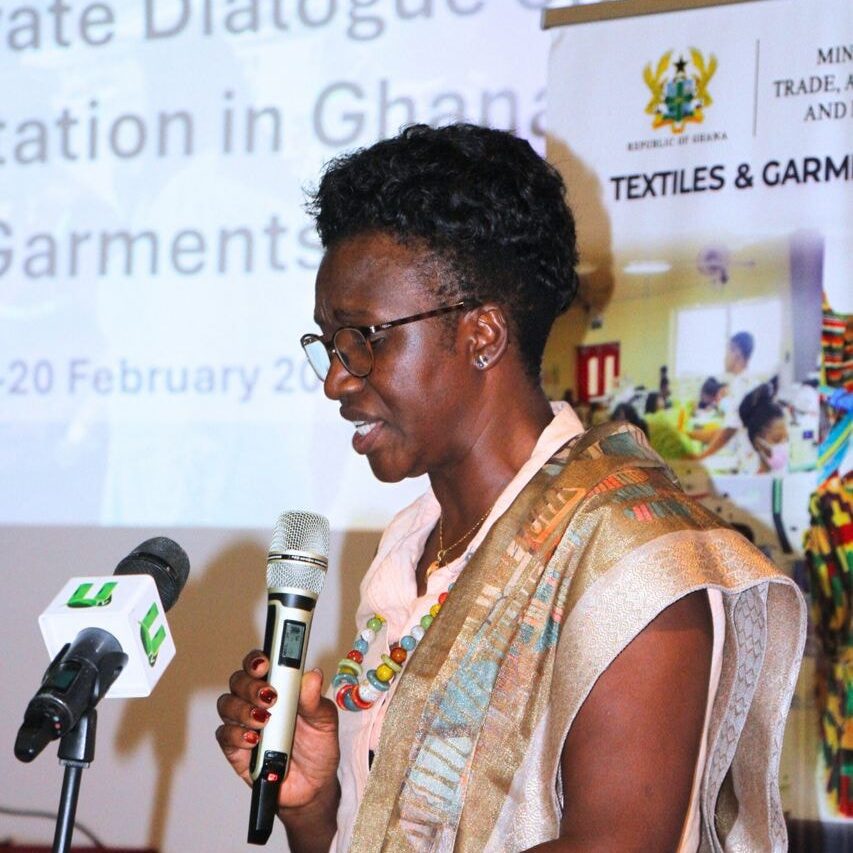
Ms. Gayi’s remarks highlighted a bittersweet reality: although the industry has significantly declined from its historic peak, its performance during the COVID-19 pandemic – where local firms rapidly produced over 14 million facemasks – proved that the sector is resilient when policy and private sector interests are aligned.
However, she noted that “resilience” alone is not enough to survive in the hyper-competitive global fashion market. The dialogue moved into a granular critique of the operational hurdles that continue to inflate the cost of “Made in Ghana,” apparel.
According to TradeMark Africa, these delays often force companies to rely on expensive air freight to meet international deadlines, further thinning already narrow profit margins.
To counter this, the Ministry noted it had begun the advance circulation of reform measures designed to stabilize the trade environment. The goal is to create a “predictable” system that allows factories to plan their logistics with the same precision as their production lines.
24-Hour Shift
Perhaps the most significant revelation from the Sogakope dialogue was the private sector’s readiness to scale. Ms. Gayi indicated that garment manufacturers are not just waiting for minor repairs to the system; they are prepared to transition to a full 24-hour, three-shift production model.
This shift, however, is contingent on the government’s ability to secure a “stable and enabling,” environment where utility and customs services are as reliable at 2:00 AM as they are at 2:00 PM. This alignment with the broader 24-Hour Economy agenda suggests that the garment sector could become the primary laboratory for the nation’s new industrial strategy.
Both MoTAI and TMA underscored that the push for efficiency is not merely about corporate profits.
Because women and youth form the backbone of the textile workforce, every trade facilitation bottleneck that is cleared translates directly into broader economic inclusion. A more efficient system means expanded orders, which in turn leads to the creation of sustainable, dignified jobs for the most vulnerable segments of the labor market.
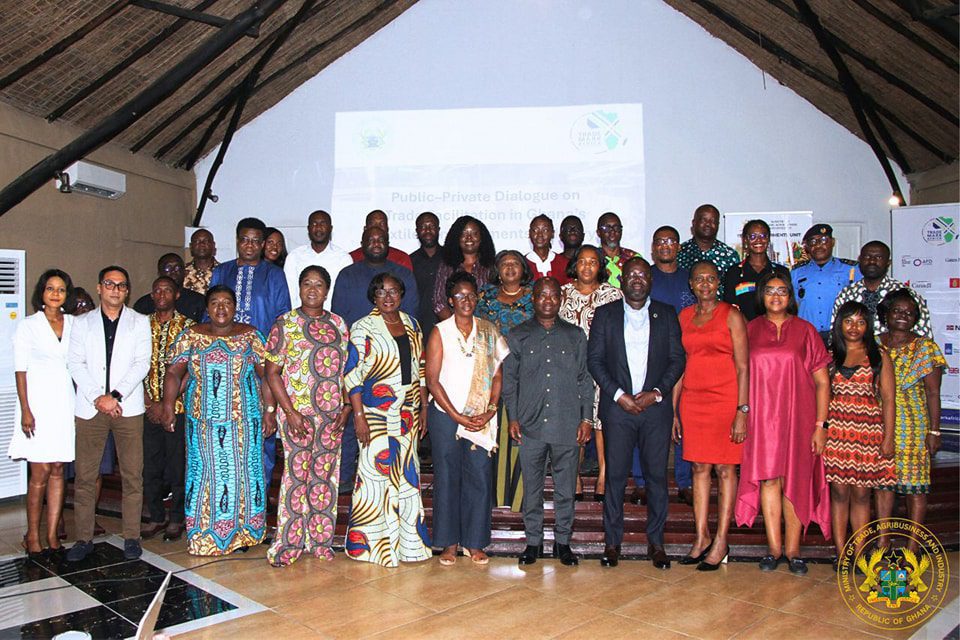
“The dialogue concluded with a shared commitment from Government, industry stakeholders, and development partners to work collaboratively toward implementing reforms that will unlock the full potential of Ghana’s garment industry”
MoTAI

Ms. Gayi’s charge at the Sogakope dialogue was clear: Ghana must move from being a “potential” hub to a “reliable” one.
By strengthening ties with the Ghana Standards Authority and implementing evidence-based reforms, the nation aims to reclaim its historic peak and secure its place as West Africa’s garment powerhouse.
READ ALSO: Kosmos Energy Confirms Ratification of Ghana License Extensions