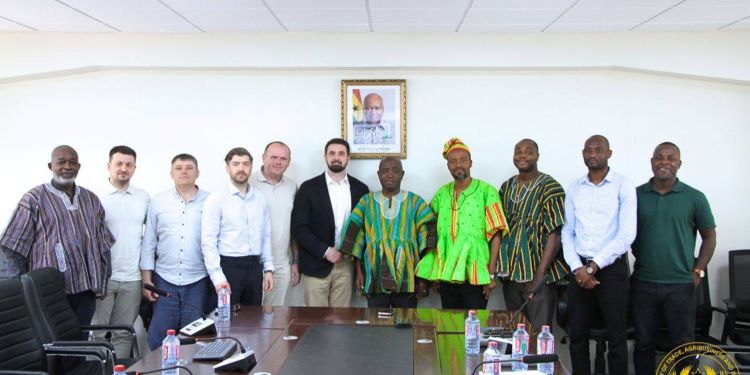
The Ministry of Trade, Agribusiness and Industry (MoTAI), has recently hosted a six-member delegation from Ukraine, marking a strategic advancement in the deepening economic collaboration between the two nations.
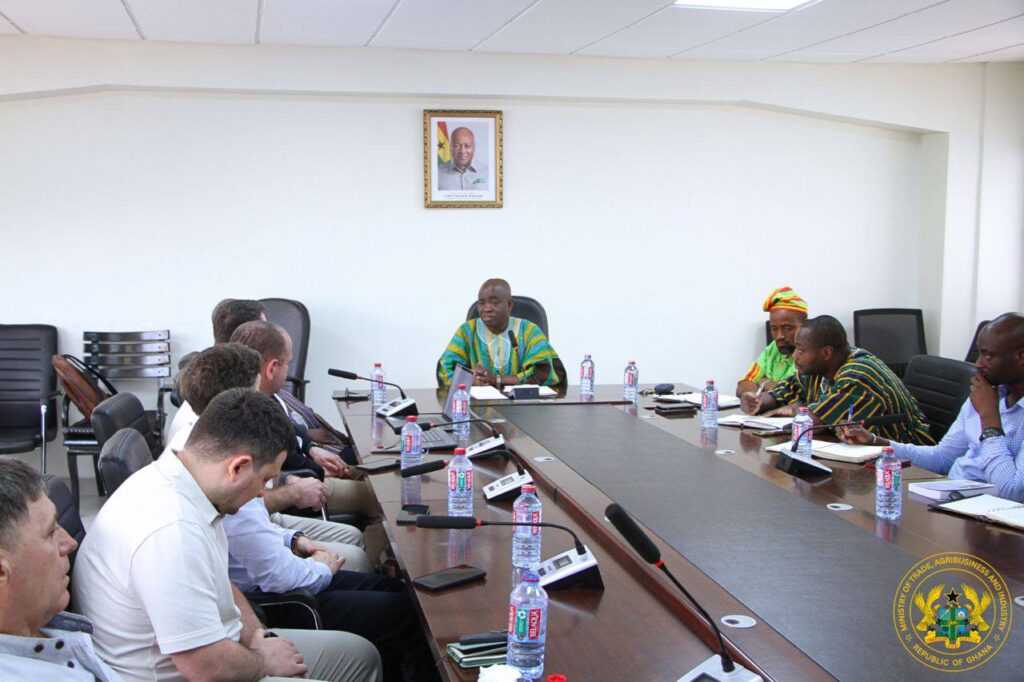
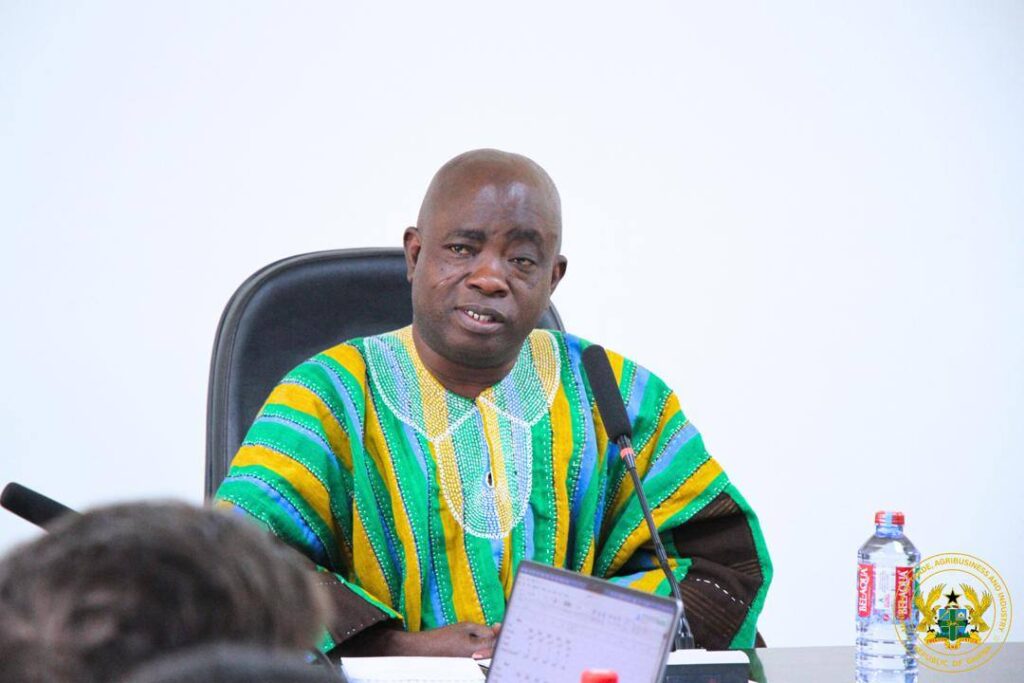
Led by Volodymyr Korchun, representing the diversified agro-industrial firm LNZ Group, the delegation met with the Deputy Minister for Trade, Agribusiness and Industry, Hon. Sampson Ahi to explore frameworks for high-level technology transfer and large-scale agricultural investment.
“The meeting forms part of ongoing efforts by the Ministry to attract strategic partnerships that will strengthen Ghana’s agribusiness sector, promote technology transfer, and enhance agricultural productivity while making Ghana the manufacturing hub in Africa.
“Ghana is positioning itself as the center for business in Africa. Companies that establish operations in Ghana gain access to the vast 1.4 billion consumer market under the African Continental Free Trade Area, whose Secretariat is hosted in Accra”
Ministry of Trade, Agribusiness and Industry
According to MoTAI, the meeting follows a series of bilateral engagements – including the 2022 trade and investment agreement between the Ghana National Chamber of Commerce and Industry and the Council of Exporters and Investors of Ukraine – aimed at transitioning Ghana’s economy toward greater value addition.
The government’s primary objective in this engagement is to modernize the agricultural sector by moving beyond the traditional export of raw commodities like manganese and cocoa. The Ministry seeks to foster a more commercialized farming sector that can reliably feed local industries and boost export competitiveness by integrating Ukrainian agronomic expertise.
The partnership is particularly focused on upstream inputs, where Ukrainian expertise in “hybrid seed production, specialized fertilizers, and crop protection products,” can provide the necessary technical foundation to enhance yields for both smallholder and commercial farmers.
Leveraging AfCFTA
A critical component of the discussions was Ghana’s strategic role as the host of the African Continental Free Trade Area (AfCFTA) Secretariat. For the Ukrainian delegation, this provides a compelling incentive to utilize Ghana as a manufacturing and logistics base.
Establishing operations within Ghana’s industrial parks, gives international partners access to the broader continental market with the benefit of simplified trade protocols.
Deputy Minister Hon. Sampson Ahi emphasized that the government is prepared to provide the necessary support – including the facilitation of land access and a business-friendly regulatory environment – to ensure these investments succeed under the rule of law.
“The Government of Ghana is placing renewed emphasis on agribusiness by focusing on the commercial aspects of farming, particularly value addition after production and also to feed local industries. We want strategic partnerships that will strengthen our agribusiness sector”
Hon. Sampson Ahi, Deputy Minister for Trade, Agribusiness and Industry
The LNZ Group’s interest is particularly relevant as it aligns with the government’s efforts to establish a formalized “agrohub” network. Hon. Ahi noted that earlier initiatives have already begun the reconstruction of warehouse and production facilities in Ghana, designed to receive, process, and distribute agricultural goods.
This infrastructure is vital for stabilizing the supply chain for key inputs and ensuring that domestic farmers have consistent access to the modern tools required to optimize their productivity.
Modernizing the Value Chain
MoTAI reported that the Ukrainian delegation showcased a suite of agricultural technologies that could significantly disrupt traditional farming methods in Ghana. They introduced hybrid seeds and advanced agronomic support systems that mitigate the risks associated with climate-induced volatility and low harvest yields.
For the Ministry, this technology transfer is not just an investment in capital, but an investment in human capacity. The goal is to equip Ghanaian farmers with the knowledge and resources to transition into higher-value crops that satisfy both domestic demand and international quality standards.
This collaboration is also expected to influence the government’s flagship initiatives, such as the effort to promote local food security through improved mechanization and input supply.
By creating a formalized channel for Ukrainian seed and fertilizer technology, the Ministry will reduce the reliance on high-cost, imported finished goods, instead fostering a more self-reliant agricultural ecosystem.
The focus remains on the downstream benefits: as input costs decrease and yields increase, local industries in food processing and manufacturing will experience lower overheads and more reliable supply flows.
Beyond the immediate commercial interests, the engagement underscored a shared commitment to food security and long-term economic resilience. Both parties acknowledged that the stability of global and regional supply chains depends on the “successful implementation of robust agricultural infrastructure.”
MoTAI emphasized that Ghana remains a stable, democratic destination where such complex partnerships can flourish, providing a safe haven for investment that seeks to serve the wider African continent.
As the Ministry moves toward the implementation phase of these agreements, the focus will shift to the practicalities of land usage, local partnership structures, and the integration of these new technologies into the national extension services framework.

The expectation is that by the end of the year, several joint projects will transition from the discussion stage to on-the-ground activity.
This progress marks a significant shift in Ghana’s diplomatic and economic strategy, signaling that the nation is ready to lead the charge in regional agribusiness by building partnerships that offer tangible, high-tech, and sustainable industrial benefits.
READ ALSO: Government Can Recruit Only 5,000 from 500,000 Applicants