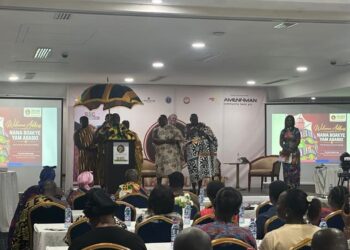
In its continuous move to decentralize investment and unlock the industrial potential of the middle belt, the Ghana Investment Promotion Centre (GIPC) has launched its Ashanti Regional Roadshow to integrate the Region’s manufacturing and agricultural prowess into the national Industrialization agenda and the emerging 24-Hour Economy framework.
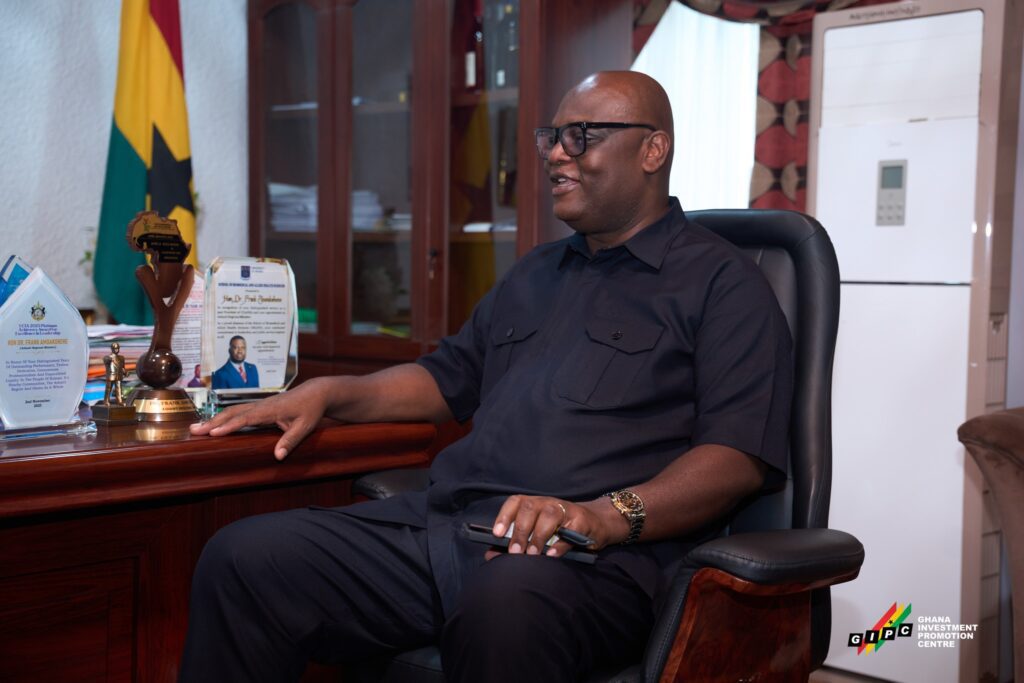
Led by CEO Mr. Simon Madjie, the high-level delegation converged on Kumasi to map out “bankable projects” and deepen collaboration with regional authorities. The visit began with a courtesy call on the Ashanti Regional Minister, Dr. Frank Amoakohene, where Mr. Madjie emphasized that the GIPC is moving beyond “headquarters-based” promotion.
“Since the Regional Roadshows launch in 2025 the Centre has undertaken roadshows in the Volta, Oti, Central, and Western regions with more than 90 bankable projects identified.
“The meeting with the Minister forms part of a series of engagements under the Ashanti Regional Roadshow purposed to spotlight high-potential sectors within the region while connecting investors to pipeline projects and local enterprises”
Ghana Investment Promotion Centre
For the GIPC, the focus is now on “Investment Mapping,” – a granular approach to identifying local enterprises that are ready for international partnerships.
The Centre is ensuring that the Ashanti Region remains the industrial heartbeat of the nation with global investors directly connected to pipeline projects in Kumasi and its environs. The meeting thus served as a strategic alignment between the Centre and the Regional Coordinating Council to streamline land acquisition and local regulatory hurdles for incoming investors.
A significant addition to the GIPC delegation was Dr. Ishmael Nii A. Dodoo, Head of Innovative Finance, Partnerships, and Markets at the 24-Hour Economy & Accelerated Export Development unit. His presence signals the Administration’s intent to ensure that new investments in Ashanti are not just traditional daylight operations.

The goal is to facilitate “Innovative Finance “ for companies willing to adopt the 24-hour model, thereby increasing production capacity and meeting the demands of the international market more efficiently.
The Ashanti Region, with its vast Agriculture resources and established manufacturing base, is expected to significantly increase this tally of the Centre’s Regional Roadshows successes.
The involvement of the 24-Hour Economy unit ensures that these projects are designed with a global export mindset from the outset, leveraging the “Accelerated Export Development,” strategy to push Ghanaian products into the AfCFTA and beyond.
Olam Cocoa
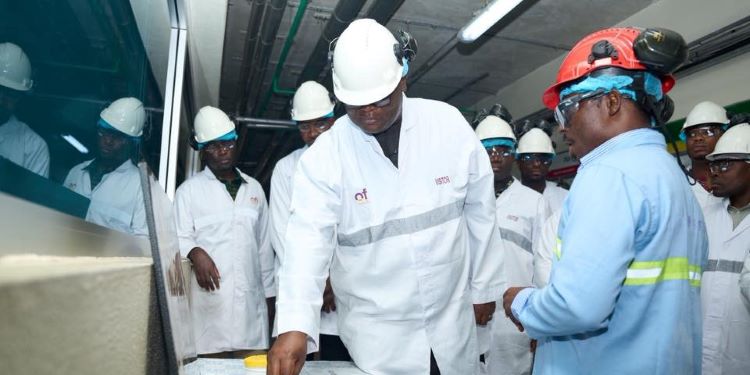
As part of the roadshow’s practical assessment, the GIPC team toured the Olam Cocoa Processing facility in Kumasi. Guided by General Manager Ing. Prince Acheampong, the tour highlighted the evolution of the facility from its 2008 origins into a world-class supplier for global food giants.
A key takeaway for the GIPC was the company’s successful transition to 100% Ghanaian leadership. This shift has not only boosted operational performance but has also fostered a deep sense of local expertise and pride in the “Made in Ghana,” brand.
Olam’s commitment to the region is further evidenced by its $40 million investment in a new, state-of-the-art pasta plant. This expansion is a prime example of the kind of value-addition that the GIPC is seeking to replicate across the country.
According to the GIPC, Olam moving from raw cocoa exports to processed food products is helping Ghana climb the global value chain. Mr. Madjie praised the firm’s resilience and signaled that the GIPC would continue to facilitate the necessary incentives – such as tax rebates and duty waivers – to ensure that such large-scale industrial projects remain profitable and sustainable.
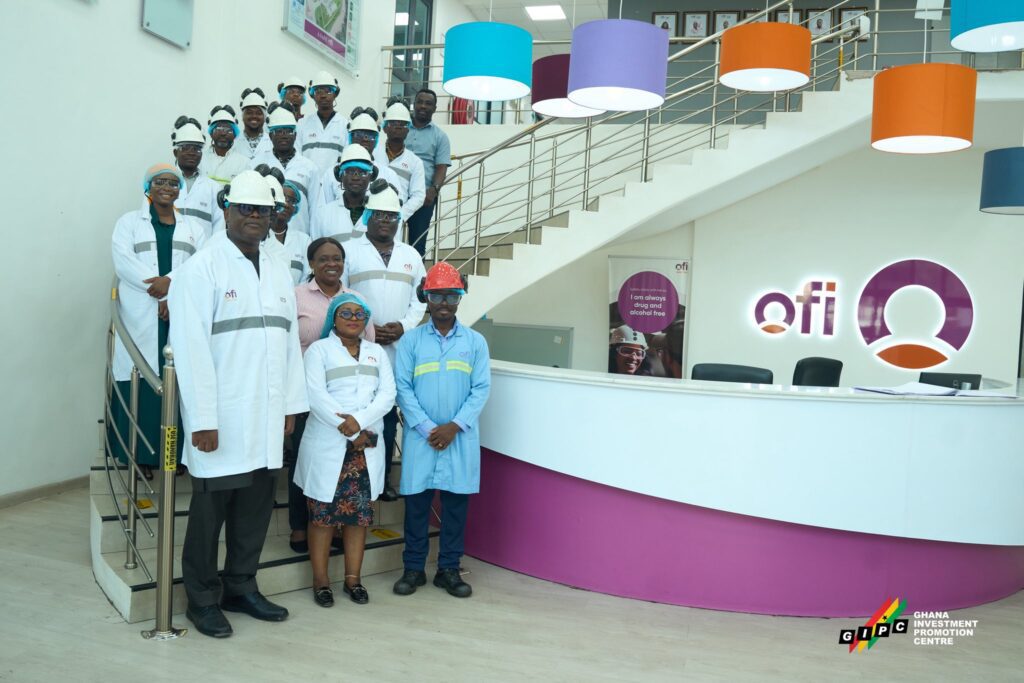
The tour of Olam also revealed a forward-looking technological agenda. To maintain its competitive edge in the global market, Olam is currently eyeing significant upgrades in robotics and automated equipment.
This move toward “Smart Manufacturing” is a crucial component of the GIPC’s investment mapping strategy, as the Centre aims to attract investors who are not only bringing capital but also technology transfer. The automated cocoa processing and pasta production lines have set a standard for the “Factory of the Future,” in Ghana.
Mr. Madjie reaffirmed that the GIPC’s role is to act as a bridge between these high-tech ambitions and the government’s policy framework.
He noted that the Centre is working closely with the Ministry of Trade and the Ghana Enterprises Agency (GEA) to ensure that the infrastructure – such as reliable power for 24-hour operations – is in place to support these technological leaps.
The success of Olam is proof that with the right combination of local talent and global capital, Ghana can lead the sub-region in industrial innovation.
The Ashanti Regional Roadshow is more than just a series of facility tours; it is a fundamental shift in economic policy. Through these physical visits, including the recent one to the Asantehene, and engagements with local managers like Ing. Prince Acheampong, the GIPC is building a “real-time” database of the nation’s industrial capacity.
This allows the Centre to provide potential investors with data that is accurate, up-to-date, and grounded in the specific strengths of each region. In Ashanti, those strengths are clearly defined: a robust work ethic, a strategic location, and a deep-rooted history of entrepreneurship.
The GIPC noted that its delegation, which also included Dr. George Obodum-Kusi Asafo-Agyei and Kumasi Zonal Head Michael Otchere, will continue to engage with local businesses over the coming days.