
Natural Resource Governance Institute (NRGI) has called for a radical overhaul of Ghana’s mineral licensing framework to safeguard the burgeoning lithium industry from entrenched corruption risks.
As the nation positions itself to become a key player in the global green energy transition, the institute warns that without transparent, merit-based decision-making and full public disclosure of contracts, the sector could fall prey to the same governance failures that have historically plagued other extractive industries.
The proposed reforms aim to shift the status quo by integrating beneficial ownership information into the heart of the licensing process and requiring parliamentary approval for leases to ensure a higher level of legislative oversight.
“NRGI has prepared this briefing to inform stakeholder discussions on priority reforms to ensure that Ghana’s lithium sector is not hampered by corruption.”
Natural Resource Governance Institute (NRGI)
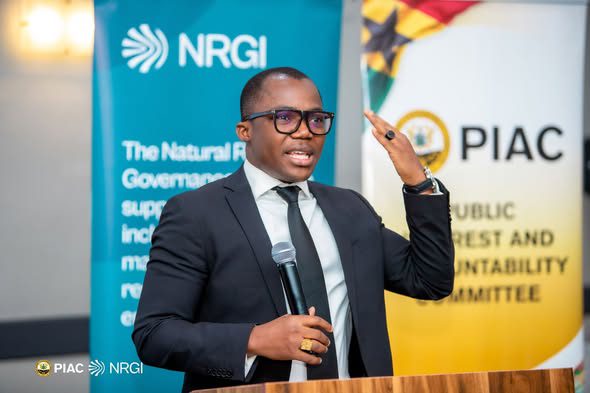
The organization’s latest briefing, titled “Stopping a False Start: Identifying Corruption Risks in Ghana’s Nascent Lithium Sector,” emphasizes that the window to act is narrow as global demand for critical minerals skyrockets.
Beyond the call for transparency, the NRGI advocates for a profound shift toward inclusivity, demanding the “meaningful involvement of communities in licensing decisions” to ensure that those most affected by mining activities have a legitimate seat at the table.
By strengthening these foundational processes now, the institute argues that Ghana can avoid the “licensing irregularities and opaque pricing structures” that have compromised resource wealth in other jurisdictions, ultimately securing a more equitable and stable investment climate for the Ewoyaa Lithium Project and beyond.
Digitization as a Shield Against Opaque Deal-Making
Central to the NRGI’s strategy is the establishment of an independent, digitized mining cadastre designed to provide public access and comprehensive audit trails.
This digital ecosystem is intended to track the entire lifecycle of a mineral title from initial issuance and renewals to transfers and eventual termination. By automating land allocation and mineral production data, the reform seeks to eliminate the human discretion that often serves as a “flashpoint” for bribery and favoritism.
Integrating these digital systems across various regulatory and revenue agencies is not merely a matter of technical efficiency; it is a strategic move to curb revenue leakage.
A digitized cadastre allows for real-time monitoring of revenue flows, making it significantly harder for “politically exposed persons” to manipulate data or hide illicit financial interests.
According to the NRGI, a publicly accessible system ensures that civil society and the media can act as watchdogs, verifying that the companies awarded rights are indeed the most qualified and that their beneficial owners are disclosed to the public.
Strengthening Enforcement and Regulatory Independence
The third pillar of the proposed reform focuses on the “politicized decision-making” that has historically hampered the effectiveness of Ghana’s regulatory bodies.
The Natural Resource Governance Institute (NRGI) points out that even the most robust laws are ineffective if enforcement is selective or under-resourced. To combat this, the institute recommends a dual approach: increasing the financial and technical resources available to regulators while simultaneously implementing measures to protect their institutional independence from political interference.
Improving on-site monitoring and compliance checks is vital to ensuring that “illegal and non–compliant operators” face swift consequences.
The briefing suggests that by increasing prosecution rates for regulatory breaches, the state can send a clear signal that the lithium sector will operate under a strict rule of law.
This enforcement surge is expected to reduce the “high-level of conflict” often associated with mining by ensuring that environmental and social safeguards are not just paper requirements but active, enforced mandates that protect the ecosystem and the citizenry.
A Roadmap for Sustainable Resource Governance

In NRGI’s proposals, it becomes evident how these multifaceted reforms would curb corruption by closing the loopholes that facilitate “self-dealing and graft” during commodity booms.
By mandating parliamentary approval and community engagement, the reforms distribute power away from a few centralized officials, making it harder for a single point of failure to compromise an entire sector.
This decentralized oversight, paired with the “unprecedented transparency” of a digital cadastre, creates a hostile environment for corruption.
Ultimately, the NRGI’s proposal serves as a preemptive strike against the “resource curse.” By ensuring that every lease is subject to public scrutiny and every license is awarded on merit, Ghana can maximize its “local value addition” without deterring the “patient capital” required for large-scale lithium extraction.
If implemented, these reforms would transform the lithium sector from a potential site of elite capture into a transparent engine for national development, ensuring that the transition to green energy is both ecologically and ethically sound.
READ ALSO: Ghana Completes Evacuation of Nationals in Israel