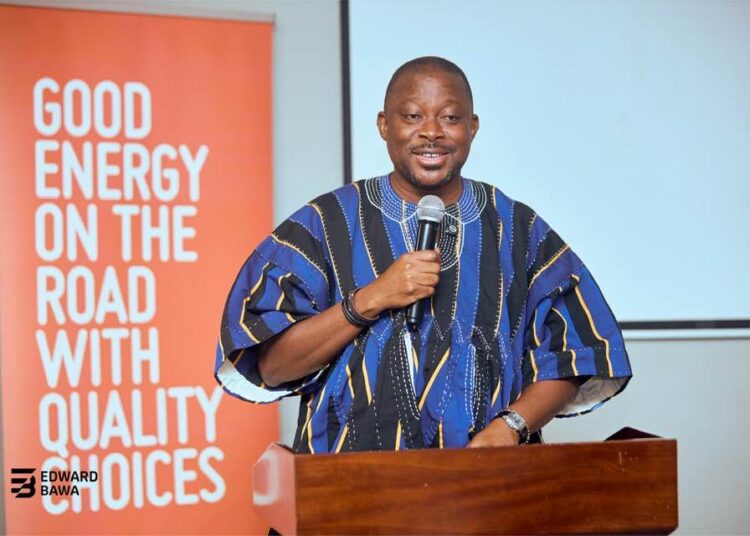
Edward Abambire Bawa, the Group CEO and Managing Director of GOIL PLC, has asserted that the intensifying price competition within Ghana’s downstream petroleum sector serves as a vital catalyst for operational efficiency and consumer relief.
He argued that while “price wars” are often viewed as disruptive market tensions, they ultimately force Oil Marketing Companies (OMCs) to eliminate internal waste and pass the resulting financial benefits directly to the pumps.
By positioning these market dynamics as a win-win scenario, Bawa highlights how competitive pressure serves as a self-regulating mechanism that ensures the sustainability of indigenous firms while protecting the disposable income of the ordinary Ghanaian.
“Anytime you have price war, it is a consumer who benefits. For me, to have a situation where you have players within the downstream that can compete on price means that every OMC has to maximise its efficiency. It is the inefficiencies that are passed through to the consumer.”
Edward Abambire Bawa, the Group CEO and Managing Director of GOIL PLC

While advancing his view, Mr. Bawa noted that the current economic landscape requires a sophisticated approach to liquidity and debt management, famously quipping that “debt is just as old as Adam and Eve.”
Within the context of GOIL’s operations, he emphasized that staying liquid and maintaining a “healthy working capital” are the primary shields against market volatility.
He further revealed that under the strategic guidance of the Minister for Energy and Green Transition, Hon. John Abdulai Jinapor, the industry is moving toward a “cross-rationalisation” model.
This systemic approach allows for the “balancing up” of mutual debts between government agencies and OMCs, ensuring that state-linked entities like GOIL remain financially robust enough to deliver high-quality products without the burden of stalled cash flows.
Efficiency as a Shield Against Market Volatility

For industry players, the primary benefit of healthy fuel pricing competition is the mandatory drive toward lean operations.
In a market where prices are capped or stagnant, companies often become complacent, allowing administrative bloat and logistical inefficiencies to erode their margins.
However, in a competitive “price war” environment, OMCs must “institute cost-cutting measures” to survive.
This forced evolution leads to the adoption of advanced supply chain technologies and better resource allocation.
By maximizing efficiency, companies like GOIL can maintain their market share and ensure “the best of services” even when global crude prices are fluctuating.
This internal refinement not only protects the company’s bottom line but also builds a more resilient national energy infrastructure.
Consumer Relief and Macroeconomic Stability

The most immediate beneficiary of a liberalized pricing regime is the consumer, who sees a direct reduction in the cost of living.
Lower prices at the pump have a significant “multiplier effect” on the economy; since fuel is a primary input for transportation and food production, a reduction in fuel costs translates to “paying less for food” and other essential services.
Edward Bawa, speaking from his dual perspective as both an industry leader and a citizen, noted that he is “personally excited” by these developments because they “affect him positively” by virtue of reduced household expenditure.
This consumer-centric benefit stimulates aggregate demand, as the money saved on fuel is redirected into other sectors of the Ghanaian economy.
“And I’m so excited. I am, one, working for GOIL, and two, I’m also a consumer. So that war is making me to pay less for food. Obviously, it’s affecting me positively by virtue of the fact that I have to pay less for the products I buy.”
Edward Abambire Bawa, the Group CEO and Managing Director of GOIL PLC
The Strategic Role of Cross-Rationalisation
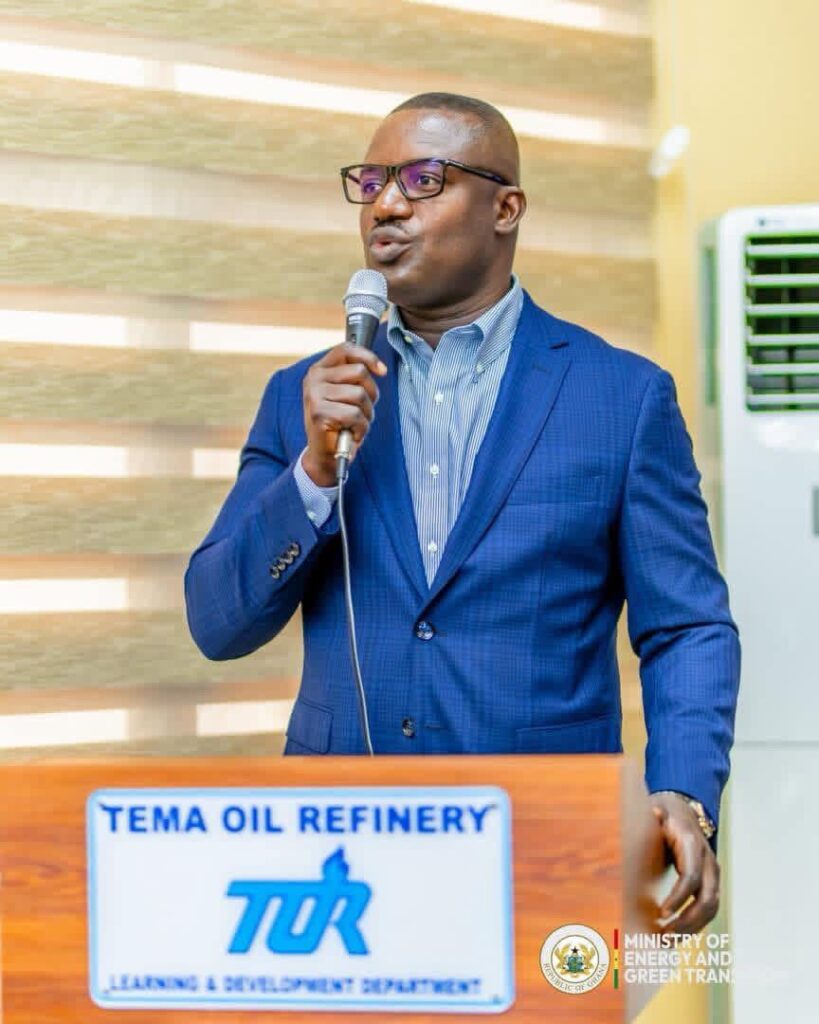
Beyond the pumps, the industry benefits from a more transparent financial relationship with the state. The “cross-rationalisation” strategy mentioned by Bawa is a cornerstone for maintaining industry liquidity.
By “balancing up” what the government owes OMCs against what those companies might owe in taxes or levies, the sector avoids the “debt trap” that has historically plagued energy providers.
This fiscal balancing act ensures that GOIL and its peers can continue to invest in “quality products” and infrastructure without being sidelined by circular debt.
Ultimately, a competitive market, supported by proactive government mediation, creates a stable environment where efficiency not just price becomes the ultimate metric of success.
READ ALSO: Ramaphosa Shrugs Off Reports of Withdrawn G7 Invitation