
The volatility of West African agricultural logistics has recently been met with a decisive diplomatic intervention, as the Ministry of Trade, Agribusiness and Industry (MoTAI) successfully convened an emergency stakeholder engagement to resolve a burgeoning onion trade crisis.
According to MoTAI, the meeting, which brought together onion associations from Ghana, Nigeria, and the Republic of Niger, was necessitated by a localized dispute that had rapidly escalated into a cross-border impasse, threatening the livelihoods of thousands of traders and the stability of vegetable prices across the sub-region.
“The primary objective of this engagement was to move beyond the immediate friction and establish a framework for mutual respect.
“By bringing the Nigerian High Commission and the various trader associations to the table, the Ministry ensured that the movement of food is no longer held hostage by administrative or market-level misunderstandings”
Ministry of Trade, Agribusiness and Industry
The Ministry prioritized commitment to maintaining the flow of essential commodities and upholding regional trade cooperation through direct dialogue rather than retaliatory measures. During the deliberations, MoTAI officials emphasized that the smooth flow of trade is not merely a matter of economic convenience but a fundamental requirement for regional food security.
According to reports, the friction began following reports of a disagreement at the Adjen Kotoku Market in Accra, where tensions over offloading rights and market fees led to the temporary detention of several Nigerian-registered trucks.
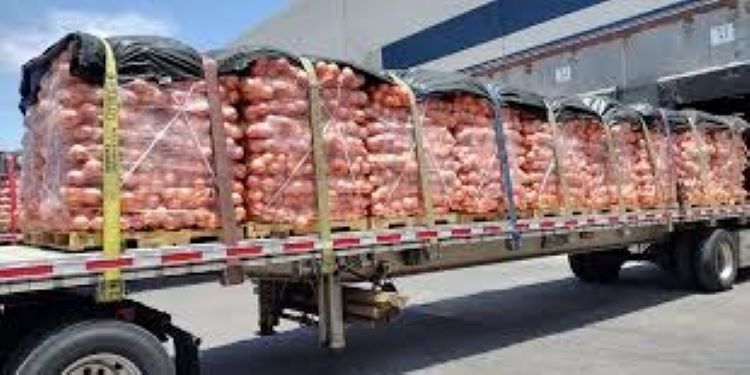
In what quickly became a mirror-image retaliation, approximately 59 trucks destined for Ghana – carrying high-value onion cargo from the Galimi region of Niger – were held at various transit points and border crossings within Nigeria, specifically in the Kebbi State corridor.

The standoff created an immediate threat of post-harvest loss, as the perishable nature of the crop meant that every hour of delay resulted in significant financial hemorrhaging for the small-scale importers and transporters involved.
MoTAI facilitated a breakthrough agreement wherein the Ghanaian onion associations committed to the immediate release and offloading of the Nigerian trucks currently in Accra. In exchange, the Nigerian representatives, backed by the diplomatic weight of the High Commission, pledged to facilitate the swift release and safe passage of all Ghana-bound trucks currently stationary at the Nigerian borders.
This reciprocal action is expected to clear the backlog of vehicles within the next 48 to 72 hours, preventing a localized shortage that could have driven up onion prices for the Ghanaian consumer.
Structural Solution
However, the Ministry recognized that a simple release of trucks would only be a temporary fix for a recurring structural issue. This resulted in a major outcome of the meeting being the unanimous agreement to develop a comprehensive roadmap to prevent future trade disruptions.
“Stakeholders are identifying practical steps to strengthen cooperation across the value chain. This roadmap will serve as the guiding standard for cross-border vegetable trade, ensuring that the livelihoods of our traders are protected by clear protocols rather than left to the whims of informal market disputes”
Ministry of Trade, Agribusiness and Industry
This roadmap is intended to align local market operations with existing regional trade frameworks, ensuring that when disputes arise at the market level, they do not automatically trigger international border closures or retaliatory detentions.
MoTAI explained that the goal is to “institutionalize a grievance procedure that allows traders to seek redress without disrupting the broader supply chain.” To this end, the involvement of the Nigerian High Commission was particularly significant, as it provided the necessary state-level guarantee that the commitments made by the trader associations would be upheld.
The High Commission’s support for the immediate release of the trucks in Kebbi State addressed the security concerns of Ghanaian drivers who had reported being caught in the middle of the dispute.
This diplomatic intervention reinforces the importance of bilateral engagements in resolving trade bottlenecks that fall outside the immediate control of customs or immigration authorities, highlighting MoTAI’s role as a mediator in the wider agribusiness ecosystem.
Beyond the immediate logistics, the discussions focused on the long-term sustainability of the onion sector.
The Ministry noted that the onion value chain supports a vast network of porters, drivers, wholesalers, and retailers across the three nations – even a single day of gridlock at the border does not just affect the truck owner; it ripples through the entire market, impacting the daily bread of the most vulnerable actors in the trade.
“The Ministry’s commitment to this dialogue is a reflection of government’s broader goal to promote increased cross-border trade. MoTAI recognizes that the onion sector is a vital component of the national agribusiness landscape, and will continue to use every diplomatic and administrative tool at its disposal to ensure its resilience”
Ministry of Trade, Agribusiness and Industry
As the trucks begin to move again, the focus turns to the technical implementation of the new roadmap. MoTAI indicated that follow-up sessions will be held to detail the specific roles of the various onion associations in maintaining order at the landing sites.
This includes better coordination on offloading schedules and a more transparent system for identifying authorized traders, thus professionalizing the on-the-ground interactions at the markets to remove the friction points that lead to these large-scale international standoffs.
The resolution serves as a case study in effective trade diplomacy, with a strong focus on ensuring that the onion trade remains a pillar of cooperation between Ghana, Nigeria, and Niger, rather than a recurring source of tension.
The successful conclusion of this stakeholder engagement marks a return to normalcy for the Adjen Kotoku and Galimi trade routes.
READ ALSO: Barker-Vormawor: Business Community Must Spearhead Constitutional Reforms