The Ghana Investment Promotion Centre (GIPC) has signaled a decisive end to the era of “extractive” investment, pivoting toward a strict mandate of local value addition as the primary metric for investor support.
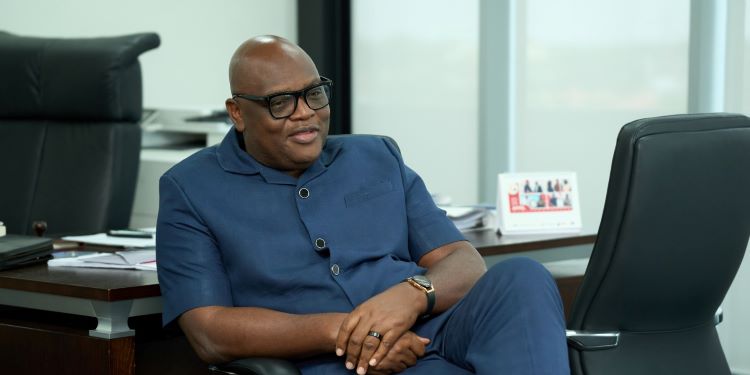
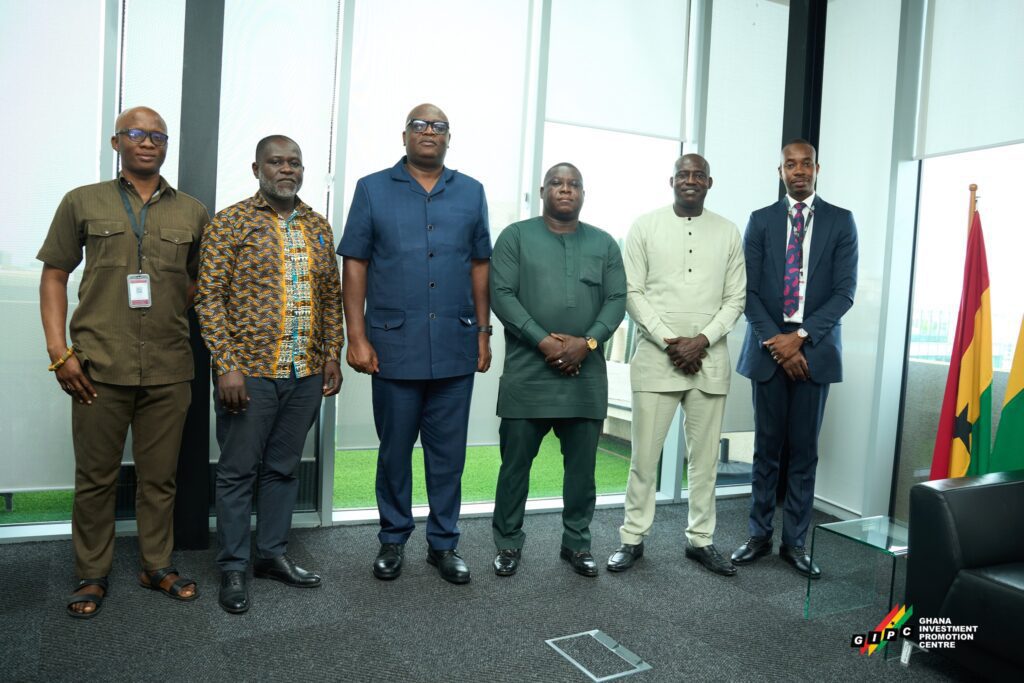
In a high-stakes engagement with a delegation from the Ghana India Chamber of Commerce, GIPC Chief Executive Officer (CEO) Mr. Simon Madjie issued what amounts to an industrial ultimatum: the red carpet of Ghanaian incentives is now reserved for those building factories, not just operating warehouses.
“Mr. Madjie urged foreign investors to prioritise local production and processing to maximise Ghana’s economic impact. Speaking during the meeting, he emphasised the need for investments that go beyond raw commodity trading to include manufacturing and free-zone operations”
Ghana Investment Promotion Centre
This strategic message, articulated during the consultative meeting, marks a fundamental change in how Ghana manages its bilateral commercial ties.
The GIPC is seeking to maximize the domestic economic impact of incoming investment, moving beyond the surface-level trading of raw commodities that has characterized the Ghana-India trade corridor by urging foreign capital to prioritize local production and processing.
According to Mr. Madjie, foreign direct investment (FDI) into Ghana has skewed heavily toward the retail and raw commodity sectors for ages, creating a leaky economy where value is extracted and shipped out rather than being captured locally. The GIPC is no longer satisfied with being a passive reception desk for foreign capital.

Instead, the Centre is repositioning itself as a strategic filter, prioritizing investments that integrate into Ghana’s free-zone operations and manufacturing frameworks. The CEO emphasized that the current industrialization drive is not just a policy aspiration but a response to actual market trends.
Recent engagements point to a surge in interest from global players looking to establish processing plants in cocoa, textiles, and food production.
This renewed confidence, however, comes with a caveat: the GIPC expects these investments to drive technology transfer and strengthen Ghana’s export capacity, rather than simply serving as a base for importing finished goods.
From Trade To Production
The Centre noted that though the Ghana-India trade relationship has traditionally been one of the most robust on the continent, much of it has remained rooted in the export of raw materials like gold, cashews, and timber.
Kwabena Ekremet, President of the Ghana India Chamber of Commerce, provided the necessary “proof of concept,” for the GIPC’s new direction by highlighting a shift in Indian investor sentiment.
According to him, investors are now increasingly looking at cocoa processing and food manufacturing – sectors that have long been identified as the missing links in Ghana’s industrial chain. This pivot was described as critical.
If Indian industrial expertise, particularly in food processing and light manufacturing, can be successfully transplanted into the Ghanaian ecosystem, it would solve one of the country’s most persistent economic hurdles: the high cost of importing processed goods that could be made locally.
The commitment from both sides to promote “quality investment,” signalled a shared understanding that the future of the partnership lies in creating a Made in Ghana brand backed by Indian technical IP and aided by the GIPC’s Free-Zone operations.
For the Centre, encouraging investors to set up within these tax-shielded enclaves positions Ghana as a manufacturing bridgehead for the African Continental Free Trade Area (AfCFTA). For Indian firms, manufacturing in Ghana gains them duty-free access to a 1.3 billion-person market, provided they meet the “rules of origin,” that require significant local value addition.
This is a strategic use of Ghana’s host status for the AfCFTA Secretariat. Mr. Madjie is leveraging the country’s geographic and political stability to attract “builder” investors rather than “trader” investors.
The goal is to create industrial clusters that do more than just assemble imported parts; the GIPC is pushing for the deep integration of local supply chains, where Ghanaian farmers and small-scale producers feed directly into foreign-owned processing plants.
Perhaps the most significant long-term stake in this engagement is the focus on technology transfer. When a foreign investor sets up a cocoa processing plant or a textile factory, they bring more than just capital; they bring the “how-to” of industrial efficiency.
The GIPC’s emphasis on strengthening export capacity through these investments is a play for sovereign economic resilience that trains the Ghanaian workforce in advanced manufacturing processes and builds the human capital necessary to eventually drive the country’s own industrial sector without permanent reliance on foreign expertise.
This focus on “quality investment” over “quantity” is a bold step for a developing economy like Ghana’s. However, as Mr. Madjie noted, the renewed confidence in the country’s industrial drive suggests that it now has the leverage to be selective.
The GIPC is betting that the global shift toward “near-shoring” and resilient supply chains will drive investors to Ghana’s shores, even with the stricter requirements for local processing.
READ ALSO: MDF, GGSA Sign Agreement to Sanitize Artisanal and Small-Scale Mining