Delivering lasting reforms in Ghana’s energy sector may depend as much on how government institutions work together as on the policies themselves, following renewed efforts to align priorities between the Ministry of Energy and Green Transition and the Ministry of Finance.
The latest engagement between the two ministries signals a growing recognition that many of the country’s energy challenges, from mounting sector debts and infrastructure financing to renewable energy expansion and petroleum sector reforms, cannot be addressed by a single institution acting alone.
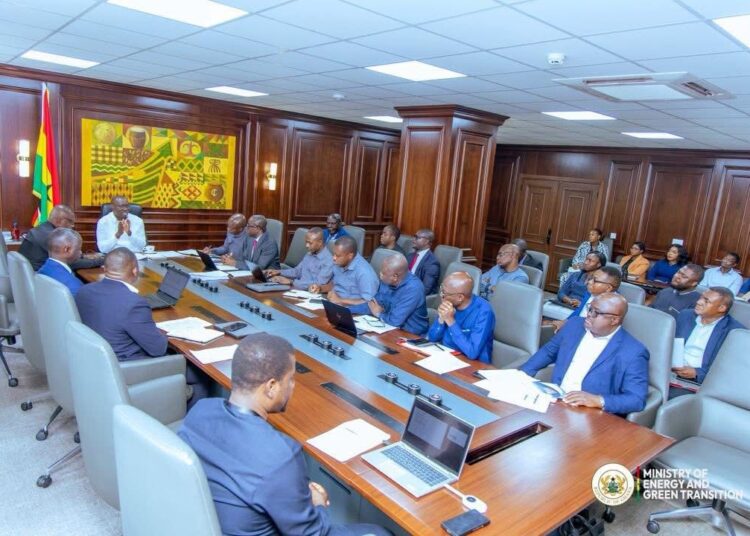
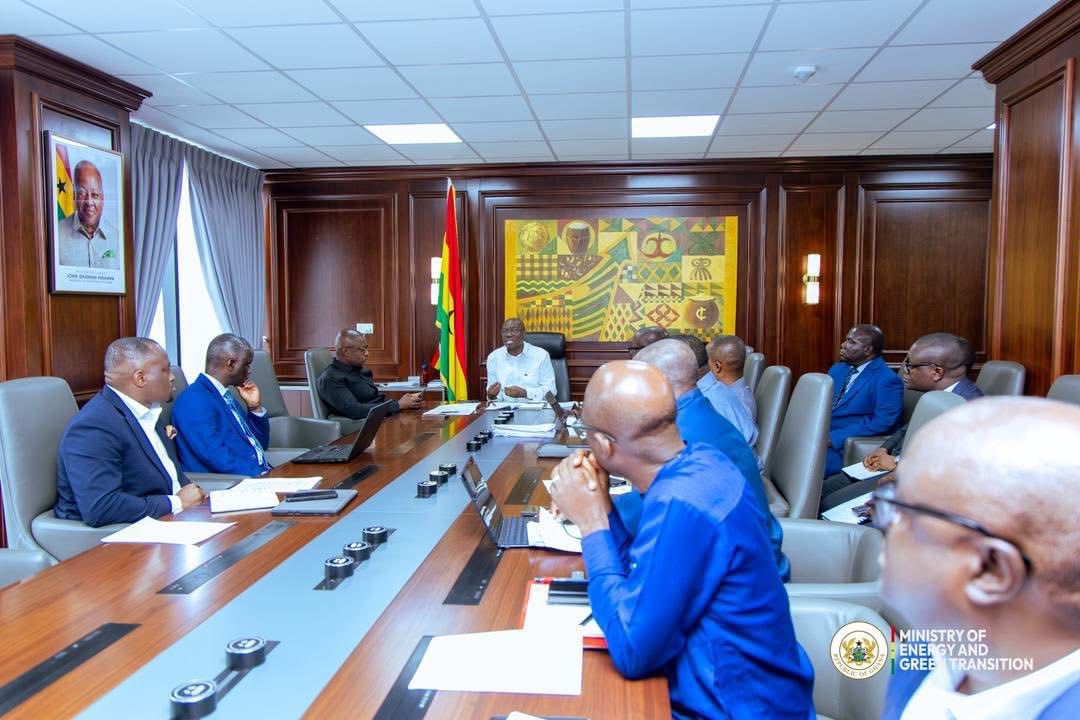
Energy and Green Transition Minister John Abdulai Jinapor today led the heads of agencies under his ministry to the Ministry of Finance for what he described as a strategic engagement to coordinate priorities across government.
According to the Minister, each agency presented its roadmap, ongoing reforms, major priorities and the support required to accelerate delivery across Ghana’s petroleum, electricity and renewable energy sectors.
Each agency presented its strategic roadmap, outlining ongoing reforms, key priorities and the support required from Government to accelerate delivery across the petroleum, power and renewable energy sectors.
Energy and Green Transition Minister John Abdulai Jinapor
Beyond policy announcements
Although governments frequently announce ambitious energy policies, implementation often depends on timely financing, regulatory approvals and institutional coordination.
Projects ranging from transmission infrastructure and petroleum investments to renewable energy deployment require multiple public institutions to work toward common objectives.
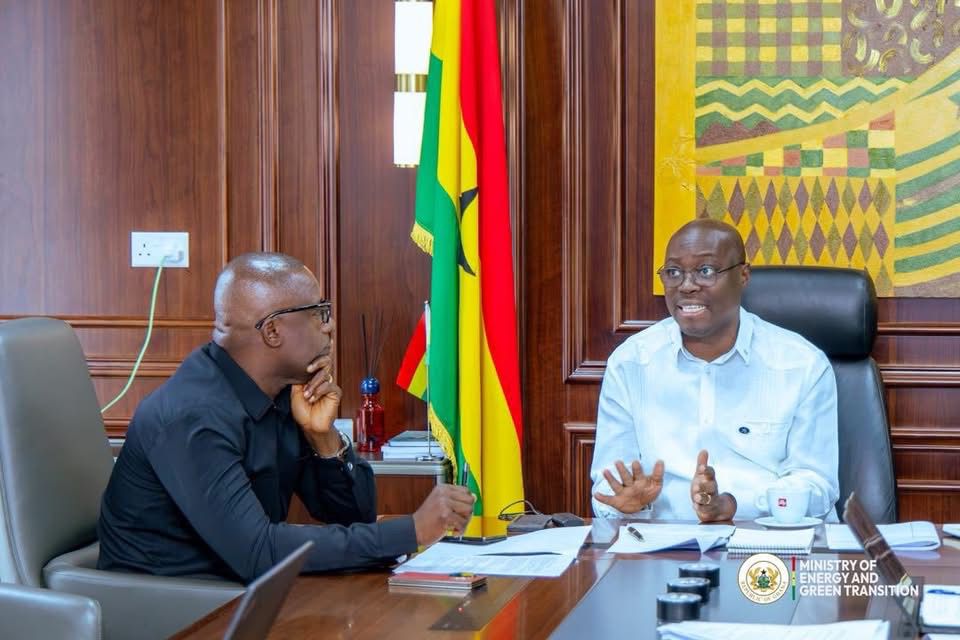
The Ministry of Finance determines fiscal space, guarantees and budget allocations, while sector agencies oversee implementation, regulation and project execution.
Analysts have long argued that weak coordination between these institutions can delay reforms, increase project costs and discourage private investment.
The latest meeting therefore represents more than a routine courtesy call. It reflects an attempt to align financial planning with Ghana’s broader energy transition agenda at a time when the sector faces significant funding requirements.
Financing remains central
Ghana’s energy sector continues to grapple with legacy debts, infrastructure deficits and growing investment needs.
Recent government efforts, including measures to address energy sector financing gaps and ongoing reforms within the electricity market have highlighted the importance of securing adequate financial support while maintaining sector sustainability.

Renewable energy deployment also requires significant upfront investment in generation, grid expansion and supporting infrastructure.
Without close collaboration between economic managers and sector institutions, many of these projects risk delays despite strong policy intentions.
Building investor confidence
Greater policy coordination could also improve investor confidence.
Private investors often assess not only the technical viability of projects but also the consistency of government policy, financing arrangements and regulatory support.
When ministries and implementing agencies present aligned priorities, investors generally have greater certainty regarding project execution.
That certainty is particularly important as Ghana seeks additional investment in renewable energy, natural gas infrastructure and electricity transmission.
A broader transition agenda
The meeting comes as Ghana continues pursuing a more diversified energy mix that combines conventional power generation with greater deployment of renewable technologies.
Government has repeatedly indicated that expanding renewable energy does not mean abandoning existing generation assets but rather strengthening energy security through a balanced approach.

The latest engagement suggests that this transition will increasingly require coordinated action across government institutions rather than isolated sector reforms.
Through stronger collaboration across Government, we are laying the foundation for a more secure energy future, one that strengthens energy security, expands access, promotes investment, accelerates the clean energy transition and delivers lasting value for the people of Ghana.
Energy and Green Transition Minister John Abdulai Jinapor
Why it matters
For ordinary Ghanaians, institutional coordination may seem removed from everyday life, but its effects can be significant.
Faster project implementation can improve electricity reliability, attract investment, reduce financing bottlenecks and support more affordable energy over the long term.

Better coordination can also help ensure that limited public resources are directed toward priority projects while reducing duplication and administrative delays.
As Ghana continues balancing energy security, fiscal sustainability and climate commitments, effective collaboration between government institutions could become one of the most important drivers of successful energy sector reform.
READ ALSO: Billions in Economic Pain Follows Brutal Flooding Event in Ghana