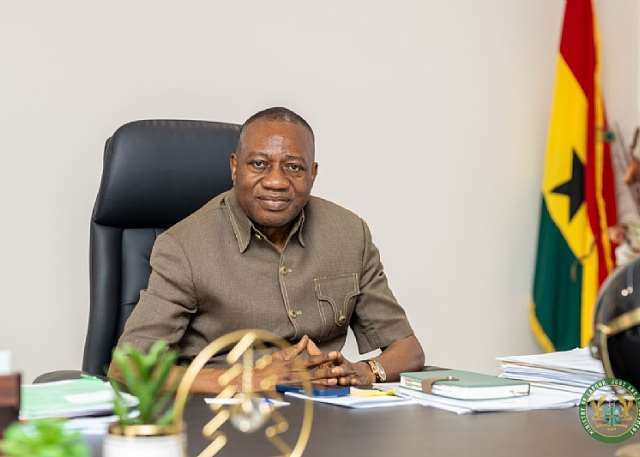
Minister for Labour, Jobs and Employment, Dr Abdul-Rashid Hassan Pelpuo, has rejected calls for government to prioritise the completion of abandoned Agenda 111 hospital projects over the construction of 24-hour economy markets, describing such criticism as unfair given the scale of neglect inherited from the previous administration.
Addressing criticism, Dr Pelpuo argued that government must strike a balance between completing inherited projects and implementing the programmes it promised Ghanaians during its campaign, insisting that focusing exclusively on unfinished projects would come at the expense of the current administration’s own development priorities.
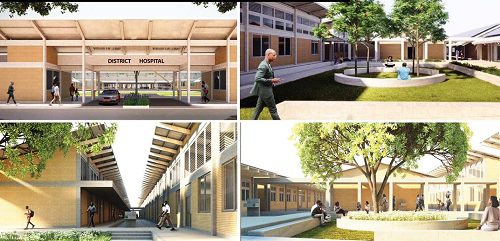
His comments come amid mounting public pressure for government to accelerate work on the stalled Agenda 111 hospital initiative, several years after construction first began under the previous administration.
Dr Pelpuo attributed the incomplete state of several Agenda 111 projects to inadequate attention, illegal practices, and corruption under the previous New Patriotic Party (NPP) administration, framing the current state of these facilities as a direct consequence of mismanagement rather than any failure on the part of the current government.
He questioned why the previous administration failed to complete projects such as the Afari Military Hospital during its full eight years in office, yet the current government is facing criticism for not completing Agenda 111 projects within just 15 months of assuming power.
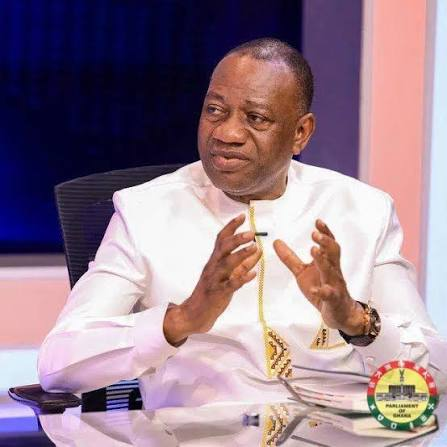
“They came for eight years. They didn’t finish it. Within 15 months, they are saying, ‘Why is government not finishing our hospital?’ Isn’t it funny for anybody to be saying that?”
Dr Pelpuo
Blames Previous Government for Abandoned Projects
He maintained that it was not strange for critics to shift blame onto the current administration for shortcomings that originated under the previous government’s watch, adding that such criticism conveniently overlooks the historical context behind the abandoned projects.
“It is not strange that they can be blaming the NDC for what they failed to do.”
Dr Pelpuo
Despite his sharp criticism of the previous administration, Dr Pelpuo maintained that government remains committed to completing viable projects inherited from past administrations, including those under the Agenda 111 initiative. However, he was clear that this commitment does not mean government can abandon its own development agenda to focus exclusively on unfinished inherited projects.
He explained that the construction of 24-hour economy markets forms part of government’s own commitments to Ghanaians, describing the initiative as one intended to support economic activity and create employment opportunities for citizens across the country. According to him, these markets are not a distraction from Agenda 111, but a distinct and equally important pillar of government’s broader development agenda.
Balancing Competing Development Priorities
Dr Pelpuo’s remarks reflect a broader tension facing the current administration as it works to advance its own flagship programmes while simultaneously managing public expectations around completing projects left unfinished by its predecessor.
By framing the 24-hour economy markets as equally important to Agenda 111 completion, he sought to push back against the suggestion that government should deprioritise its own initiatives in favour of exclusively addressing inherited obligations.
He argued that governance inherently involves managing multiple competing priorities simultaneously, and that singling out one unfinished inherited project as the sole measure of government’s development performance overlooks the broader range of commitments the administration is working to fulfil.
Beyond defending government’s approach to project prioritisation, Dr Pelpuo accused the opposition of amplifying what he described as relatively minor issues while overlooking the broader scope of government’s development agenda.
His comments suggest a belief that criticism directed at the pace of Agenda 111 completion is being disproportionately emphasised at the expense of recognising other ongoing government initiatives, including the 24-hour economy programme.
Part of A Wider Political Debate Over Development Priorities
Dr Pelpuo’s comments add to an ongoing political debate over how government should allocate its limited resources between completing inherited infrastructure projects and delivering on its own campaign promises.
With Agenda 111 continuing to draw public attention due to the scale of investment already made without full completion, and the 24-hour economy programme positioned as a central pillar of government’s job creation strategy, the tension between these competing priorities is likely to remain a recurring point of political contention in the months ahead.
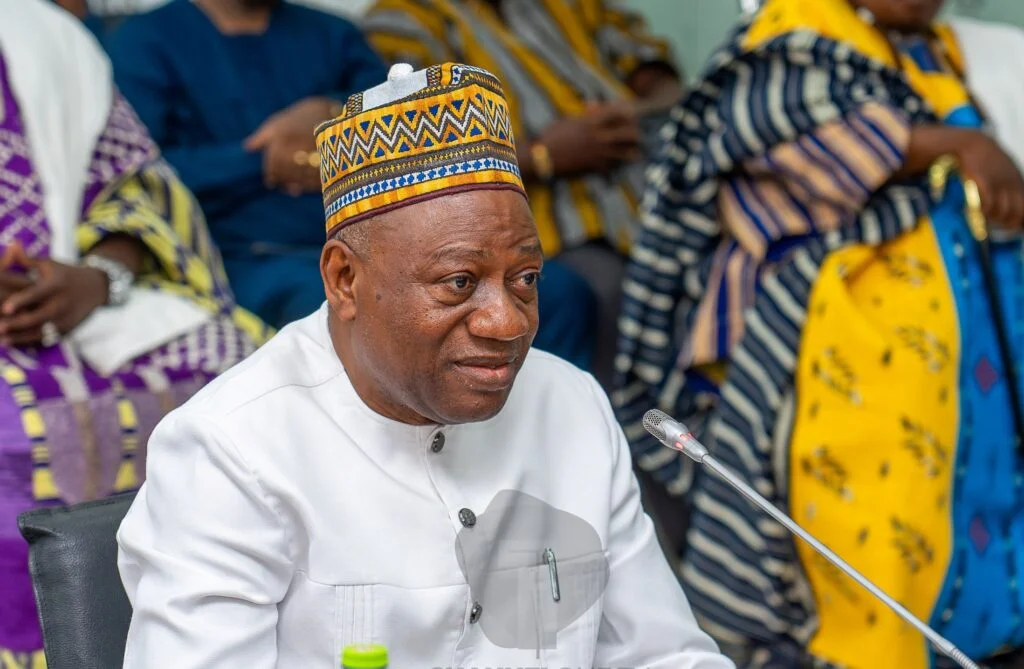
For now, Dr Pelpuo’s defence of the current approach signals that government intends to pursue both agendas simultaneously, rather than yielding to calls to pause new initiatives like the 24-hour economy markets in favour of concentrating solely on completing Agenda 111 hospitals and other inherited projects.
Whether this dual-track approach satisfies public and opposition concerns over the pace of Agenda 111 completion remains to be seen, particularly as government continues to balance the political weight of unfinished promises with the practical demands of delivering new initiatives within its own term in office.
READ MORE: Eduwatch Flags Ghana’s Education Financing Gap in New Report