Ghana’s efforts to restore domestic refining and expand its petroleum infrastructure will depend on securing predictable crude supplies, stable commercial arrangements and credible regulation, rather than simply increasing processing capacity, according to an energy expert interviewed exclusively by The Vaultz News.
The expert warned that uncertainty over crude allocation, inconsistent pricing policies, delayed payments and regulatory instability can undermine refinery operations, regardless of the ownership model.
The assessment raises a central question for Ghana’s petroleum ambitions: whether the country can create the commercial conditions needed to keep its refining assets operating sustainably while pursuing its broader goal of becoming a regional petroleum hub.
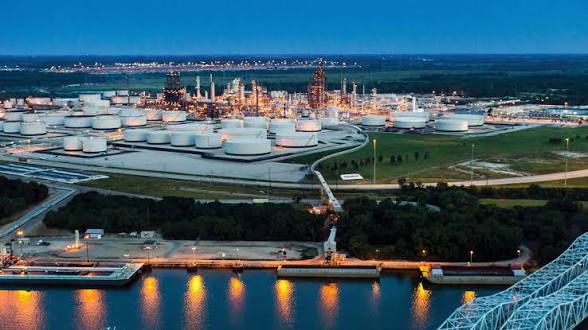
Ghana is seeking to revive the Tema Oil Refinery (TOR), with plans targeting processing capacity of 100,000 barrels per day, while the proposed Petroleum Hub development envisages a separate refinery with a planned capacity of 300,000 barrels per day.
Together, these ambitions place greater importance on how the country secures feedstock, coordinates investment and develops markets for refined products.
But planned capacity is not the same as operational output. The ability to obtain crude at commercially viable terms, maintain reliable operations and sell products competitively will determine whether the infrastructure can deliver sustained economic value.
Crude Supply Is a Commercial Test
Ghana’s plans to allocate part of its Jubilee crude to domestic refining bring the relationship between upstream production and downstream processing into sharper focus.
The expert said Ghana should establish a transparent domestic crude allocation framework before disagreements emerge between export commitments and local refining requirements.

“Ghana should establish a transparent domestic crude allocation framework based on determined domestic consumption before conflicts arise between exports and domestic refining. The domestic crude oil obligation should be well determined and sustained.”
The recommendation highlights the need to define how much crude domestic refineries can reasonably expect to receive, under what conditions and for how long.
Without a predictable framework, refinery operators may struggle to plan production, manage costs and negotiate product sales.
The challenge is not simply to reserve crude for domestic use. Allocation arrangements must also reflect the commercial interests of producers and refiners, including pricing, payment terms and contractual obligations.
The expert pointed to Nigeria’s experience as a warning about the consequences of uncertainty.
“Nigeria’s experience shows that uncertainty in crude supply, inconsistent pricing policies, delayed payments, and regulatory instability undermine refinery operations,” the energy expert said.
For Ghana, a domestic supply arrangement that looks favourable on paper could still fail if deliveries are irregular, prices do not support viable refining margins or payments are delayed.
Conversely, a transparent and predictable framework could improve planning for both producers and refiners.
The implications extend beyond TOR. Any new refinery intended to support Ghana’s petroleum hub strategy will need reliable access to feedstock and a commercial structure that can withstand changes in market conditions.
Ownership Alone Will Not Guarantee Sustainability
The debate over domestic refining often centres on whether state-owned or privately owned facilities are better placed to deliver energy security. The expert argued that neither model is automatically superior.
“The most sustainable approach is a hybrid model that combines private-sector efficiency with strategic government support.”
The expert cited the advantages of private refining, including access to capital, scale, operational efficiency and responsiveness to market conditions. Ghana’s efforts to revive TOR, meanwhile, reflect the strategic value of maintaining national refining capacity.
However, the interviewee said governance and operating conditions are more important than ownership alone.
“The key determinant is not ownership but governance,” the energy expert said, pointing to commercially driven operations, transparent regulation, reliable crude supply and predictable market policies as critical factors.
For Ghana, this distinction is significant because restoring a refinery does not automatically resolve the structural problems that may have weakened its commercial performance.
Public ownership can support national strategic objectives, but those objectives must be reconciled with operational discipline and financial sustainability.
Likewise, private investment does not eliminate the need for effective regulation or competition safeguards.
The expert advised Ghana to avoid fuel subsidies that distort market signals and discourage investment, while ensuring that refinery operations remain commercially viable.
That places pressure on policymakers to balance energy security and affordability with pricing arrangements capable of sustaining investment.
The challenge will be to avoid using domestic refining as a policy objective at any cost. If a refinery cannot reliably secure feedstock, cover operating costs and sell products competitively, its nominal capacity may offer limited protection against supply disruptions.
Regional Ambitions Increase the Stakes
Ghana’s refining plans are also unfolding within a regional market where large-scale suppliers and competing infrastructure could influence product availability and pricing.
The expert said a successful Dangote Refinery could reduce West Africa’s dependence on petroleum products imported from outside the continent, supporting regional integration. However, the expert also warned that market concentration would need to be monitored.
Competition policy and open access to storage, transportation and distribution infrastructure would be important to maintaining a competitive market, the energy expert said.
This has direct implications for Ghana’s Petroleum Hub ambitions. The proposed facilities will have to compete for customers, investment and product flows in a market where suppliers may have significant advantages in scale or operating costs.
The expert suggested that smaller refineries could remain competitive by serving domestic demand, producing specialised petroleum products, maintaining strategic reserves and supplying nearby regional markets where logistics offer an advantage.
That approach could allow Ghana to pursue more than one objective: maintaining domestic refining capability while building a broader role in petroleum trading and distribution.
However, it would require a realistic assessment of the products and markets each facility can serve profitably.
A strategy built around refining capacity alone could expose Ghana to the risk of underused assets if regional supply grows faster than demand or if competing facilities can deliver products at lower costs.
Policy Certainty Must Precede Expansion
The expert’s recommendations point to a sequence of priorities for Ghana: establish predictable crude allocation arrangements, maintain stable pricing and regulatory policies, ensure commercially viable operations and strengthen investor confidence.
These conditions will matter for both existing refining assets and proposed projects. They are also relevant to the wider petroleum hub, where refinery capacity must operate alongside storage, transportation and petrochemical infrastructure.

The energy expert said that predictable commercial arrangements between upstream producers and domestic refiners are essential to sustaining local refining.
That requires more than announcing domestic supply commitments; it requires workable terms that producers and refiners can implement consistently.
For policymakers, the test will be whether the country can align energy security objectives with commercial realities without creating arrangements that undermine investment or competition.
Ghana’s petroleum hub ambitions could strengthen its position in West Africa, but large facilities will only deliver durable value if they are supported by reliable supply, sound governance and access to viable markets.
The central issue, therefore, is not simply how much refining capacity Ghana plans to build. It is whether the country can establish the conditions under which that capacity will operate consistently, compete effectively and contribute to energy security without becoming a long-term financial burden.
READ MORE: Government Must Enforce Labour Laws on Prolonged Strikes – Mr. Azeem