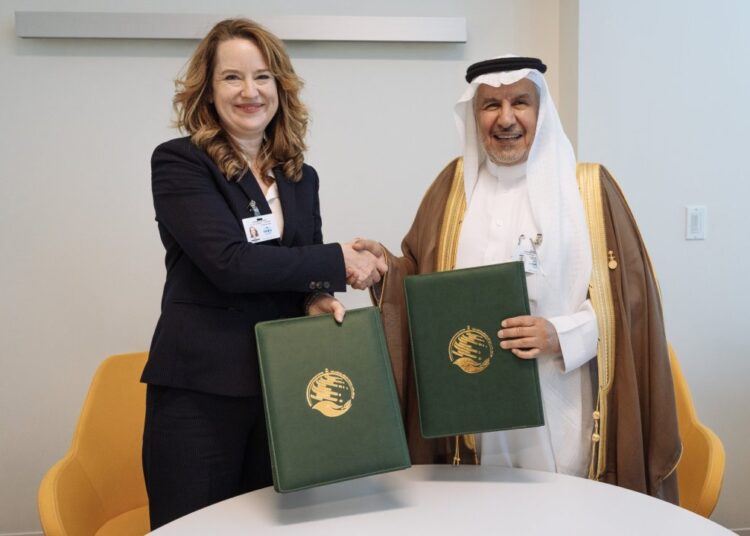
International Organization for Migration (IOM) and King Salman Humanitarian Aid and Relief Centre (KSrelief) have signed a USD 2.6 million agreement to improve living conditions for internally displaced people and vulnerable host communities in Yemen.
The 18-month initiative targets 1,900 crisis-affected families across Ma’rib, Ta’iz and Hodeidah, where displacement, deteriorating economic conditions and recurring environmental hazards have left vulnerable households struggling to secure safe and adequate shelter.
The agreement was signed on the sidelines of the 81st session of the United Nations General Assembly in New York, as Yemen faces another period of heightened humanitarian pressure following renewed hostilities.
More than 22.3 million people, representing over two-thirds of Yemen’s population, require humanitarian assistance and protection in 2026. Recent attacks has also displaced more than 134,000 people since early September, adding new pressure to communities already dealing with years of conflict and economic decline.
The latest displacement comes against a backdrop of a crisis that has uprooted more than five million people over the years. Many displaced households continue to live in inadequate shelters, leaving them exposed to extreme weather, flooding and other environmental hazards capable of damaging homes and essential infrastructure.
The new programme is designed to address some of those vulnerabilities by combining transitional shelters with essential household items and emergency shelter support.
Some families will also receive safer and more durable shelter solutions intended to withstand recurrent flooding, extreme weather and other hazards that have repeatedly compounded the effects of displacement.
According to IOM Director General Amy Pope, “Families displaced by conflict in Yemen need a safe place to live, with privacy and protection from harsh weather.”
” As renewed fighting forces more people from their homes, those needs are becoming more urgent. Our partnership with KSrelief will help families find safer shelter and regain some stability in their daily lives.”
Amy Pope
Yemen’s shelter crisis is closely connected to the wider deterioration of living conditions across the country.
Years of conflict have damaged infrastructure, weakened household livelihoods and placed enormous pressure on communities hosting displaced populations. The resulting humanitarian needs extend across food security, water and sanitation, healthcare, protection and housing.
The latest IOM-KSrelief initiative will focus specifically on shelter conditions while also providing household items intended to help families meet immediate needs.
WHO, KSrelief Commit $1.55 Million to Treat Malnourished Children in Yemen
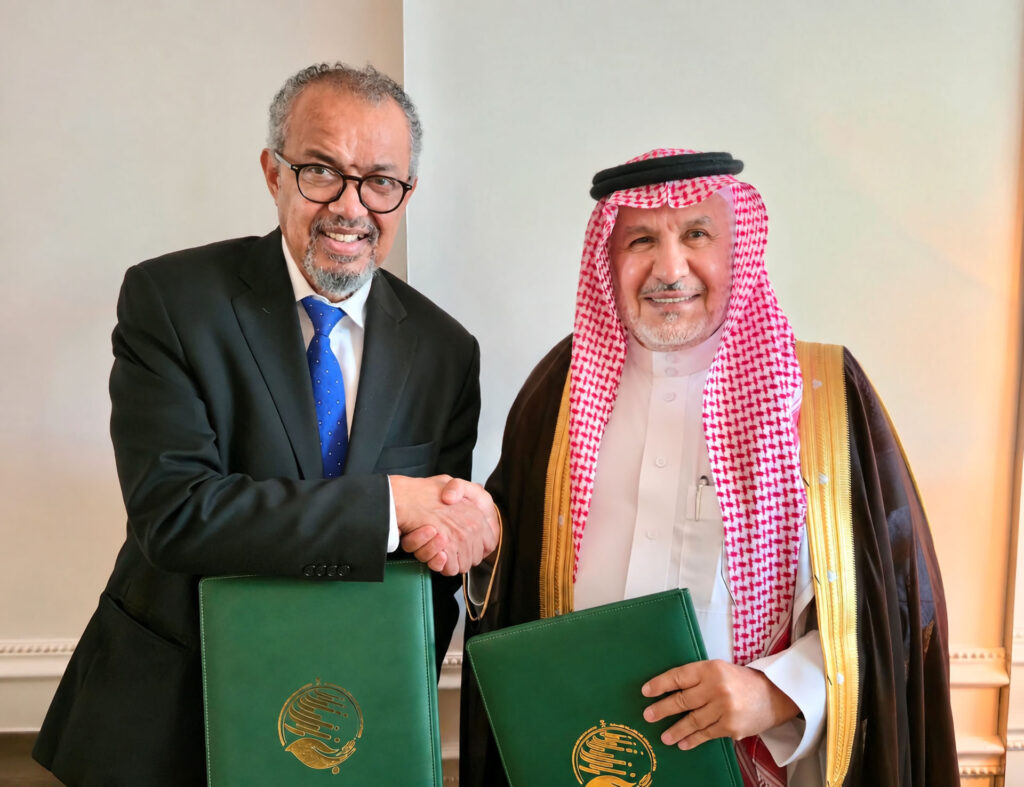
Meanwhile, World Health Organization (WHO) and the King Salman Humanitarian Aid and Relief Centre (KSrelief) have committed USD 1.55 million to expand life-saving nutrition and medical care for children suffering from severe acute malnutrition and related medical complications in Yemen.
The 12-month intervention is expected to benefit about 18,282 children under the age of five, targeting some of the country’s most vulnerable communities as prolonged conflict and fragile health services continue to complicate access to essential care.
Under the agreement, WHO will procure and distribute 402 paediatric and severe acute malnutrition (PED/SAM) kits to 35 therapeutic feeding centres (TFCs) across Yemen.
The supplies will help facilities maintain access to essential medicines, medical equipment and other materials required to treat children whose severe malnutrition has progressed to potentially life-threatening medical complications.
The intervention covers priority areas including Abyan, Aden, Al Dhale’e, Al Mahrah, Al Mukalla, Lahj, Marib, Seiyun, Shabwah, Socotra and Taiz.
Dr. Abdullah Al Rabeeah, Supervisor General of KSrelief, highlighted that the partnership’s focus on protecting children affected by the crisis.
“We are pleased to work with our valuable partner WHO to protect and improve the lives of children in Yemen who are suffering. These therapeutic medical interventions, including medicines, equipment and other needed supplies, will help children with severe acute malnutrition to recover and to have the best possible chance for a bright future.”
Dr. Abdullah Al Rabeeah
The new funding is aimed at addressing one of the most critical links in Yemen’s response to child malnutrition: maintaining the medical capacity needed when severe nutritional deprivation is accompanied by illness or other complications.
WHO will supply PED/SAM kits containing commonly used oral and injectable paediatric medicines, intravenous fluids, essential medical supplies and equipment.
Distribution will not follow a uniform allocation across all facilities. Supplies will be determined by caseloads and utilisation rates, allowing resources to be directed towards centres experiencing greater demand.
The process will be carried out in coordination with Yemen’s Ministry of Public Health and Population, while WHO will work with national and local health authorities and supported facilities to monitor the intervention.
Dr. Syed Jaffar Hussain, WHO Representative to Yemen, described the timing of the intervention as critical for children and families facing severe malnutrition.
“This new partnership with KSrelief comes at a critical time for children and families in Yemen. By ensuring therapeutic feeding centres have the medicines, supplies and equipment they need, we can help health workers provide timely, quality care to children facing severe acute malnutrition and potentially life-threatening medical complications.”
Dr. Syed Jaffar Hussain
He added, “we deeply appreciate KSrelief’s continued partnership and commitment to protecting the health and lives of Yemen’s most vulnerable children.”
The programme forms part of a longer partnership between WHO and KSrelief aimed at sustaining health and nutrition services in Yemen.
READ ALSO: Semenyo Earns Player of the Month Nomination