The Ministry of Trade, Agribusiness and Industry (MoTAI) is at the center of a sweeping financial investigation following the discovery of multi-million cedi discrepancies within its flagship industrial program under the erstwhile government.
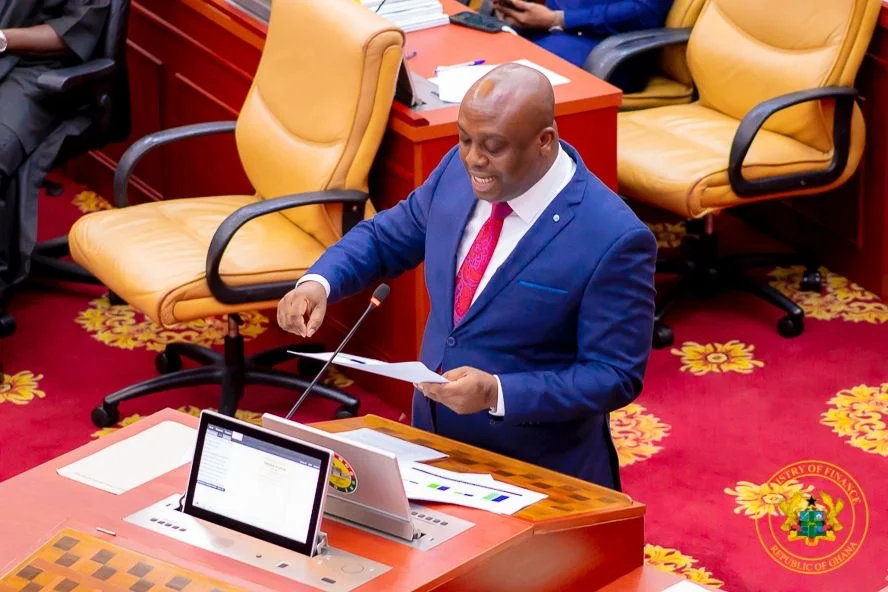
During a recent briefing to Parliament – where the government refuted huge claims in outstanding arrears submitted for validation – the Deputy Minister for Finance, Hon. Thomas Ampem Nyarko, revealed that a joint audit by the Ghana Audit Service, EY, and PwC intercepted nearly GHS 100 million in fictitious claims originating from the Trade Ministry’s 2024 records.
According to Hon. Ampem, these findings have prompted the government to trigger an immediate, comprehensive forensic audit of the entire One District, One Factory (1D1F) scheme to root out systemic waste and corruption.
“The evidence from the audit pointed to a completely fictitious account. As a result of these fictitious accounts linked to One District, One Factory payments, the entire 1D1F scheme requires a forensic audit which will be carried out soon – more so when the Government is said to have spent GHS 391 million as its contribution towards 1D1F interest subsidies as at the end of 2024”
Hon. Thomas Ampem Nyarko, Deputy Minister for Finance
The 1D1F initiative, designed to be the engine of Ghana’s Industrialization under the previous NPP administration, is now under scrutiny for its internal financial controls. According to the audit, the then-Ministry of Trade and Industry submitted a request for GHS 89.4 million to be paid to five commercial banks as the state’s contribution toward interest subsidies for local factories.
However, the external auditors discovered a complete disconnect between the Ministry’s request and the reality at the financial institutions, raising critical questions about the oversight of industrial subsidies and the integrity of the data used to justify these massive disbursements.
“When auditors contacted these five banks to confirm the liability, every single one of them denied being owed any amount by the government under the said arrangement. According to the Auditors, the said GHS 89.4 million debt was fictitious”
Hon. Thomas Ampem Nyarko, Deputy Minister for Finance

Financial Oversight Crisis
For Hon. Ampem, the discovery of these “fictitious debts,” suggests a breakdown in the verification pipeline at the Ministry of Trade. The audit revealed that the GHS 89.4 million request had already cleared several administrative hurdles and was positioned at the Controller and Accountant General’s Department, awaiting final cash release.
“Without the audit intervention, a whopping GHS 89.4 million of hard-earned public money could have been disbursed to settle this non-existent liability,” Hon. Ampem said, stressing how close this substantial sum of public money was to being transferred to settle liabilities that the commercial banks themselves claim do not exist.
This specific failure in the 1D1F interest subsidy program is particularly concerning given the sheer scale of investment the state has poured into the initiative.
By the end of 2024, the government had reportedly committed GHS 391 million toward interest subsidies alone, but now, the revelation that nearly a quarter of the most recent request was entirely fabricated has cast a shadow over previous expenditures.
The Ministry of Trade, Agribusiness and Industry must now account for how these “phantom” requests were generated and why internal departmental checks failed to flag them before they reached the Ministry of Finance.
Hon. Ampem added that further compounding the crisis at the Ministry of Trade is the discovery of a GHS 10.5 million payment linked to a non-existent “Buffer Account.” The audit found that this payment was officially recorded as a legitimate transfer, yet the commercial bank cited in the records confirmed that the account number did not exist and did not even match their internal numbering format.
The Deputy Finance Minister signaled that this level of financial indiscipline is incompatible with the nation’s 24-hour economy goals, as the entire affair points to a deliberate attempt to bypass standard financial protocols within the industrial support framework.
For Industrialization to be sustainable, the capital allocated for manufacturing must reach actual factory floors, not disappear into fabricated accounts. The Ministry of Trade, Agribusiness and Industry is now required to assist the forensic auditors in tracing the origin of these account details and identifying the personnel responsible for authorizing these entries.
This investigation is essential to ensure that the “agribusiness” and “industry” components of the Ministry’s mandate are not compromised by administrative malpractice.
Restructuring for Transparency
The fallout from this audit is expected to lead to a radical restructuring of how the Ministry of Trade, Agribusiness and Industry manages its support for the private sector.
The Ministry of Finance is currently reviewing the “interest subsidy,” model to ensure that future payments are made only after direct, three-way verification between the Ministry, the participating bank, and the industrial partner.
By eliminating the current gaps in the validation process, the government aims to protect the GHS 68.7 billion in wider arrears that are still being vetted for legitimacy. This move toward extreme transparency is also a direct response to the fiscal consolidation drive.
As the government slashes its own machinery budget, it is demanding the same level of lean, honest operation from the Ministry of Trade.
The forensic audit of the 1D1F scheme will act as a “stress test” for the Ministry’s new leadership, providing a clean slate by identifying and removing “paper factories” that have been siphoning off resources meant for genuine Agriculture and manufacturing ventures.

Ultimately, the goal of the Ministry of Finance and the Ministry of Trade is to ensure that every cedi spent on Industrialization yields a tangible return for the Ghanaian people. As the forensic audit progresses, the Ministry of Trade will be under intense pressure to demonstrate that it has implemented the necessary safeguards to prevent a recurrence of such fraud.
The collaboration between the Ghana Audit Service, EY, and PwC will remain the gold standard for this cleanup, ensuring that the final report is beyond reproach. For the thousands of legitimate farmers and industrialists who rely on these subsidies, the successful conclusion of this audit will mean a more stable, honest, and efficient partner in the state.