The Canadian government has announced more than $8.2 million in new funding aimed at strengthening domestic defence manufacturing and reducing reliance on foreign suppliers, as part of a broader push to reinforce national security and economic resilience.
The investment, delivered through the Regional Defence Investment Initiative, was announced by Secretary of State Buckley Belanger on behalf of the government to support three projects in Saskatchewan’s Yorkton region, focusing on expanding advanced manufacturing, engineering and technological innovation across the defence sector.
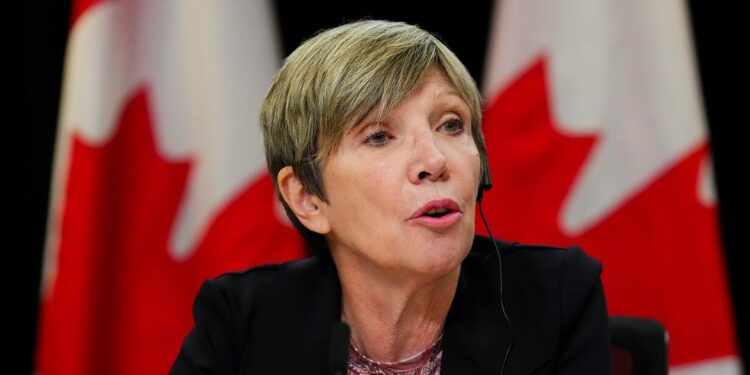
According to Honourable Eleanor Olszewski, Minister of Emergency Management and Community Resilience and Minister responsible for Prairies Economic Development Canada (PrairiesCan), in an increasingly uncertain global environment, Canada must be able to rely on strong, domestic industrial capabilities.
“Through the Regional Defence Investment Initiative, our government is investing in Saskatchewan’s defence sector to expand capacity, advance research and development, and strengthen manufacturing here at home.
“These investments support the growth of innovative prairie businesses and help ensure Canada has the tools and technologies needed to protect our security while creating new opportunities for Canadians.”
Eleanor Olszewski
The government claims that the investment is intended to assist Canadian small and medium-sized businesses in more successfully integrating into national and international defence supply chains, notably those associated with NATO.
This action underlines the need for nations to strengthen their local industrial capabilities in an increasingly uncertain global environment, as well as the growing worry over supply chain vulnerabilities.
Parkland Welding & Machine Ltd. and its Yorkton-based partner PWM Hydraulics will receive the majority of the $5 million in repayable support.
The investment will allow the company to expand its engineering, fabrication and testing capacity through the introduction of advanced CNC machining, robotics and a dedicated quality-control laboratory. These upgrades are expected to enable the domestic production of defence components for both Canadian forces and allied partners.
Furthermore, $3 million in non-repayable funding has been allocated to the Prairie Agricultural Machinery Institute in Humboldt. The institute plans to establish a new military engineering and testing facility capable of supporting both off-road and on-road heavy vehicle testing.
The facility will also include environmental chambers for extreme conditions, alongside robotics and drone testing capabilities supported by advanced data analytics.
The government indicated that, this will help prairie-based manufacturers meet stringent international defence standards.
Meanwhile, Saskatchewan Polytechnic will receive $277,000 to advance research through its Digital Integration Centre of Excellence.
The project will focus on developing a low-cost, multi-agent artificial intelligence drone system designed for autonomous command and control operations, contributing to Canada’s emerging capabilities in counter-uncrewed aerial systems.
This investment funds is in line with the government’s Defence Industrial Strategy, which aims to boost innovation in the defence industry, improve supply chains, and increase domestic manufacturing capacity.
According to the Canadian government, the program will assist long-term industrial growth, boost regional economies, and improve national security.
Economic Support Measures Accompany Canada’s Defence Expansion Plans

Along with defence funding, the government announced broader economic measures aimed at reducing cost constraints on businesses and individuals.
These include a temporary suspension of the federal fuel excise tax until Labour Day 2026, which is estimated to decrease fuel prices by about 10 cents per litre for petrol and 4 cents for diesel. The policy aims to reduce operating expenses in industries such as transportation, agriculture, construction, and logistics.
Buckley Belanger, Secretary of State for Rural Development, indicated that “Saskatchewan’s defence sector is growing and innovating to deliver new technologies and manufacturing capacity to support good jobs here at home and the national security needs of Canada and of our NATO allies,” adding, “these defence investments are about positioning Saskatchewan to lead as we move forward with our plan to build a secure, prosperous, and resilient Canada, now and for generations to come.”
At the same time, Dr. Larry Rosia, President and CEO, Saskatchewan Polytechnic said the funding would support the development of advanced skills and technologies in artificial intelligence and machine learning, helping prepare the next generation of talent for the defence sector.
According to government data, Canada’s defence industry provides approximately $10 billion to the national economy and employs over 81,000 people.
With rising worldwide demand for secure supply chains and advanced defence technologies, the government believe continued investment is crucial to ensuring Canada’s competitiveness while meeting international commitments.
As global tensions rise and defence priorities shift, the government has indicated that projects like the Regional Defence Investment Initiative will play a critical role in enhancing both economic resilience and national security in the coming years.
READ ALSO : GRIDCo Fire Outbreak: Engineers to Work ’24/7′ to Restore Power – Energy Minister