Ghana is preparing for a major transformation in the way it evaluates national development, with the Ghana Statistical Service (GSS) advocating a broader framework that goes beyond Gross Domestic Product (GDP) to assess the country’s true progress.
The proposed shift signals a significant change in economic governance as policymakers seek to measure not only how much the economy produces, but also whether growth is improving people’s lives, protecting the environment, reducing inequality and strengthening resilience against future economic and climate shocks.
The proposal was discussed during a high level policy workshop themed “Measuring What Matters in Ghana: Inclusive and Sustainable Growth Beyond GDP,” where experts emphasized that economic success should no longer be judged solely by rising output figures.
GDP remains important, but no longer tells the full story
For decades, GDP has served as the world’s most widely accepted measure of economic performance. It captures the value of goods and services produced within an economy and has traditionally guided fiscal policy, investment decisions and international comparisons.
However, the GSS believes that relying exclusively on GDP paints an incomplete picture of Ghana’s development journey.
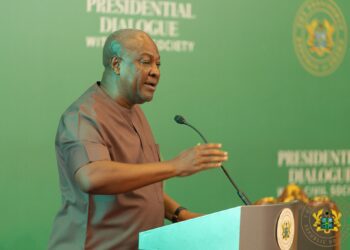
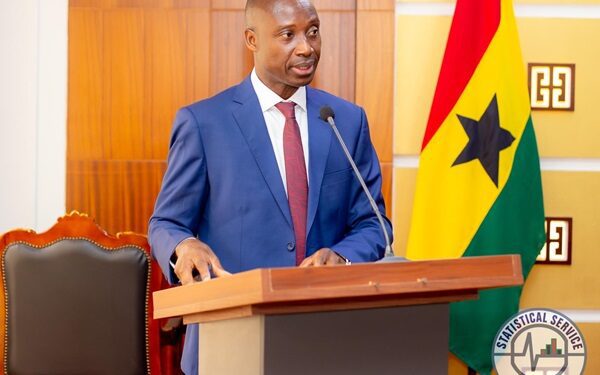
Speaking on behalf of Government Statistician Dr Alhassan Iddrisu, Acting Deputy Government Statistician for Economic Statistics and Data Science, Francis Bright Mensah said Ghana has a unique opportunity to redefine how national success is measured.
“For more than half a century, GDP has served as the world’s benchmark for measuring economic success. Yet it cannot fully explain whether growth is inclusive, sustainable or improving quality of life.”
Dr Alhassan Iddrisu
His remarks reflect a growing international consensus that countries should supplement economic output data with indicators that assess environmental sustainability, social inclusion, institutional strength and long term resilience.
Ghana’s economy is growing, but questions remain
The discussions come at a time when Ghana’s economy is showing renewed strength.
After years of macroeconomic reforms supported by the International Monetary Fund, the country’s economy expanded by an impressive 6.40 percent during the first quarter of 2026.
While this rebound has been welcomed by investors and policymakers, officials argue that strong GDP growth alone does not necessarily translate into better living conditions for ordinary citizens.
Questions remain over whether economic expansion is creating enough decent jobs, reducing regional disparities, improving healthcare and education, and ensuring that vulnerable communities benefit from national growth.
The GSS believes these broader issues deserve equal attention when assessing Ghana’s development performance.
A new framework for smarter policymaking
Under the proposed measurement system, the government would monitor a wider range of development indicators alongside traditional economic statistics.
Officials say this approach will strengthen evidence-based policymaking by providing a clearer understanding of whether growth benefits are reaching households across the country, whether natural resources are being preserved and whether Ghana’s development path remains sustainable for future generations.
The framework is expected to build upon existing national initiatives including the Sustainable Development Goals, environmental economic accounting and natural capital accounting.
It will also introduce additional indicators capable of measuring social progress, environmental health, inequality and resilience.
Such an approach could enable policymakers to evaluate not only the speed of economic growth but also its quality.
Rather than celebrating higher production figures alone, future assessments could increasingly focus on improvements in healthcare, education, decent employment opportunities, environmental protection and climate resilience.
Investors watching Ghana’s policy evolution
The proposed reforms also carry important implications for investors and development partners.
Around the world, development finance institutions, ESG focused investors and multilateral lenders are placing increasing emphasis on environmental, social and governance indicators when making investment decisions.
A broader national measurement framework could therefore enhance Ghana’s attractiveness by demonstrating stronger commitment to sustainable development and responsible economic management.
Public investment decisions may also evolve under the new approach.
Rather than evaluating projects solely based on their contribution to GDP, governments could increasingly consider how investments improve livelihoods, strengthen climate adaptation, promote inclusion and deliver lasting national resilience.
Measuring what truly matters
Although GDP will continue to serve as the country’s principal indicator of economic activity, officials insist that it should no longer stand alone.
The broader message emerging from the policy workshop is that national success should be judged by more than production figures.
Instead, development should also reflect who benefits from economic growth, what environmental resources are consumed during the process and whether today’s achievements can be sustained for generations to come.
For Ghana, embracing this broader perspective could mark a defining moment in its development journey.
If successfully implemented, the new framework has the potential to reshape national planning by treating economic expansion, social progress and environmental sustainability as interconnected pillars of long term prosperity.
As Ghana continues its recovery and pursues higher levels of growth, the GSS believes that measuring what truly matters will ultimately produce policies that create not only a bigger economy, but a stronger, fairer and more resilient nation.
READ ALSO: DR Congo Seeks Justice at ICJ Over Rwanda’s Role in Conflict