
The Chamber of Petroleum Consumers (COPEC) has called on government to clearly outline concrete steps to guarantee fuel prices sustainability, warning that gains made at the pumps could easily be reversed amid ongoing volatility in the global energy market.
The Chamber says while recent reductions in fuel prices have offered some relief to consumers, Ghanaians need assurances that those improvements can be maintained over the long term. The call comes ahead of the State of the Nation Address by John Dramani Mahama, where key policy directions for the energy sector are expected to be unveiled.
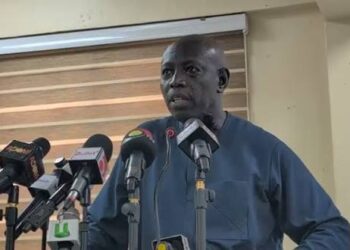
Executive Secretary of COPEC, Duncan Amoah, stressed that clarity on pricing policy and sector reforms would help build public confidence.
“You are also looking at the issue of fuel pricing in Ghana. Hopefully, we should be settling at some spot sometime, if there is a possibility of being told where we are today and plans that are being made also to sustain the gains so far made.”
Duncan Amoah, Executive Secretary of COPEC
Demand for Clear Downstream Policy Direction
Beyond pump prices, COPEC is urging government to provide a comprehensive update on its broader plans for the downstream petroleum sector. Central to that conversation is the future of the Tema Oil Refinery (TOR) and the Bulk Oil Storage and Transportation Company (BOST).
According to Amoah, the operational health of TOR and private refineries is critical to ensuring stable supply and competitive pricing. He noted that consumers are keen to understand whether government intends to revamp or reposition these institutions to strengthen local refining capacity.
“But overall, Ghanaians are equally looking forward to power sustainability and again, low price fuel and availability of same. TOR is very critical here, as well as the other private refineries.”
Duncan Amoah, Executive Secretary of COPEC
He added that clarity is also needed on national storage capacity, particularly if government has plans to expand infrastructure under BOST.
“Again, we would also want to hear if there are any plans of retooling or expanding the bulk oil storage and transportation, which is BOST or BEST.
“Whatever it is that the government intends to do to make Ghanaians energy secured, we will be happy to hear about those today.”
Duncan Amoah, Executive Secretary of COPEC
Linking Fuel Stability to Power Sustainability
COPEC’s concerns extend beyond fuel pricing to the broader issue of power reliability. Amoah underscored the need for a second gas processing plant to reduce intermittent power disruptions and improve energy security.
He referenced ongoing discussions about the Ghana Gas Train 2 project, which is expected to boost gas processing capacity and ensure a more stable feedstock supply for thermal power generation.
“Last but not the least, the Ghana gas train 2 discourse, we will be happy to hear where we are on that as of today. Again, where the government intends to take that to in the next 12 months.”
Duncan Amoah, Executive Secretary of COPEC
The Chamber believes expanding gas infrastructure is essential to reducing dependence on imported fuels and cushioning the economy against external shocks.
Petroleum Hub and Western Corridor Development
Another major focus for COPEC is the proposed expansion of the Petroleum Hub Development Corporation (PHDC), an initiative designed to transform Ghana’s western corridor into a fully integrated petroleum and petrochemical hub.
The project envisions the development of refineries, storage terminals and gas processing facilities to complement existing infrastructure in the eastern corridor.
“The issue of the Petroleum Hub Development Corporation, which proposes to make the western enclave a very good hub that sustains refineries, sustains gas processes, sustains a lot of the energy establishments so as to ensure that what we provide in the eastern corridor, there is a healthy balance in the western corridor.”
Duncan Amoah, Executive Secretary of COPEC
He further called for clear funding commitments to accelerate the project.
“I would also be keen to hear what the government’s proposition is in getting the petroleum hub program fully funded so that you and I can talk of benefits in the next 12, 24 months to Ghanaians.”
Duncan Amoah, Executive Secretary of COPEC
Awaiting Policy Signals in State Address
With global oil markets remaining unpredictable, COPEC argues that Ghana must adopt forward-looking policies that protect consumers while strengthening domestic infrastructure.
The Chamber maintains that sustained fuel prices sustainability will depend not only on international trends but also on domestic reforms, including efficient refining, expanded storage, improved gas processing and transparent pricing mechanisms.
As President Mahama to outlines his administration’s priorities, stakeholders across the energy value chain will be watching closely for signals on how government intends to stabilise fuel prices, ensure reliable power supply and secure long-term energy resilience.
For COPEC and the consuming public, the expectation is clear: policy clarity, infrastructure investment and measurable timelines that translate recent gains into lasting stability for Ghana’s energy sector.
READ ALSO: Parliament Approves National Reserve Policy, Targets 15months of Import Cover